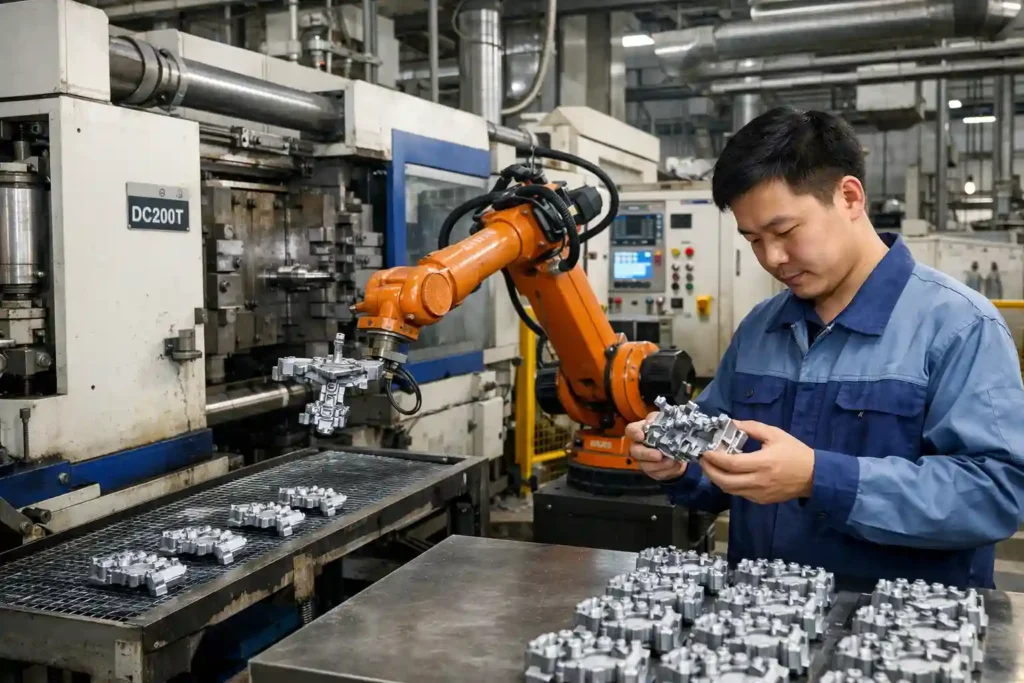
Zinc die casting is a high-precision manufacturing process where molten zinc alloy is injected into a steel mold under high pressure to produce complex metal parts with tight tolerances and excellent surface finish.
It is widely used in industries such as automotive, electronics, and industrial equipment because it enables:
- dimensional accuracy up to ±0.02–0.05mm
- efficient mass production with stable quality
- thin-wall and complex geometry capability
Compared to other metal forming methods, zinc die casting offers a unique combination of precision, cost efficiency, and repeatability, making it an ideal solution for high-volume precision components.
At IEC Mould, this process is commonly used for manufacturing precision housings and functional parts that require consistent quality in mass production.
Zinc Die Casting Process (From an Engineering Perspective)
The zinc die casting process is typically carried out using a hot chamber system, which is well-suited due to zinc’s low melting temperature and excellent fluidity.
A real production workflow includes:
- DFM (Design for Manufacturability) analysis before tooling
- Mold flow simulation to optimize filling and reduce defects
- Precision tooling manufacturing
- Trial production and First Article Inspection (FAI)
- Controlled mass production
- Secondary CNC machining for critical features
- Surface finishing such as plating or coating
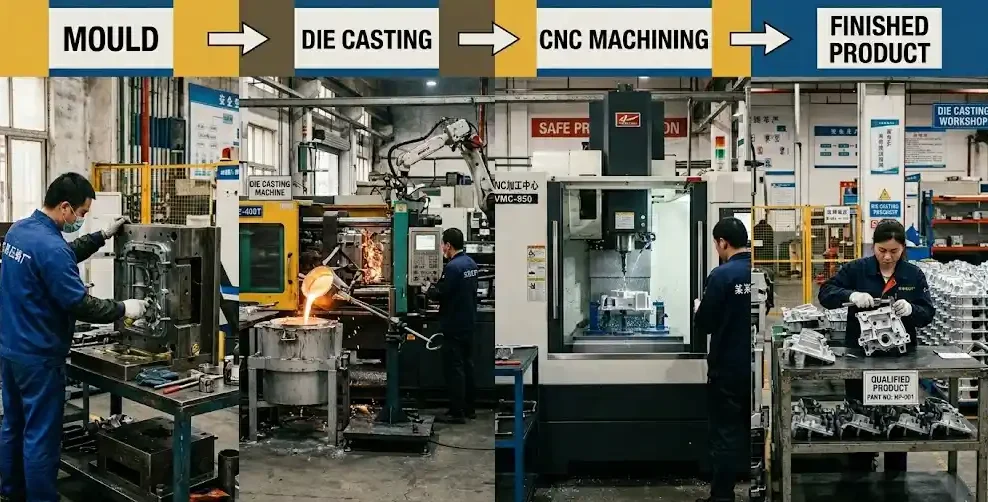
This engineering-driven workflow ensures that every zinc die casting part is validated before entering mass production, reducing risks and improving consistency.
Engineering System Behind Stable Production
In practice, achieving stable quality in zinc die casting depends more on engineering control than on the material itself.
At IEC Mould, we implement:
- DFM validation before mold manufacturing
- Mold flow simulation for gating and venting design
- Shrinkage compensation during mold design
- Standardized process parameters for production
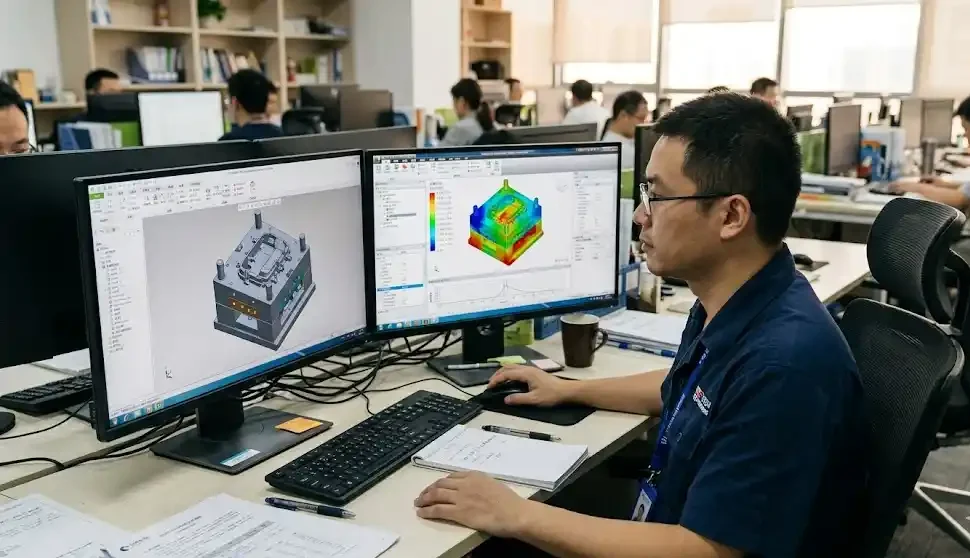
This approach ensures that manufacturability is confirmed before tooling begins, which helps maintain stable production and controlled defect rates.
Key Advantages of Zinc Die Casting in Precision Manufacturing
Advantage 1: High Dimensional Accuracy
One of the most important advantages of zinc die casting is its ability to achieve tight tolerances.
Typical capability:
- ±0.02–0.05 mm on critical dimensions (depending on part design)
This is achieved through:
- Mold design with shrinkage compensation
- CNC machining for precision surfaces
- CMM inspection for dimensional verification
- Controlled process temperature and pressure
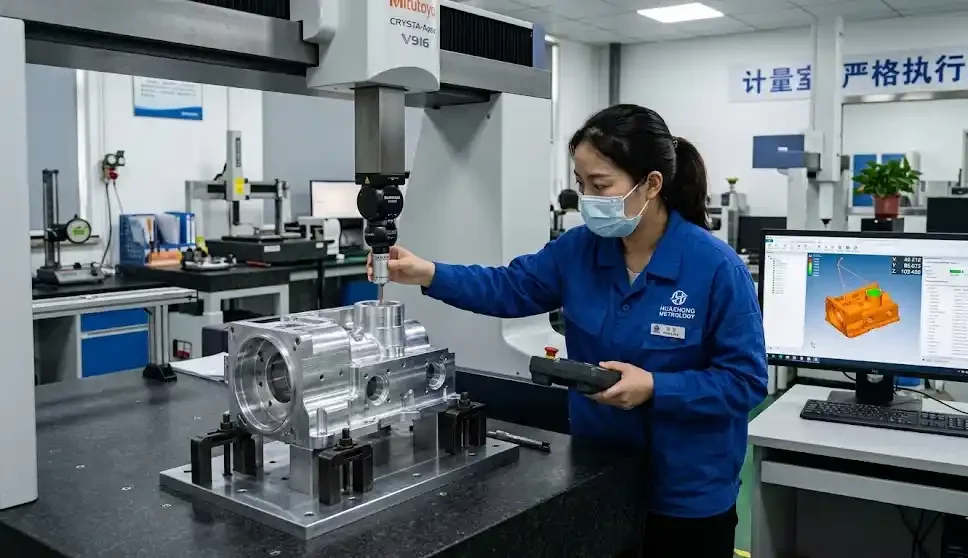
This level of accuracy makes zinc die casting ideal for precision metal components requiring consistency in high-volume production.
Advantage 2: Excellent Surface Finish
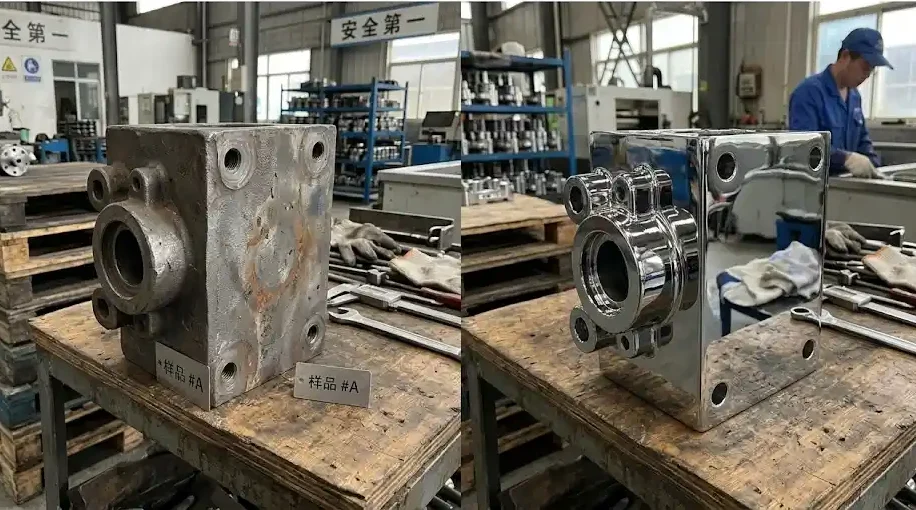
Zinc die casting produces a naturally smooth surface that supports a wide range of finishing processes:
- Electroplating (nickel, chrome)
- Powder coating
- Painting
- Polishing
Surface quality is controlled by:
- Mold cavity polishing standards
- Injection speed and pressure control
- Gate design optimization
- Stable thermal conditions
Advantage 3: Thin-Wall and Complex Geometry Capability
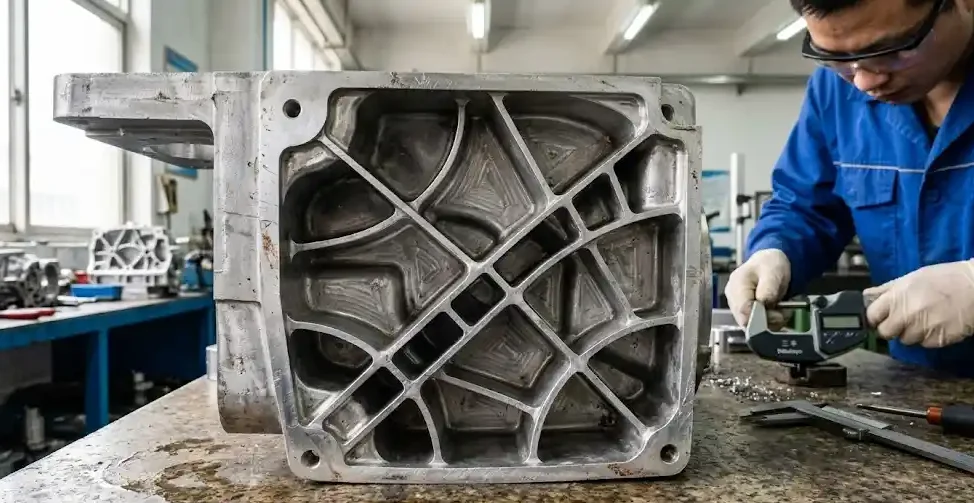
Due to its excellent fluidity, zinc die casting allows the production of thin-wall structures and complex geometries that are difficult to achieve with other methods. This reduces post-processing costs while maintaining consistent appearance quality.
Engineering support includes:
- Mold flow simulation to ensure complete filling
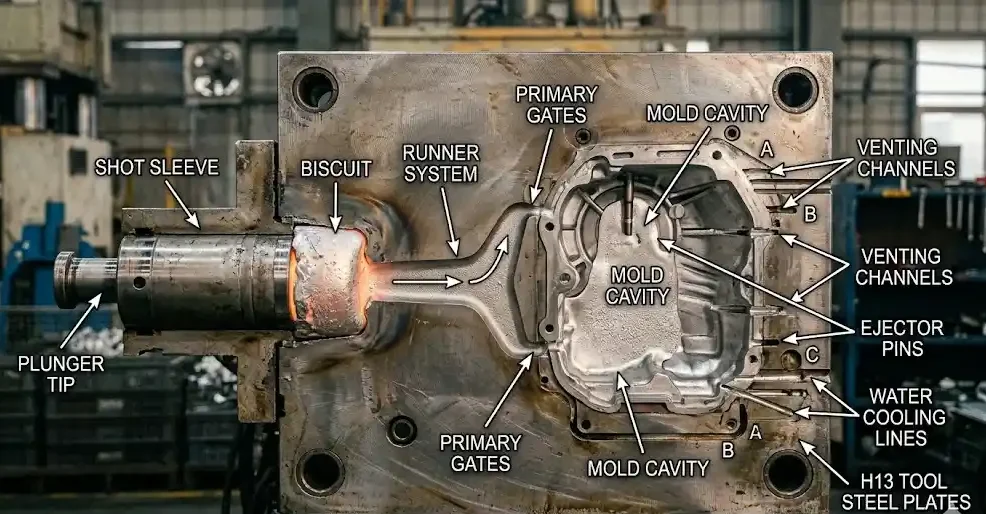
- Venting system design to prevent air traps
- Balanced runner system for uniform flow
- Controlled injection parameters
Advantage 4: Stable Mass Production and Repeatability
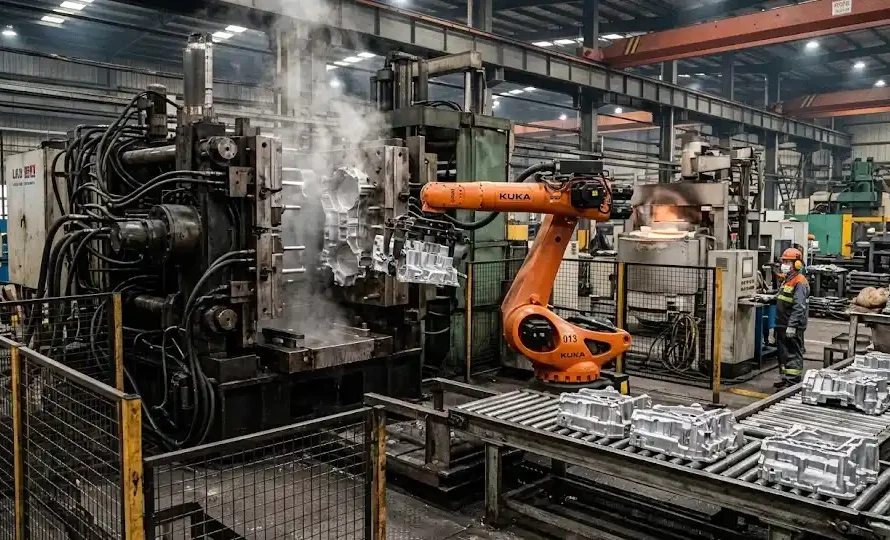
For large-scale manufacturing, consistency is critical. Zinc die casting offers high repeatability across production batches.
Key control methods:
- Automated die casting machines
- SPC (Statistical Process Control)
- Fixed process parameter windows
- Real-time monitoring of production variables
These systems ensure stable output and consistent part quality over long production runs.
Advantage 5: Mechanical Strength and Reliability
Zinc alloys provide a strong balance between hardness and ductility.
Compared with some aluminum castings, zinc offers:
- Better impact resistance
- Higher surface hardness
- Stable performance for small structural parts
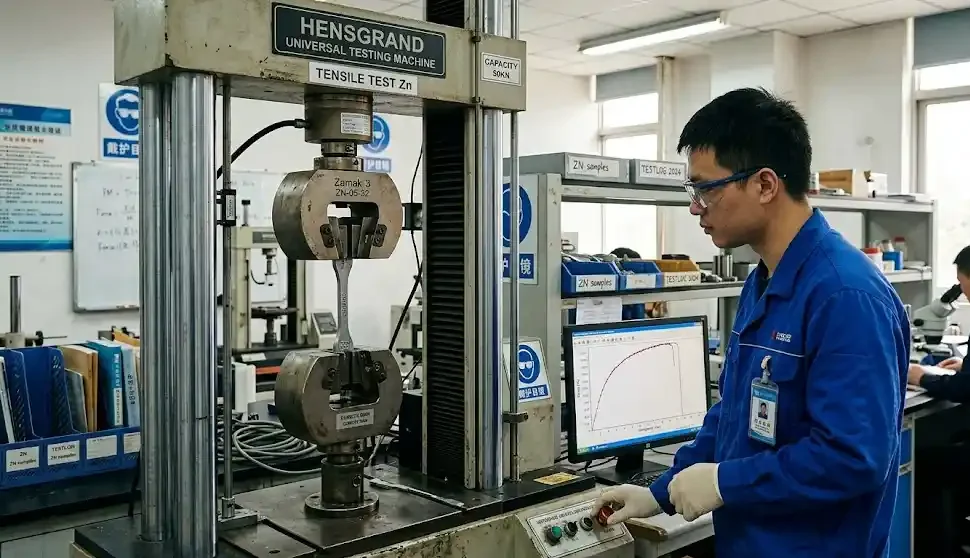
Mechanical properties can be verified through:
- Tensile testing
- Hardness testing
- Functional validation (based on application)
Advantage 6: Longer Tool Life and Cost Efficiency
Because zinc has a lower melting temperature, it reduces thermal fatigue on molds.
This results in:
- Longer die life
- Reduced maintenance frequency
- Lower cost per part in high-volume production
For many projects, this significantly improves overall manufacturing cost efficiency.
Advantage 7: Defect Control and Process Stability
In real production, defect control is essential for reliable delivery.
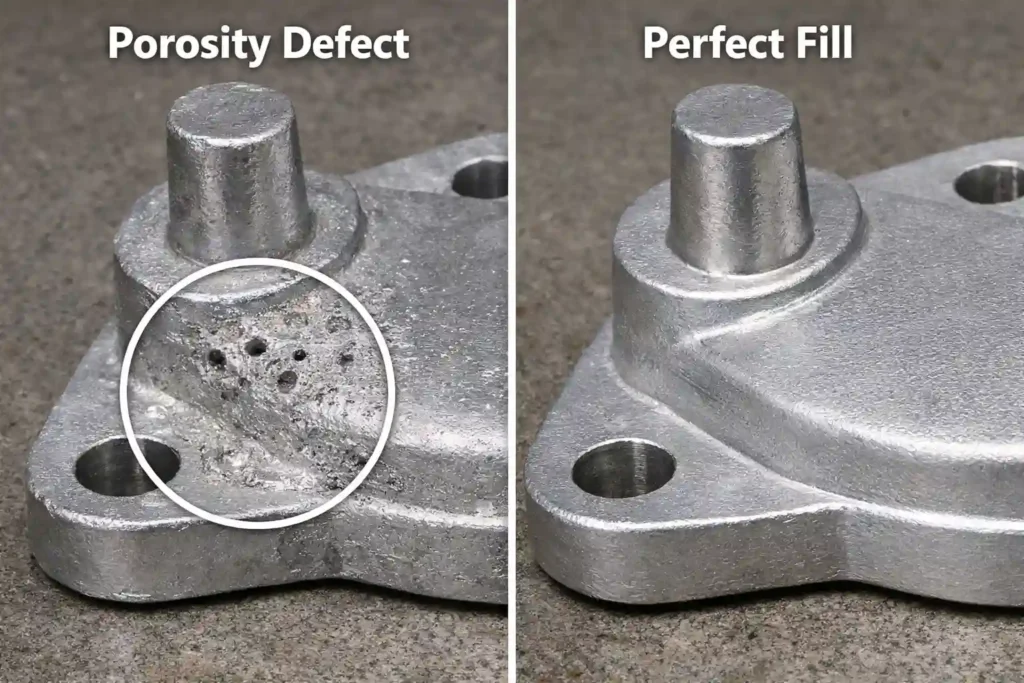
Common defects such as porosity and shrinkage are controlled through:
- Optimized gate and runner design
- Vacuum-assisted die casting (when required)
- Controlled injection pressure and speed
- Proper venting design
These methods help maintain stable yield rates and consistent product quality.
Advantage 8: Reduced Assembly Cost
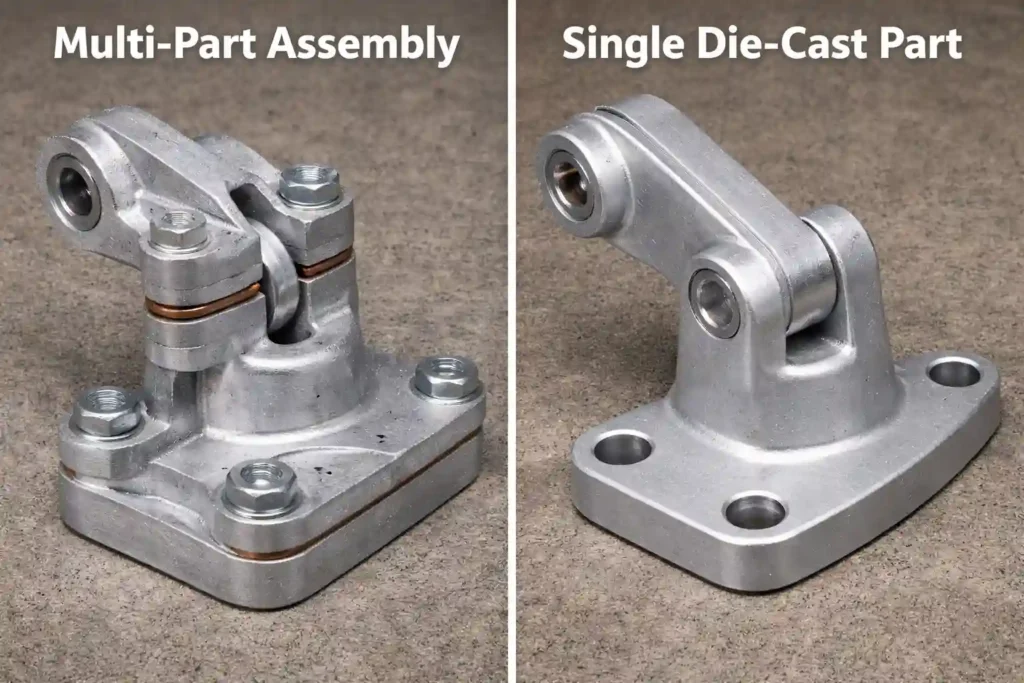
Zinc die casting enables part integration, reducing the number of components required.
Benefits include:
- Fewer assembly steps
- Reduced fasteners
- Lower labor cost
This is especially valuable for high-volume OEM production.
Advantage 9: Thermal and Electrical Performance
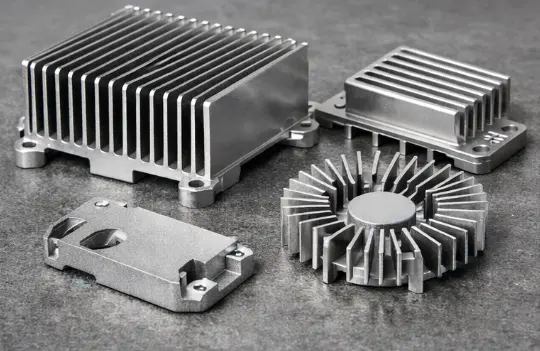
Zinc alloys provide good thermal conductivity and EMI shielding performance.
Typical applications:
- Electronic housings
- Communication equipment
- Smart device enclosures
Advantage 10: Sustainable and Recyclable Material
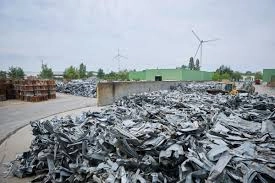
Zinc is a sustainable material that supports modern manufacturing requirements:
- 100% recyclable
- Lower energy consumption during melting
- Suitable for environmentally responsible production
Quality Control System
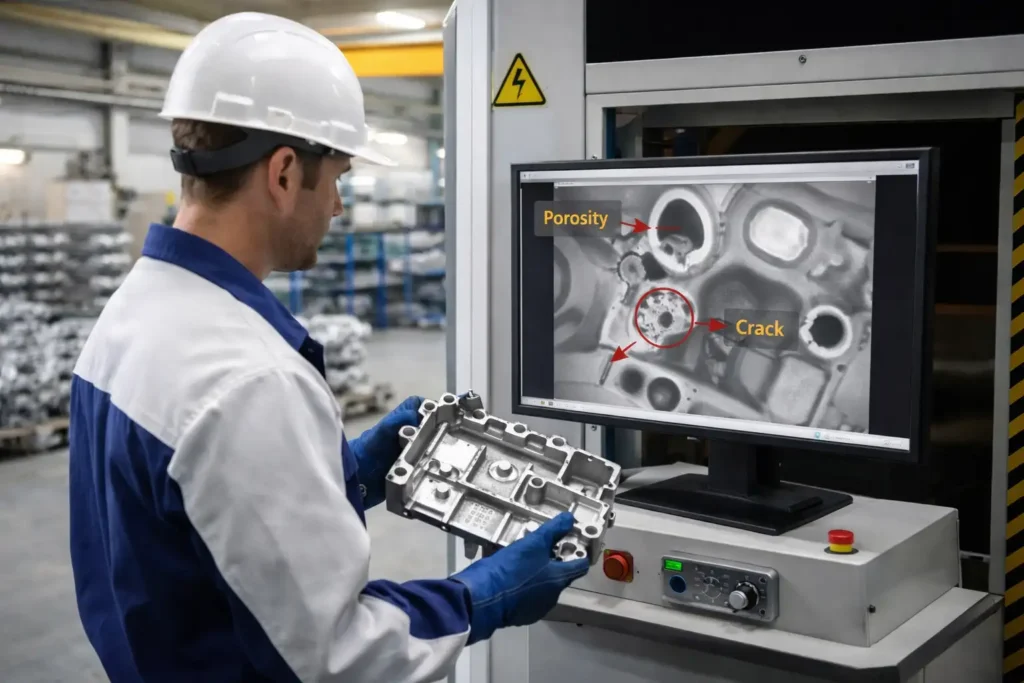
At IEC Mould, quality control is implemented throughout production:
- Incoming material inspection
- First Article Inspection (FAI)
- In-process inspection for critical dimensions
- CMM full inspection reports
- Final inspection before shipment
For critical features, 100% inspection or controlled sampling is applied to ensure consistency.
Zinc vs Aluminum Die Casting
| Factor | Zinc Die Casting | Aluminum Die Casting |
|---|---|---|
| Precision | Higher | Moderate |
| Tool Life | Longer | Shorter |
| Wall Thickness | Thinner possible | Thicker required |
| Cost Efficiency | Better for small parts | Better for large parts |
| Surface Finish | Excellent | Good |
Why Zinc Die Casting Is a Reliable Choice for Precision Manufacturing
From an engineering and production perspective, zinc die casting is not just a cost-effective process—it is a highly controlled manufacturing solution for producing precision metal components at scale.
Its key advantages include:
- tight dimensional tolerances (down to ±0.02–0.05 mm for critical features)
- excellent surface finish suitable for direct post-processing
- stable mass production with repeatable quality
- strong mechanical performance for functional applications
- long tool life that reduces overall production cost
However, in real-world manufacturing, achieving these advantages depends heavily on process control, tooling design, and production experience.
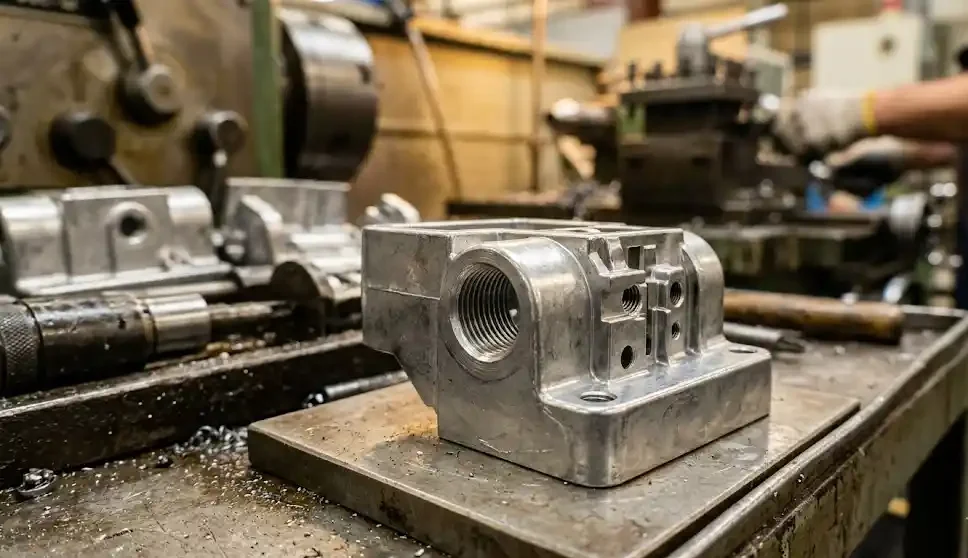
At IEC Mould, we focus on engineering-driven zinc die casting, where every project is evaluated from manufacturability to mass production stability. This ensures that parts are not only well-designed, but also consistently producible with controlled defect rates.
For OEM and industrial buyers, choosing the right zinc die casting manufacturer means choosing a partner who can deliver both precision and reliability—not just prototypes, but scalable production.
Get Engineering Support for Your Zinc Die Casting Project
If you are developing a new product or looking to improve an existing design, early engineering involvement can significantly reduce tooling cost, production risk, and lead time.
At IEC Mould, we provide full engineering support for zinc die casting projects, from DFM analysis to mass production optimization.
To help our engineering team evaluate your project quickly and accurately, please prepare the following information:
🧠 What We Will Do for You
Once we receive your information, our engineering team will:
- Perform DFM (Design for Manufacturability) analysis
- Optimize part structure for defect prevention
- Recommend cost reduction solutions
- Evaluate tooling feasibility and lifespan
- Provide clear quotation with lead time estimation
📌 What You Should Provide for a Fast and Accurate Quote
1. Product Design Data
- 2D drawing (PDF / DWG)
- 3D model (STEP / IGES preferred)
👉 This helps us analyze structure, wall thickness, and manufacturability.
2. Material Requirements
- Zinc alloy type (e.g., Zamak 3, Zamak 5, or other specifications)
- Surface treatment requirements (plating, powder coating, polishing, etc.)
3. Annual Demand / Order Volume
- Prototype quantity
- Estimated monthly or yearly production volume
👉 This directly affects tooling design and unit cost.
4. Critical Tolerance & Functional Requirements
- Key dimensions that must be controlled
- Assembly or fitting requirements
- Functional stress or load conditions (if any)
5. Product Application
- Automotive parts
- Electronics housing
- Industrial components
- Consumer hardware
👉 Application helps us optimize material and process selection.
📩 Start Your Zinc Die Casting Project Today
Whether you are in the early design stage or ready for mass production, IEC Mould can support you with engineering-driven manufacturing solutions.
FAQs About Zinc Die Casting
What factors affect the precision of zinc die casting parts?
Precision in zinc die casting depends on multiple factors, including mold design accuracy, shrinkage compensation, process parameter control, and secondary machining. For critical features, CNC machining and CMM inspection are often used to ensure tolerances within ±0.02–0.05 mm.
How do you control porosity in zinc die casting?
Porosity is controlled through a combination of engineering methods:
- optimized gate and runner design
- proper venting system to release trapped air
- controlled injection pressure and speed
- optional vacuum-assisted die casting
These measures help improve internal density and ensure stable mechanical performance.
When should I choose zinc die casting instead of aluminum?
Zinc die casting is typically a better choice when:
- high precision is required
- parts are small to medium in size
- thin-wall or complex geometry is needed
- high-volume production is expected
Aluminum is more suitable for larger structural components, while zinc excels in precision applications.
What is the typical lead time for zinc die casting projects?
Lead time depends on part complexity and tooling requirements, but a typical timeline includes:
- 3–5 weeks for tooling development
- 1–2 weeks for sampling and validation
- ongoing mass production after approval
Early DFM review can significantly reduce delays and improve overall efficiency.
Can zinc die casting reduce overall production cost?
Yes. Although tooling requires initial investment, zinc die casting reduces total cost through:
- minimal machining requirements
- long mold life
- high production efficiency
- reduced assembly through part integration
This makes it highly cost-effective for medium to high-volume production.
What information should I provide for an accurate quotation?
To receive an accurate quote from a zinc die casting supplier, it is recommended to provide:
- 2D/3D drawings (STEP / IGES preferred)
- material or surface finish requirements
- estimated annual quantity
- tolerance or critical dimension requirements
This allows engineers to evaluate manufacturability and provide precise pricing.