Pressure Die Casting for Sanitary & Plumbing Systems Industry
At IEC MOULD, we specialize in high-precision pressure die casting for the sanitary and plumbing sector. Our capabilities cover the entire manufacturing process, from design for manufacturability (DFM) and mold design to die casting production, CNC machining, surface finishing, and assembly. By integrating these services, we help OEMs and industrial clients produce components that are reliable, corrosion-resistant, and dimensionally accurate.
Pressure die casting is ideal for producing complex geometries, thin walls, integrated mounting features, and tight-tolerance components, making it the preferred method for modern plumbing systems. With decades of experience, IEC MOULD ensures each component meets industry standards, customer specifications, and global compliance requirements.
What Is Pressure Die Casting in Plumbing and Sanitary Manufacturing?
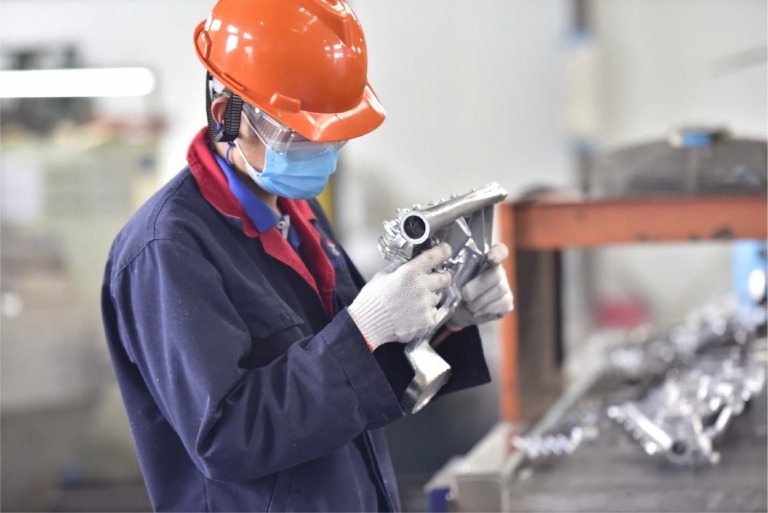
Pressure die casting is a precise process where molten metal is injected into steel molds under high pressure. At IEC MOULD, this produces strong, corrosion-resistant, and leak-proof components for sanitary and plumbing systems.
Key advantages:
- High dimensional accuracy for leak-proof valves, pumps, and connectors
- Smooth surface finish suitable for plating or coating
- Complex shapes with internal channels and thin walls
- Efficient high-volume production
- Material versatility with aluminum and zinc alloys
IEC MOULD uses state-of-the-art high-pressure die casting machines, combined with advanced mold design and flow simulation, to produce components that meet the most stringent plumbing standards.
Why Pressure Die Casting Is Ideal for Sanitary & Plumbing Components
Plumbing and sanitary systems require components that operate under constant exposure to water, chemicals, and mechanical stress. Pressure die casting offers unique advantages that traditional casting or machining cannot match:
Leak-Proof & Pressure-Resistant – Tight tolerances and precision sealing surfaces ensure valves, faucets, and pump housings remain leak-free under high water pressure.
Corrosion-Resistant – Aluminum and zinc alloys withstand humid and chemically active environments, extending component life.
Supports Complex Geometries – Internal channels, mounting features, and threaded connections can be integrated in a single casting.
Functional & Attractive Surface Finish – Polished, electroplated, powder-coated, and anodized finishes meet both aesthetic and functional requirements.
High-Volume Production – Automated machines deliver consistent quality across large batches.
Cost & Time Efficiency – Integrated production reduces assembly steps and manufacturing costs while ensuring reliability.
Engineering Challenges in Sanitary & Plumbing Pressure Die Casting
Manufacturers of sanitary and plumbing systems face multiple engineering and production challenges when developing metal components such as valve bodies, faucet housings, pump parts, and pipe connectors.
With extensive pressure die casting experience, IEC MOULD helps OEMs overcome these challenges through advanced mold design, optimized casting processes, and precision manufacturing.
| Pain Point | Impact on Sanitary & Plumbing Products | Engineering Solution |
|---|---|---|
| Leak-proof sealing requirements | Water leakage, pressure loss, product failure | High-pressure die casting with precision sealing surfaces, combined with CNC machining and pressure testing, ensures leak-free performance |
| Corrosion & humid environments | Surface degradation, rust, reduced product lifespan | Aluminum and zinc die casting alloys, combined with electroplating, anodizing, or powder coating, provide excellent corrosion resistance |
| Complex internal flow channels | Difficult machining, high production cost, design limitations | Pressure die casting enables integrated internal structures, reducing machining steps and improving manufacturing efficiency |
| Dimensional accuracy for threaded connections | Poor pipe fitting, leakage risk, assembly issues | Precision die casting + CNC machining ensures tight tolerances for threaded connectors and sealing interfaces |
| High water pressure resistance | Structural deformation or cracking | Optimized wall thickness, ribbing, and structural reinforcement improve mechanical strength and pressure resistance |
| Surface finish for visible fixtures | Visible defects affecting brand image | Polishing, electroplating, and powder coating deliver smooth, decorative surfaces for faucets and bathroom hardware |
| High-volume production stability | Quality variation, delayed delivery | Automated pressure die casting production lines ensure consistent quality and reliable large-scale manufacturing |
How We Solves Sanitary & Plumbing Pressure Die Casting Manufacturing Challenges
At IEC MOULD, our pressure die casting solutions for sanitary and plumbing components are engineered to deliver leak-proof performance, corrosion resistance, dimensional precision, and stable high-volume production.
We support OEM manufacturers producing valves, faucets, pump housings, pipe connectors, and water control components through an integrated engineering and manufacturing workflow.
Early DFM for Sanitary & Plumbing Die Cast Components
Scope: Manufacturability planning and leak-proof structural design
Key Engineering Actions:
- Wall thickness optimization for pressure resistance and structural strength
- Reinforcement rib design to prevent deformation under water pressure
- Sealing surface planning for valve bodies and fluid control components
- Threaded interface design for pipe connectors and fittings
- CNC machining allowance planning for critical sealing surfaces
Outcome: Reduced tooling revisions, improved sealing performance, and faster product development cycles for sanitary and plumbing components.
Moldflow Analysis & Tooling Engineering
Scope: Mold design optimization and casting defect prevention
Key Engineering Actions:
- Gate and runner design for balanced molten metal flow
- Venting layout to minimize gas entrapment and porosity
- Thermal balance design to prevent deformation during solidification
- Cooling channel optimization for stable cycle time and dimensional stability
Outcome: Higher casting yield, improved internal integrity, and reduced porosity—critical for pressure-resistant plumbing components.
Pressure Die Casting + Precision CNC Machining
Scope: Near-net-shape casting with precision finishing
Capabilities:
- High-pressure die casting (HPDC) for valve bodies, faucet housings, and pump components
- 3-axis, 4-axis, and 5-axis CNC machining for threaded connections and sealing interfaces
- Precision machining for pressure sealing surfaces and assembly interfaces
Outcome: Cost-efficient production with tight tolerances and reliable sealing performance for plumbing components.
Surface Finishing & Corrosion Protection
Scope: Durability, corrosion resistance, and product appearance
Available Finishing Processes
- Sandblasting / bead blasting
- Polishing for decorative plumbing fixtures
- Electroplating for corrosion resistance and aesthetics
- Powder coating for protective surfaces
- Anodizing for aluminum die cast components
Outcome: Uniform, high-quality surfaces combined with long-term durability and corrosion resistance for indoor or exposed metal hardware components
Quality Assurance & Inspection System
Scope: Production quality control and traceability
Provided Deliverables:
- 3D CMM dimensional inspection reports
- Incoming and outgoing material certifications
- PPAP, FAI, Control Plan, PFMEA documentation
- RoHS and REACH compliance verification
Outcome: Supports OEM quality audits and ensures consistent compliance with international manufacturing standards.
Stable Mass Production Control
Scope: Reliable large-scale production for OEM customers
Manufacturing Control Measures:
- SPC monitoring on critical dimensions
- APQP process management for tooling and production
- CPK monitoring for key tolerance stability
- Lot traceability and production tracking
- Preventive maintenance for molds and die casting machines
Outcome: Consistent, high-quality pressure die casting components for sanitary and plumbing systems, ensuring stable supply for high-volume OEM production.
Materials Used in Pressure Die Casting for Plumbing Systems
Selecting the right alloy is essential for producing durable, corrosion-resistant, and high-precision plumbing components. At IEC MOULD, we use carefully selected materials in our pressure die casting process to ensure strength, reliability, and long service life for sanitary and plumbing applications.
Aluminum Alloys Die Casting
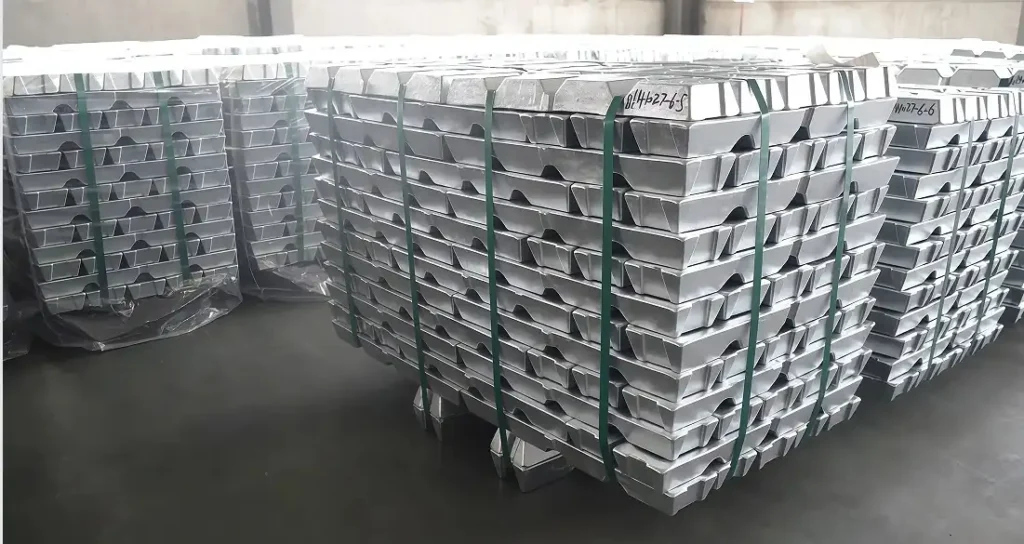
Aluminum alloys are widely used in pressure die casting for plumbing systems due to their excellent balance of strength, weight, and corrosion resistance. Common aluminum alloys include: ADC12 , A380, EN AlSi9Cu3.
Key Advantages
- High strength-to-weight ratio for structural components
- Excellent corrosion resistance in humid environments
- Good thermal conductivity and dimensional stability
- Excellent machinability for precision CNC finishing
- Long service life for demanding plumbing applications
Zinc Die Casting
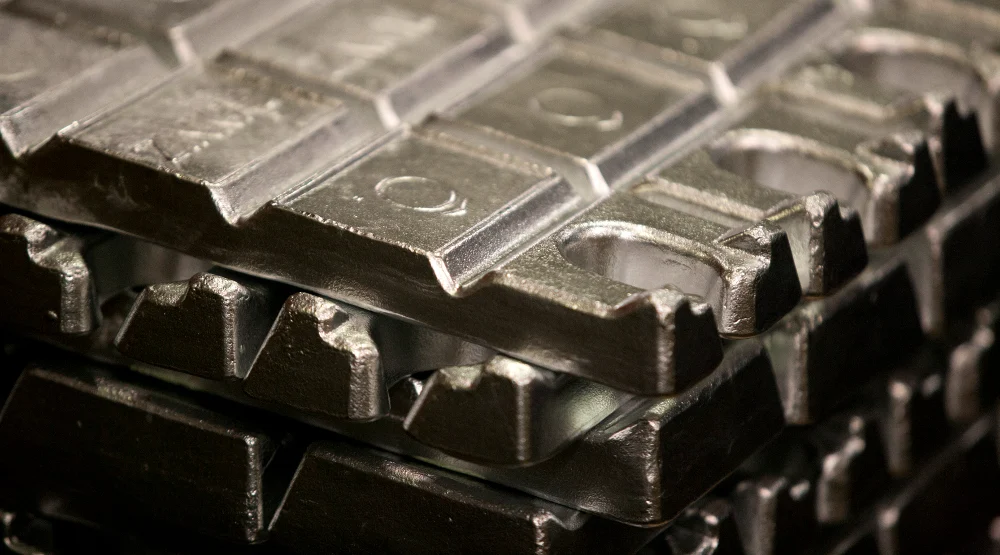
Zinc alloys Die Casting are ideal for precision plumbing hardware and decorative sanitary components, especially when high surface quality is required. Common Zinc alloys include: Zamak 3, Zamak 5 & ZA8.
Key Advantages
- Exceptional dimensional accuracy for tight tolerances
- Smooth surface finish suitable for plating and polishing
- Excellent electroplating compatibility for decorative fixtures
- Ability to produce thin walls and intricate designs
- High production efficiency for complex small components
IEC MOULD selects die casting materials based on mechanical strength, corrosion resistance, production efficiency, and aesthetic requirements, ensuring every component meets the performance standards required for modern sanitary and plumbing systems.
Common Pressure Die Casting Sanitary & Plumbing Components Produced by IEC MOULD
IEC MOULD manufactures a wide range of pressure die cast components, including:
Each part is manufactured using optimized mold design, precision pressure die casting, and rigorous quality control, ensuring long-term reliability.
Engineering DFM & Moldflow Support for Sanitary & Plumbing Pressure Die Casting Components
Sanitary and plumbing components often involve pressure-resistant structures, internal flow channels, complex geometries, and tight sealing tolerances. Early engineering collaboration is essential to reduce tooling risks, optimize manufacturability, and ensure long-term reliability in high-volume production.
At IEC MOULD, our DFM (Design for Manufacturability) and Moldflow analysis for pressure die casting focuses on improving leak-proof performance, dimensional accuracy, and cost efficiency for plumbing system components.
Geometry Feasibility Review
Our engineering team evaluates key design parameters to ensure the component is suitable for high-pressure die casting production.
Key Evaluation Areas
- Draft angles and wall tapering for efficient mold release
- Undercuts, deep cavities, and complex multi-directional features
- Thin-wall structures to reduce weight while maintaining strength
- Bosses, ribs, and reinforcement features for pressure resistance
- Sharp corners or abrupt transitions that affect molten metal flow
- Feasibility of gating, venting, and ejection systems
This engineering review ensures that plumbing components are casting-friendly, structurally reliable, and optimized for high-volume manufacturing.
Moldflow & Casting Simulation
Advanced simulation tools are used to identify and prevent potential casting defects before tooling production.
Simulation Analysis Includes
- Flow imbalance and incomplete mold filling
- Cold shuts and weld line formation
- Air entrapment and gas pockets
- Porosity concentration areas
- Thermal hot spots and shrinkage risks
- Cooling efficiency and thermal balance throughout the part
Using Moldflow-driven engineering decisions, IEC MOULD improves casting yield, dimensional stability, and internal integrity for pressure die casting plumbing components.
Assembly & Integration Support
To ensure reliable installation and operation, our engineers verify that die cast plumbing components integrate smoothly with surrounding assemblies.
Integration Considerations
- Compatibility with mating plumbing components
- Threaded interfaces for pipe connectors and fittings
- Precision mounting interfaces and datum references
- Sealing surfaces for leak-proof connections
- Functional contact areas within valves and water control systems
This approach guarantees accurate fit, repeatable assembly, and stable performance in plumbing systems.
Design-to-Cost Optimization
Based on DFM evaluation and Moldflow simulation results, IEC MOULD proposes engineering optimizations that reduce production cost while maintaining product performance.
Optimization Areas
- Reduced casting cycle time and energy consumption
- Optimized material usage without compromising structural strength
- Reduced secondary CNC machining requirements
- Simplified surface finishing processes
- Optimized tooling structure and maintenance cost
All design improvements are implemented while maintaining mechanical strength, pressure resistance, and leak-proof reliability required for sanitary and plumbing pressure die casting components.
Step-by-Step Pressure Die Casting Process for Sanitary & Plumbing Components
At IEC MOULD, the manufacturing of sanitary and plumbing pressure die casting components follows a carefully controlled process to ensure high precision, leak-proof performance, and consistent quality. From initial design evaluation to final inspection, every stage is optimized for reliability and large-scale production.
Standard Manufacturing Workflow
- RFQ & drawing review
- DFM & feasibility confirmation
- Moldflow analysis
- Tooling design
- Tool steel selection & fabrication
- Mold trials
- Dimensional inspection
- HPDC mass production
- CNC machining & tapping
- Deburring & cleaning
- Surface finishing
- Final inspection
- Packaging&documentation
- Batch traceability& shipment
Tooling Capabilities
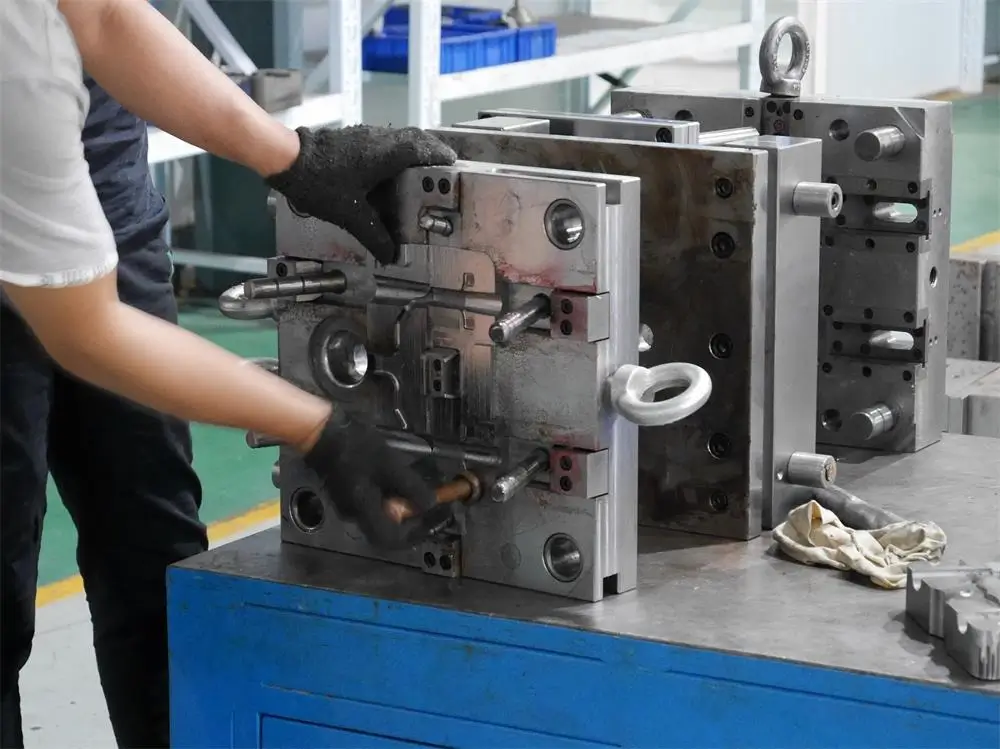
- Multi-slide tooling
- Thin-wall tooling
- Hot runner & vacuum venting
- Rapid cooling circuits
- Cavity pressure monitoring (when required)
- EDM, high-speed milling, and precision grinding
Die Casting Capabilities
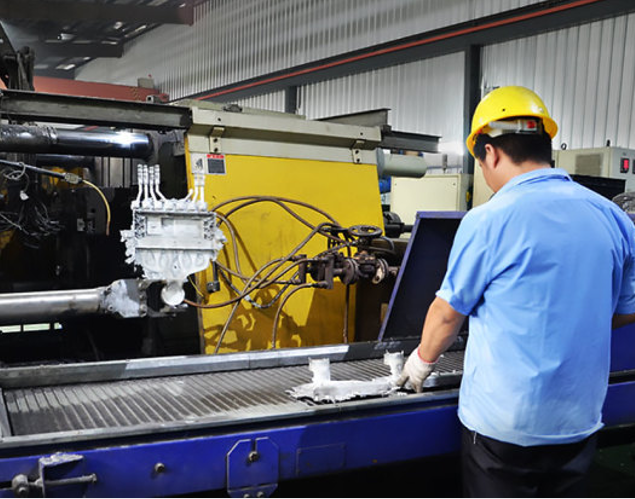
- HPDC from 80T to 1250T
- Vacuum assist for porosity reduction
- Water-cooling for dimensional stability
- Process control via temperature & shot monitoring
Secondary Operations
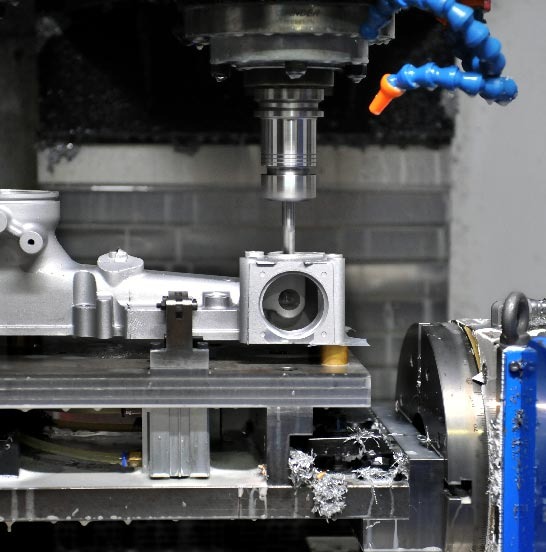
- CNC machining (3/4/5-axis)
- Turning
- Threading (M, UNC/UNF, MJ)
- Reaming & tapping
- Deburring & polishing
- Helicoil insert installation
CNC Machining for Sanitary & Plumbing Presure Die Casting Components
While pressure die casting produces most geometries, certain critical features for sanitary and plumbing components—such as sealing surfaces, threaded interfaces, and precision mounting points—require CNC machining to meet tight tolerances and functional requirements. At IEC MOULD, we integrate advanced CNC capabilities to ensure leak-proof, precise, and durable plumbing components.
Machining Capabilities
Our machining equipment supports a wide range of operations for plumbing die cast components:
- 3-axis, 4-axis, and 5-axis milling for complex geometries
- Swiss-type turning for small shafts, pins, and connectors
- Micro-hole drilling for precise water flow channels
- Tapping and threading for pipe fittings and connectors
- Helical milling for internal features
- Tight tolerance control up to ±0.01 mm (feature-dependent)
Machinable Features
We focus on functional features critical to sanitary and plumbing systems:
- Sealing surfaces and O-ring grooves
- Threaded interfaces for pipe connectors and valves
- Counterbores and countersinks for assembly features
- Chamfers and radii for smooth water flow
- Internal bore alignment for valves and pump housings
- Dynamic contours for ergonomic and decorative fixtures
Burr-Free & Clean Surface Control
For visible plumbing components, surface quality is essential. Our processes include:
- Automated deburring and media tumbling
- Brush polishing and electro-polishing for stainless steel
- Edge-break control for safe assembly and smooth water flow
- Particle-free cleaning to maintain hygiene standards
Documentation & Validation
IEC MOULD ensures full traceability and validation for high-volume plumbing production:
- CMM dimensional inspection reports
- First Article Inspection (FAI)
- PPAP (if required by OEMs)
- Traceability records for all batches
- Surface roughness measurements
- Material certifications
General Tolerance Guidelines for Sanitary & Plumbing Die Casting Components
The following tolerance ranges serve as general engineering references for pressure die casting components used in sanitary and plumbing systems. Final tolerances are determined based on part geometry, alloy selection, tooling design, and CNC machining requirements.
| Stage | Feature | Typical Tolerance |
|---|---|---|
| As-Cast (Pressure Die Casting) | Linear dimensions | ±0.10 – ±0.30 mm |
| Flatness (per 100 mm) | ≤ 0.30 mm | |
| Hole position | ±0.20 mm | |
| After CNC Machining | Linear dimensions | ±0.02 – ±0.05 mm |
| Flatness | ≤ 0.05 mm | |
| Threaded holes | ISO / ANSI standards |
Engineering Note
Tolerance requirements are carefully evaluated during the DFM (Design for Manufacturability) and tooling design stage to achieve the best balance between manufacturability, functional performance, and production cost. For sanitary and plumbing components, tight tolerances are typically applied to sealing surfaces, threaded connections, and critical assembly interfaces, while non-functional features may use standard die casting tolerances.
By applying precision CNC machining only where functionally required, IEC MOULD helps customers optimize production efficiency while maintaining the high reliability and leak-proof performance required for plumbing systems.
Surface Finishing Options for Sanitary & Plumbing Pressure Die Casting Components
Sanitary and plumbing hardware components are frequently exposed to water, humidity, soap, and cleaning chemicals. Surface finishing therefore plays a critical role in ensuring corrosion resistance, long-term durability, hygienic surfaces, and high-quality decorative appearance.
At IEC MOULD, we provide finishing solutions specifically selected for sanitary and plumbing die casting components, ensuring both functional protection and premium aesthetics.
| Surface Finish | Applicable Material | Key Benefits | Typical Applications |
|---|---|---|---|
| Chrome Plating | Zinc Die Casting | Excellent corrosion resistance, mirror-like decorative finish, highly durable in humid environments | Faucet handles, shower accessories, bathroom fixtures |
| Nickel Plating / Brushed Nickel | Zinc / Aluminum | Good corrosion resistance, modern satin appearance, strong wear resistance | Plumbing fittings, decorative hardware, control knobs |
| Powder Coating | Aluminum Die Casting | Thick protective coating with excellent resistance to moisture, scratches, and cleaning chemicals | Shower brackets, plumbing housings, mounting components |
| Anodizing (Type II) | Aluminum | Improves corrosion resistance and surface hardness; available in multiple colors | Decorative sanitary hardware, exposed plumbing components |
| PVD Coating | Aluminum / Zinc | Premium decorative finish with outstanding wear resistance and color stability | High-end faucets, luxury bathroom hardware |
| Sandblasting / Bead Blasting | Aluminum / Zinc | Creates uniform matte texture and improves coating adhesion | Pre-treatment before plating, anodizing, or coating |
Case Studies – Sanitary & Plumbing Presure Die Casting Applications
Below are typical sanitary and plumbing pressure die casting applications, showing how IEC MOULD helps OEM customers improve product performance, reduce manufacturing risks, and achieve stable mass production.
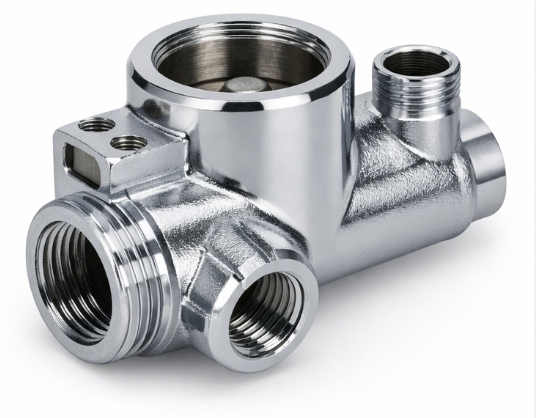
Case A: Pressure-Resistant Valve Body
Material: Zinc Alloy
Process: High Pressure Die Casting + CNC Machining + Electroplating
Engineering Focus
- Optimized wall thickness for pressure resistance
- Precision sealing surfaces to prevent leakage
- Accurate threaded interfaces for pipe connections
Result
- Reliable leak-proof performance
- Excellent corrosion resistance
- Consistent dimensional accuracy in mass production
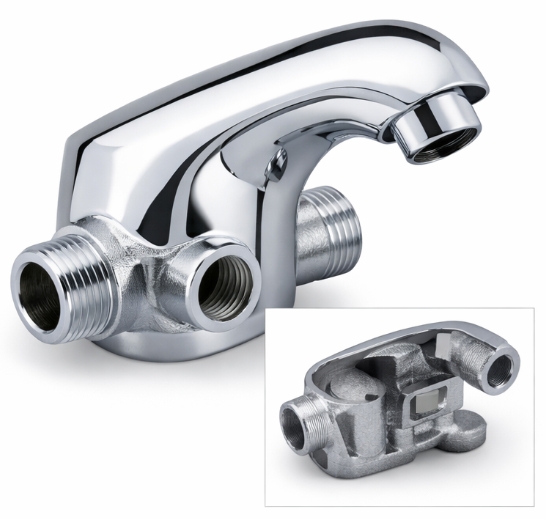
Case B: Lightweight Faucet Body
Material: Aluminum Alloy
Process: HPDC + CNC Machining + Chrome Plating
Engineering Focus
- Internal flow channel integration
- Rib structures for strength and weight reduction
- Surface quality control for decorative finishing
Result
- 15–20% weight reduction
- High-quality surface for chrome plating
- Stable production quality
Why Choose IEC MOULD for Sanitary & Plumbing Pressure Die Casting Components
Sanitary and plumbing components require precision, corrosion resistance, and leak-proof reliability. IEC MOULD provides integrated pressure die casting solutions that support OEM projects from development to stable mass production.
Our one-stop manufacturing capabilities include:
- 20+ years of die casting experience
- Full in-house capabilities: mold design, die casting, CNC machining, finishing, assembly
- OEM support for sanitary and plumbing products
- Advanced equipment for precision and high-volume production
- Strict quality control and ISO compliance
- Global delivery and reliable supply chain
With this one-stop manufacturing approach, IEC MOULD ensures consistent quality, efficient production, and reliable supply for sanitary and plumbing die casting components.
FAQ – Pressure Die Casting for Sanitary & Plumbing Products
What materials are commonly used in pressure die casting for plumbing components?
The most commonly used materials are aluminum alloys and zinc alloys. Aluminum is preferred for lightweight and corrosion-resistant structural components such as pump housings, while zinc alloys are widely used for precision parts like faucet handles and valve bodies due to excellent surface finish and dimensional accuracy.
Is pressure die casting suitable for leak-proof plumbing components?
Yes. Pressure die casting can achieve high dimensional accuracy and smooth sealing surfaces. Combined with precision CNC machining, it ensures reliable sealing performance for components such as valve bodies, pipe connectors, and faucet parts.
What surface finishes are commonly used for sanitary hardware?
Common finishes include chrome plating, nickel plating, anodizing, powder coating, bead blasting, and brushed finishes. These improve corrosion resistance, durability, and aesthetic appearance for bathroom and plumbing fixtures.
What tolerances can be achieved with pressure die casting?
Typical as-cast tolerances range from ±0.10 to ±0.30 mm. For critical features like sealing surfaces or threaded connections, CNC machining can achieve ±0.02 to ±0.05 mm for tight and reliable assembly.
What is the difference between die casting and machining for plumbing parts?
Die casting produces near-net-shape parts with high structural strength and complex geometries in a single step, ideal for high-volume production. Machining is used for precision features like threads, sealing surfaces, or tolerances that die casting alone cannot achieve.
Start Your Sanitary & Plumbing Die Casting Project
Upload your CAD drawings or samples to receive expert DFM feedback. Our engineers will review your valve, faucet, or pump design and provide feasibility analysis, tooling recommendations, and production guidance for reliable pressure die casting.