
Key Rules for Aluminum Casting Die Design
Proper aluminum casting die design ensures defect-free parts, dimensional accuracy, and long mold life. Key factors include uniform wall thickness, proper draft angles, optimized gating systems, efficient cooling, and effective venting.
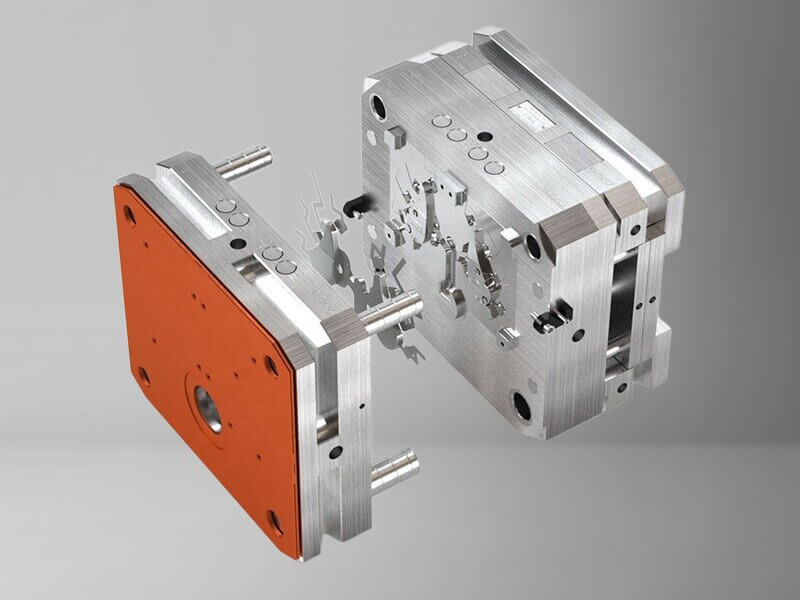
Aluminum Casting Die Introduction
Aluminum die casting is a high-precision manufacturing process where the design of the casting die directly impacts part quality, production efficiency, and mold lifespan. Poorly designed dies can cause defects such as porosity, shrinkage, flash, warpage, and short shots, leading to higher scrap rates and increased production costs.
Engineers must carefully consider factors like uniform wall thickness, proper draft angles, efficient gating systems, optimized cooling channels, and effective venting when designing aluminum casting dies. These elements not only ensure dimensional accuracy but also enhance structural integrity and repeatable performance during high-volume production.
At IEC MOULD, we specialize in creating high-precision aluminum casting dies for industries ranging from automotive and industrial equipment to consumer electronics. By leveraging advanced mold flow simulation, precision tooling, and extensive engineering expertise, we help clients minimize defects, extend die life, and optimize overall manufacturing efficiency.
This guide will walk you through 12 essential rules for aluminum casting die design that every engineer should know, providing actionable insights, recommended parameters, and professional tips to achieve consistent, high-quality die cast results.
What Is an Aluminum Casting Die?
An aluminum casting die is a precision-engineered mold used in high-pressure die casting to shape molten aluminum into complex, high-accuracy parts. Unlike general molds, an aluminum casting die must withstand repeated thermal cycling, high injection pressures, and metal flow stresses while maintaining dimensional stability.
The die consists of several critical components that work together to produce defect-free parts:
- Cavity – The hollow space where molten aluminum is injected to form the part.
- Core – Inserts that shape internal features of the casting.
- Runner System – Channels that guide molten metal from the sprue to the gates.
- Gating System – Controls the flow of metal into the cavity, reducing turbulence and defects.
- Cooling Channels – Maintain uniform temperature to prevent warping and shrinkage.
- Ejector System – Safely removes the solidified casting from the die.
- Venting System – Allows trapped air and gases to escape, preventing porosity.
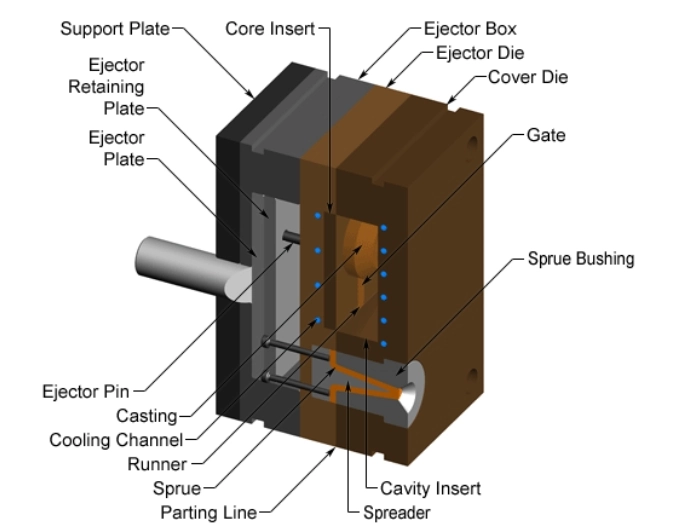
See Die Structure Diagram for a visual layout of all components.
Proper understanding of these components is essential for engineers and designers to create high-quality aluminum casting dies, optimize production efficiency, and minimize defects. By mastering the die structure, you can ensure consistent performance and extend mold life across high-volume production runs.
Aluminum Casting Die Structure: Design Principles for Engineers
Designing an aluminum casting die goes beyond identifying components—it’s about optimizing their interaction for defect-free, high-volume production. Key structural considerations include:
1. Balanced Metal Flow
- Proper placement of runners and gates ensures molten aluminum fills the cavity evenly, reducing cold shuts and porosity.
- Engineers should simulate flow paths using mold flow software to identify potential turbulence or dead zones.
2.Thermal Management
- Cooling channels must be strategically placed to maintain uniform temperature. Uneven cooling causes shrinkage, warpage, or stress concentrations.
- Hot spots near cores or thick sections require additional cooling or material adjustments.
3.Ejector and Venting Optimization
- Ejector pins must be positioned to minimize part distortion during ejection.
- Venting channels should allow trapped air to escape without creating surface defects.
4.Structural Strength and Wear Resistance
- Die steel selection, reinforcement ribs, and corner radii prevent cracking under high-pressure injection.
- Wear-prone areas like gates and cavity edges may require surface treatment (e.g., nitriding or coating).
5.Integration for Efficiency
- Components should be designed to minimize cycle time and simplify maintenance.
- Consider interactions between gating, cooling, and ejection to optimize both part quality and die longevity.
12 Rules for Aluminum Casting Die Design
To design a reliable aluminum casting die, engineers must focus on key technical factors such as metal flow, thermal balance, structural integrity, and manufacturability.
The following 12 rules are based on real production experience and proven engineering practices. They are widely applied in industrial projects to reduce design risks, shorten development cycles, and improve production efficiency—especially in high-volume die casting programs.
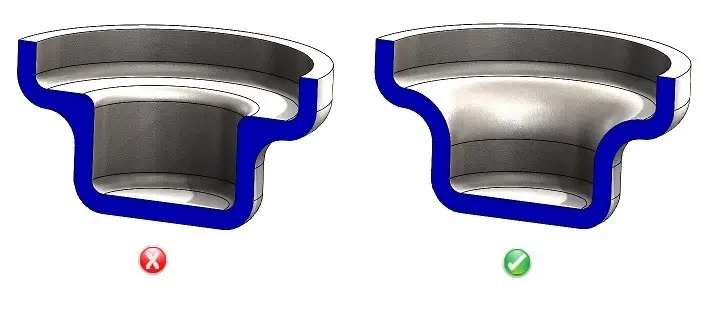
1. Maintain Uniform Wall Thickness
One of the most common issues engineers face is inconsistent wall thickness, especially when trying to improve part strength by adding thicker sections. However, this often leads to uneven cooling, resulting in shrinkage, internal stress, and porosity. In real production, parts with large thickness variations frequently fail X-ray inspection, increasing scrap rates and rework costs.
How to optimize:
- Keep wall thickness within 1.5–4 mm
- Avoid sudden transitions; use smooth changes
- Replace thick sections with ribs
Result:
Balanced solidification, fewer internal defects, and improved dimensional stability.
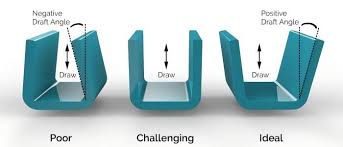
2.Apply Proper Draft Angles
Insufficient draft angles often cause parts to stick inside the die, leading to scratches, deformation, and even mold damage. This issue is commonly discovered only during trial production, resulting in delays and additional tooling costs.
How to optimize:
- External surfaces: 1–2°
- Internal surfaces: 2–3°
- Increase draft for deep or textured areas
Result:
Smooth ejection, reduced wear, and improved production efficiency.
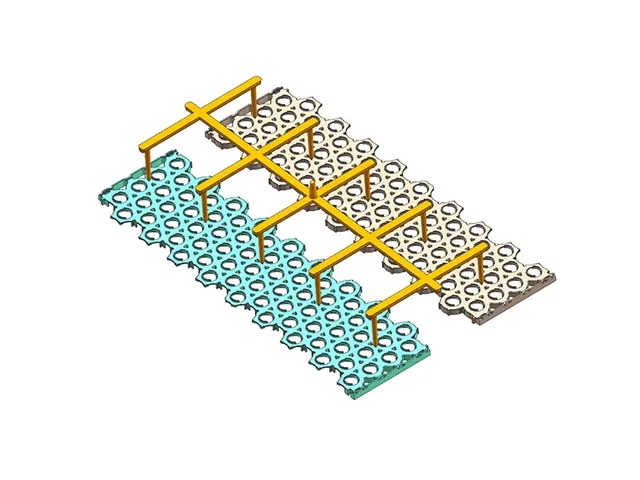
3. Design an Efficient Gating System
Poor gating design leads to turbulence, air entrapment, and defects like porosity and cold shuts. In many cases, unbalanced flow causes inconsistent filling across cavities.
How to optimize:
- Ensure smooth, laminar flow
- Place gates near thicker sections
- Use multiple gates for large parts
Result:
Improved filling quality, reduced defects, and higher yield.
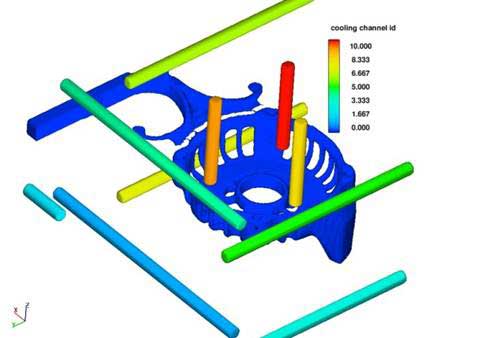
4. Optimize Cooling Channel Layout
Uneven cooling is a major cause of warpage, shrinkage, and dimensional instability. Many designs underestimate the importance of thermal balance. Hot spots near thick sections or cores often lead to internal defects and longer cycle times.
How to optimize:
- Place cooling channels close to hot zones
- Maintain uniform temperature distribution
- Use optimized or conformal cooling design
Result:
Shorter cycle time, reduced deformation, and consistent part quality.
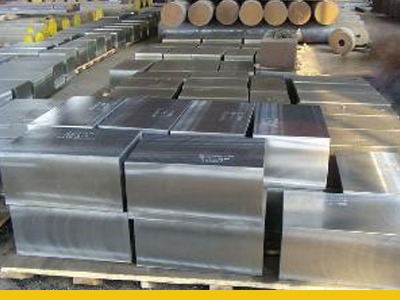
5. Select High-Quality Die Steel
Using low-quality die steel can lead to cracking, erosion, and rapid wear under high temperature and pressure. This is especially critical for high-volume production, where mold failure can cause costly downtime.
How to optimize:
- Use H13 / SKD61 for durability
- Apply heat treatment for strength
- Consider nitriding or coating for wear resistance
Result:
Longer die life, lower maintenance cost, and stable production.
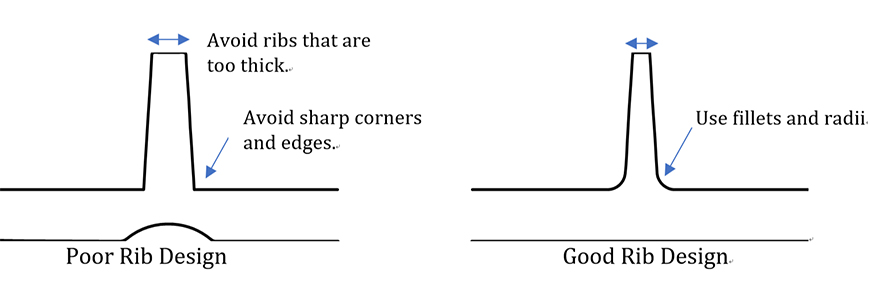
6. Avoid Sharp Corners & Stress Concentrations
Sharp corners disrupt metal flow and create stress concentration points, increasing the risk of cracks and defects. They also accelerate mold wear and reduce product strength.
How to optimize:
- Use fillet radius ≥ 0.5 mm
- Apply larger radii in high-stress areas
- Ensure smooth transitions
Result:
Improved flow, stronger parts, and longer mold lifespan.
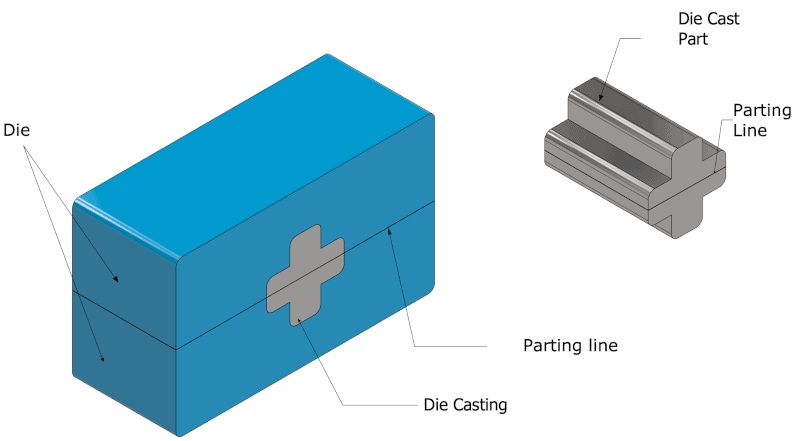
7. Simplify the Parting Line
Complex parting lines increase tooling difficulty and the risk of flash or misalignment. They also raise manufacturing costs and complicate maintenance.
How to optimize:
- Keep parting lines simple and straight
- Reduce unnecessary slides or lifters
- Ensure tight sealing
Result:
Lower tooling cost, better alignment, and fewer flash defects.
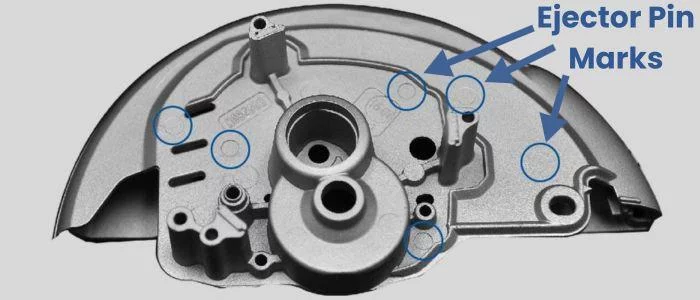
8. Position Ejector Pins Properly
Incorrect ejector placement can cause part deformation, surface marks, or even cracking. This is especially critical for thin-wall or cosmetic parts.
How to optimize:
- Place pins in strong, thick areas
- Avoid visible surfaces
- Distribute ejection force evenly
Result:
Stable ejection, improved surface quality, and reduced rejection rates.
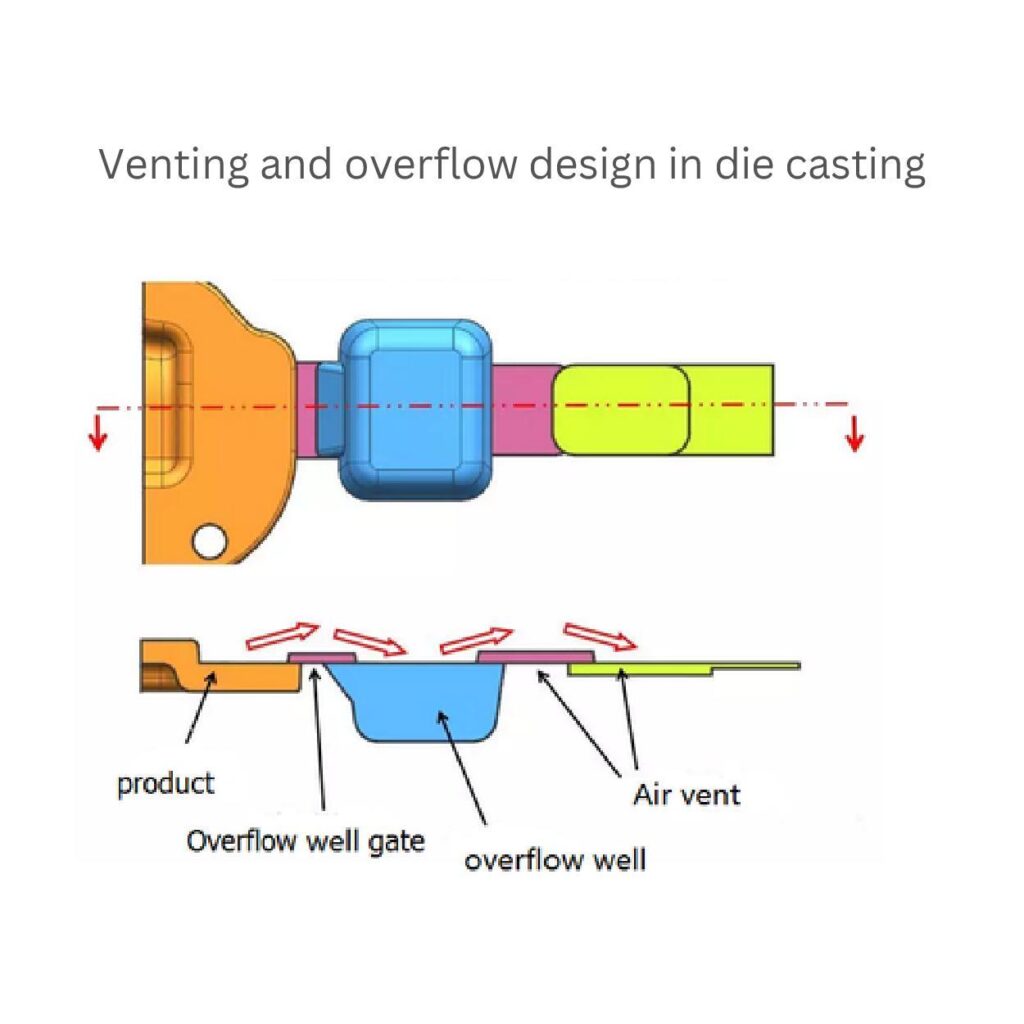
9. Design Effective Venting System
Trapped air is one of the main causes of porosity and incomplete filling. Without proper venting, gas cannot escape during injection.
How to optimize:
- Add vents at end-of-fill areas
- Control vent depth (typically 0.01–0.03 mm)
- Use overflow wells
Result:
Reduced gas defects, better surface finish, and complete filling.
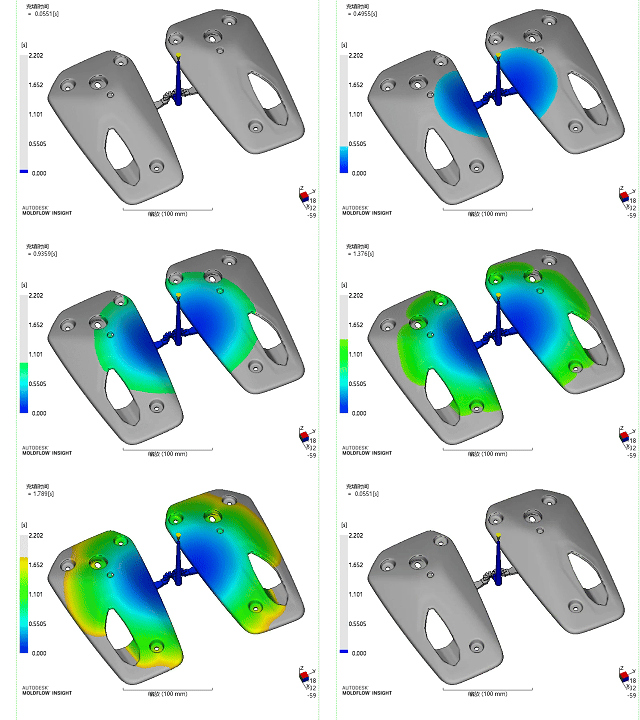
10. Use Mold Flow Simulation
Many design issues can only be identified through simulation before tooling. Skipping this step often leads to trial-and-error, increasing cost and development time.
👉 At IEC MOULD, mold flow simulation is a standard step in our die design process to ensure optimal performance before production.
How to optimize:
- Analyze filling pattern and temperature
- Identify air traps and shrinkage zones
- Adjust gating and cooling before manufacturing
Result:
Higher first-shot success rate and reduced development cost.
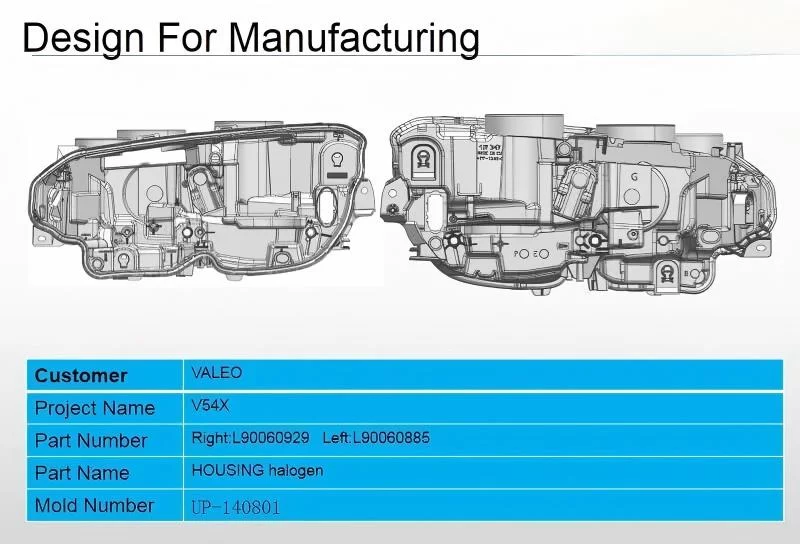
11. Apply Design for Manufacturability (DFM)
Designs that ignore manufacturability often lead to high tooling cost, low efficiency, and production challenges. Overly complex geometry or tight tolerances can make production unstable.
How to optimize:
- Simplify geometry
- Reduce undercuts
- Avoid unnecessary tight tolerances
Result:
Lower cost, faster production, and higher consistency.
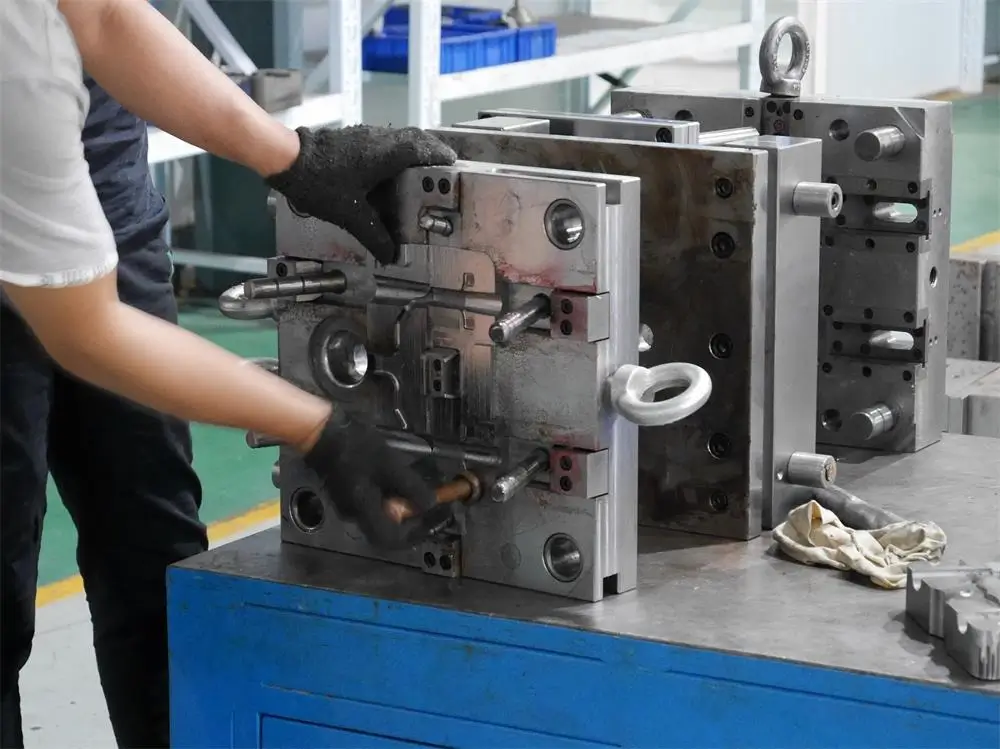
12. Plan Regular Die Maintenance
Even a well-designed die will degrade without proper maintenance. Wear, clogging, and thermal fatigue can affect performance over time.
How to optimize:
- Simplify geometry
- Reduce undercuts
- Avoid unnecessary tight tolerances
Result:
Lower cost, faster production, and higher consistency.
Recommended Aluminum Casting Die Design Parameters
In aluminum casting die design, selecting the correct parameters is essential for achieving consistent quality, minimizing defects, and ensuring efficient production. The following table summarizes widely accepted engineering recommendations based on industry standards and practical manufacturing experience.
Key Design Parameters Table:
| Parameter | Recommended Value | Engineering Notes |
|---|---|---|
| Wall Thickness | 1.5 – 4 mm | Maintain uniform thickness to ensure even cooling and reduce shrinkage/porosity |
| Draft Angle (External) | 1 – 2° | Allows smooth ejection and prevents surface scratches |
| Draft Angle (Internal) | 2 – 3° | Requires larger angles due to higher friction |
| Fillet Radius | ≥ 0.5 mm | Reduces stress concentration and improves metal flow |
| Die Steel | H13 / SKD61 | High resistance to thermal fatigue and wear |
| Casting Temperature | 660 – 700°C | Ensures proper filling and reduces cold shuts |
| Injection Pressure | 30 – 150 MPa | Depends on part complexity and size |
| Gate Velocity | 30 – 60 m/s | Controls filling speed and reduces turbulence |
| Vent Depth | 0.01 – 0.03 mm | Allows gas escape without metal leakage |
| Cooling Channel Distance | 10 – 20 mm from cavity | Ensures efficient heat transfer and uniform cooling |
How to Use These Parameters in Real Projects
While the values above serve as general guidelines, actual die design must be adjusted based on part geometry, alloy type, and production requirements. For example:
- Thin-wall electronic components require tighter control of gate velocity and cooling
- Automotive structural parts demand optimized wall thickness and die steel strength
- Complex geometries often need simulation validation before finalizing parameters
Engineering Insight
Using incorrect parameters is one of the main reasons for:
- Porosity and internal defects
- Warpage and dimensional instability
- Short die life and frequent maintenance
- High scrap rates during mass production
By applying these recommended values during the design stage, engineers can significantly reduce trial-and-error, shorten development cycles, and improve first-pass yield.
👉 At IEC MOULD, these parameters are not used as fixed values, but as a foundation combined with mold flow analysis and real production feedback to ensure each die design is fully optimized for its application.
Aluminum Casting Die Design Process: How IEC MOULD Ensures Reliable Production
At IEC MOULD, we understand that a high-quality aluminum casting die is not just about the mold—it’s about a complete, controlled process that guarantees precision, efficiency, and consistent production. Instead of focusing on the problems (which we covered in the previous section), here we explain how we systematically prevent issues and ensure your parts meet the highest standards.
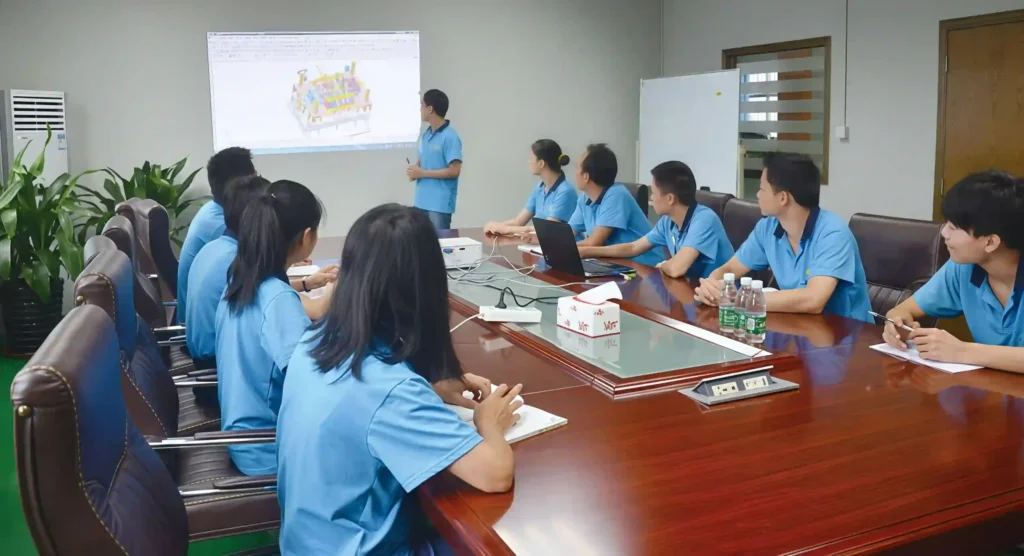
Step 1: Concept Review & DFM Analysis
- Analyze the customer’s 3D model for manufacturability
- Evaluate wall thickness, draft angles, undercuts, and parting lines
- Identify early-stage risks before tooling begins
Outcome: Optimized design ready for die manufacturing, minimizing trial-and-error and production delays.
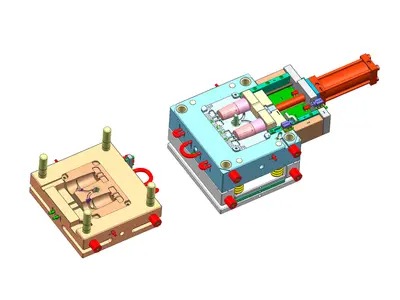
Step 2: Die Structure & Component Design
- Design cavities, cores, parting lines, sliders, lifters, and ejector systems
- Ensure structural integrity, smooth ejection, and long mold life
Outcome: Reliable die structure that supports consistent, high-quality production.
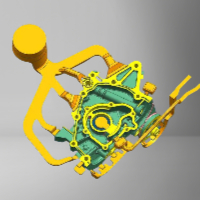
Step 3: Gating System & Metal Flow Engineering
- Optimize gate locations, sizes, and runner layout
- Ensure laminar metal flow, balanced filling, and minimal turbulence
Outcome: Stable filling process, reduced risk of internal defects, and higher first-shot success rate.
Step 4: Thermal Management & Cooling Optimization
- Engineer cooling channels for uniform temperature distribution
- Address hot spots and thermal imbalances
Outcome: Reduced warpage, improved dimensional stability, and shorter cycle times.
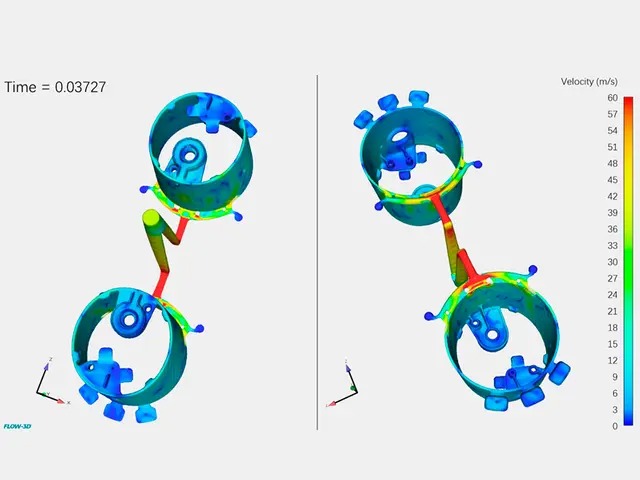
Step 5: Mold Flow Simulation & Validation
- Perform virtual simulations of filling, solidification, and thermal behavior
- Predict potential issues and optimize die design before machining
Outcome: Early detection of risks, minimized production trial costs, and faster development cycles.
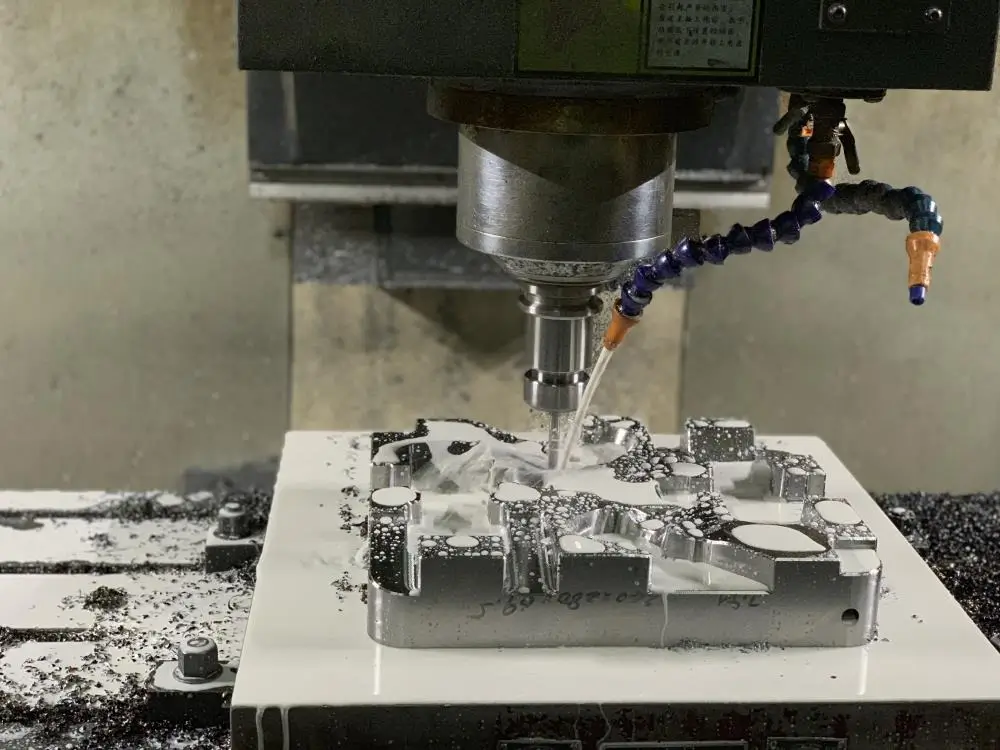
Step 6: Precision Manufacturing & Trial Runs
- Manufacture dies using CNC machining, EDM, and heat treatment
- Conduct trial production to validate part quality, dimensional accuracy, and process stability
Outcome: Ready for mass production with minimal adjustment required.
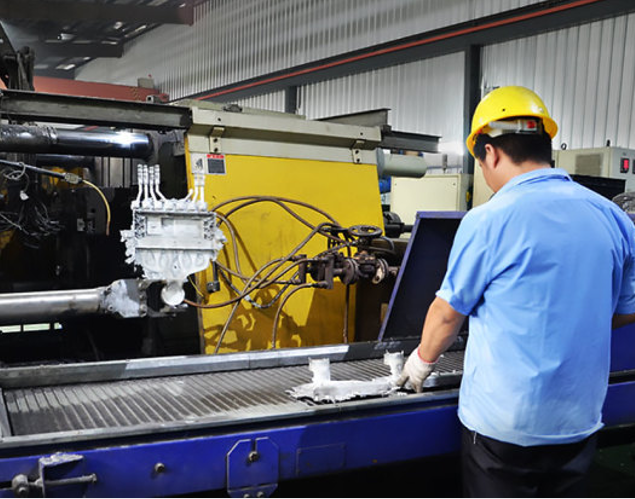
Step 7: Mass Production & Continuous Optimization
- Monitor production parameters and quality metrics
- Perform regular die maintenance and process adjustments
Outcome: Consistent part quality, long die life, and cost-efficient production.
Why This Process Matters?
Many suppliers only react to defects after production starts. At IEC MOULD, we design a controlled, end-to-end process that prevents problems before they occur, giving our customers:
- Predictable quality
- Faster time-to-market
- Reduced scrap and rework
- Long-term cost savings
This process is a key reason why engineers, QC teams, and procurement managers trust IEC MOULD for their aluminum casting die projects.
Why Work With IEC MOULD for Your Aluminum Casting Die Projects
Choosing the right partner for aluminum casting die and production is critical. At IEC MOULD, we combine engineering expertise, advanced technology, and years of hands-on experience to deliver solutions that meet the most demanding quality and production standards.
Here’s why global engineers, QC teams, and procurement managers trust us:
1. One-Stop Solution
From DFM, mold design, die manufacturing, to casting production and post-processing.
Customer Benefit: Save time, reduce errors, accelerate product development.
2. Proven Engineering Expertise
10+ years experience with mold flow, structural analysis, and thermal management.
Customer Benefit: Die designs are practical, precise, and production-ready.
3. Quality Assurance
ISO9001 / IATF16949 certified with rigorous inspection at every stage.
Customer Benefit: Consistent, defect-free parts and reliable delivery.
4. Customer-Oriented Process
Transparent workflow, collaborative design reviews, and responsive adjustments.
Customer Benefit: You stay informed and in control at every stage.
5. Cost Efficiency & Timely Delivery
Optimized designs reduce scrap, streamline production, and lower cost.
Customer Benefit: High ROI without compromising quality.
6. Innovation & Problem-Solving Capability
Advanced simulation and customized solutions for complex projects.
Customer Benefit: Confidently handle challenging parts with reliable results.
Start Your Aluminum Casting Die Project Today
Whether you are designing a new aluminum casting part or upgrading an existing die, IEC MOULD provides the technical expertise, full-service capability, and production reliability you need.
Contact us today to discuss your project and see how we can help you achieve high-quality, defect-free aluminum castings on time and within budget.
👉 Contact us today to get a free design review and quotation.