Introduction to Die Castings and Plastic Injection Moulding
Modern manufacturing relies on a variety of production processes to create high-quality components efficiently. Two of the most widely used methods are die castings and plastic injection moulding. When companies compare die castings vs plastic injection moulding, they are typically evaluating factors such as material strength, production cost, durability, and application suitability.
Both technologies are ideal for mass production and can deliver precise parts with consistent quality. However, die castings vs plastic injection moulding differ significantly in terms of materials, tooling requirements, and end-use performance. Understanding these differences helps engineers, designers, and manufacturers choose the most suitable process for their products.
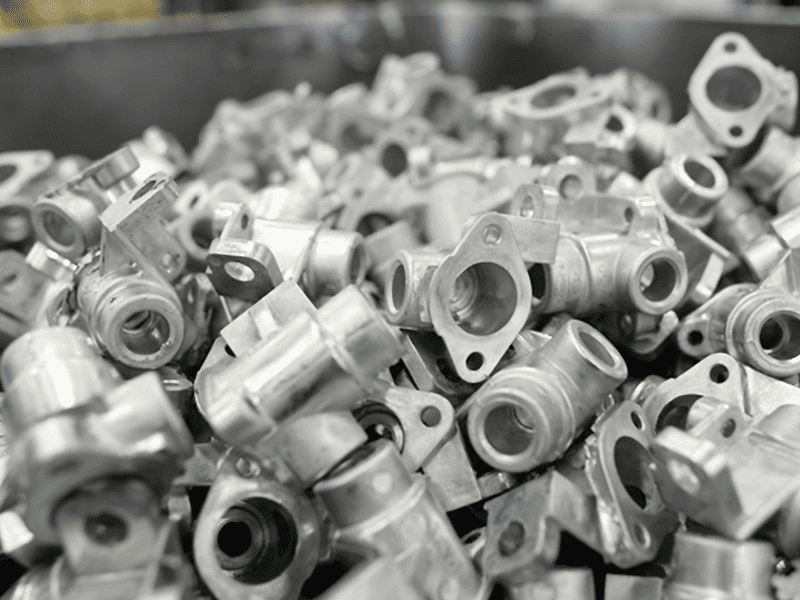
What Are Die Castings
Die castings refer to metal components produced by forcing molten metal into a steel mould (die) under high pressure. The process is commonly used with non-ferrous metals such as aluminum, zinc, and magnesium.
Because the molten metal is injected under pressure, die castings can produce complex shapes with excellent dimensional accuracy and smooth surface finishes. This manufacturing process is widely used in industries that require strong and durable metal components.
Typical characteristics of die castings include:
- High mechanical strength
- Excellent heat resistance
- Tight dimensional tolerances
- Smooth surface finishes
- High production efficiency for large volumes
What Is Plastic Injection Moulding
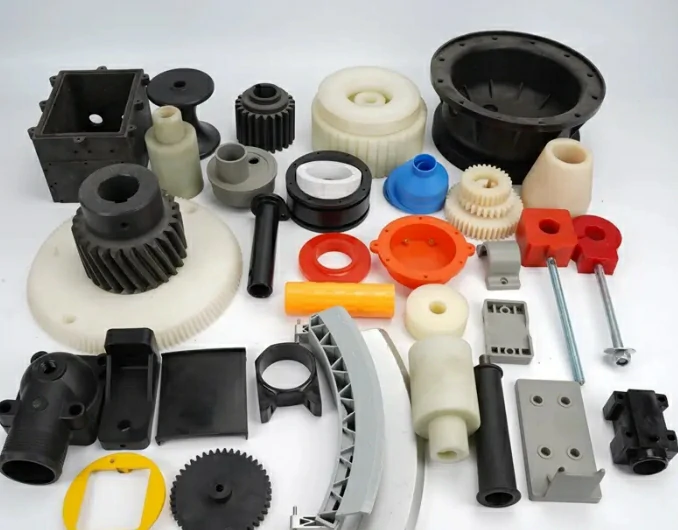
Plastic injection moulding is a manufacturing process used to produce plastic parts by injecting molten plastic into a mould cavity. Once the material cools and solidifies, the finished part is ejected from the mould.
Compared with die castings, plastic injection moulding uses thermoplastic or thermosetting polymers instead of metal. This allows manufacturers to produce lightweight, highly detailed components that can be customized with various colors and finishes.
Common plastics used in plastic injection moulding include:
- ABS
- Polypropylene (PP)
- Polycarbonate (PC)
- Nylon (PA)
- Polyethylene (PE)
Because of its flexibility and cost efficiency, plastic injection moulding is widely used in consumer goods, medical products, packaging, and electronics.
How Die Casting Works
Die Casting Process
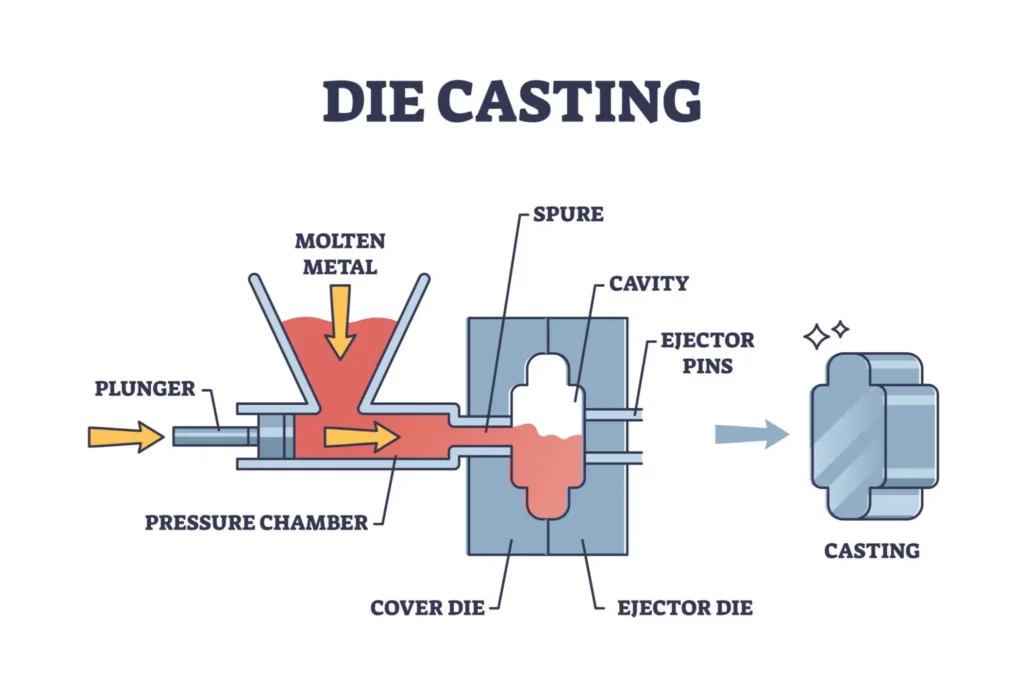
The die casting process begins by melting metal in a furnace. The molten metal is then injected into a hardened steel mould under extremely high pressure. Once the metal solidifies, the mould opens and the finished part is ejected.
The basic steps include:
- Melting the metal alloy
- Injecting molten metal into a steel die
- Cooling and solidifying inside the mould
- Ejecting the finished component
- Trimming and finishing the part
Because of the high pressure used during production, die castings offer excellent precision and repeatability.
Common Materials Used in Die Castings
Several metal alloys are commonly used in die castings, including:
- Aluminum alloys
- Zinc alloys
- Magnesium alloys
Aluminum die castings are particularly popular because they provide a good balance between strength, weight, and corrosion resistance.
How Plastic Injection Moulding Works
Plastic Injection Moulding Process
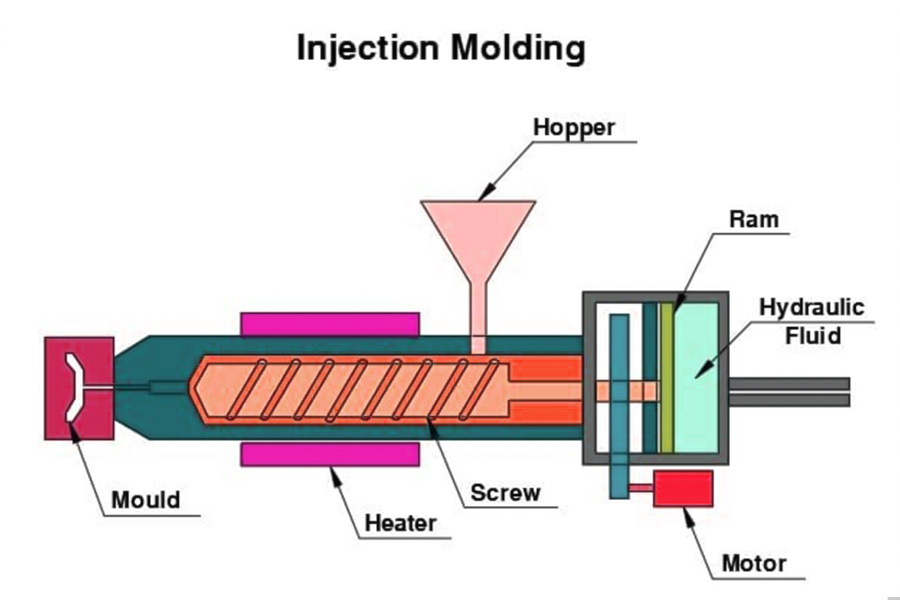
The plastic injection moulding process involves heating plastic pellets until they melt. The molten plastic is then injected into a mould cavity under pressure. After cooling, the mould opens and the part is released.
The typical steps in plastic injection moulding include:
- Feeding plastic pellets into a heated barrel
- Melting the plastic material
- Injecting molten plastic into a mould cavity
- Cooling and solidifying the plastic
- Ejecting the finished product
Because moulds can be reused thousands or even millions of times, plastic injection moulding is ideal for high-volume production.
Common Materials Used in Plastic Injection Moulding
Manufacturers use a wide range of polymers in plastic injection moulding, including:
- ABS for consumer products
- Polycarbonate for transparent or impact-resistant parts
- Nylon for mechanical components
- Polypropylene for packaging and containers
These materials allow plastic injection moulding to produce parts with various mechanical and aesthetic properties.
Die Castings VS Plastic Injection Moulding: Key Differences
When comparing die castings vs plastic injection moulding, several factors should be considered.
| Feature | Die Castings | Plastic Injection Moulding |
|---|---|---|
| Materials | Aluminum, zinc, magnesium | Thermoplastics and polymers |
| Strength | Very high | Moderate |
| Weight | Heavier | Lightweight |
| Heat resistance | Excellent | Limited |
| Surface finish | Very smooth | Highly customizable |
| Best for | Metal structural components | Consumer and plastic products |
In general, die castings vs plastic injection moulding differ mainly in material properties and structural performance. Metal parts offer higher durability, while plastic parts provide lighter weight and greater design flexibility.
Applications of Die Castings and Plastic Injection Moulding
Because of their strength and durability, die castings are widely used in many industries.
Automotive Components
The automotive industry relies heavily on die castings for parts such as engine housings, transmission components, and brackets. Aluminum die castings help reduce vehicle weight while maintaining structural strength.
Electronics Housing
Many electronic devices use die casting to create protective housings that provide strength, heat dissipation, and electromagnetic shielding.
Industrial Equipment
Heavy machinery and industrial tools often require metal parts manufactured through die casting to ensure long-term durability and reliability.
While die castings are used for metal parts, plastic injection moulding is ideal for producing plastic components in large volumes.
Consumer Products
Household products such as containers, toys, and appliances are commonly produced using plastic injection moulding due to its efficiency and flexibility.
Medical Devices
Medical equipment manufacturers often use plastic injection moulding to produce sterile, high-precision plastic parts.
Packaging Products
Packaging industries rely on plastic injection moulding for items such as caps, lids, and containers.
Die Castings VS Plastic Injection Moulding: Cost Considerations
Cost is one of the most important factors when evaluating die castings and plastic injection moulding.
Tooling Costs
Both processes require custom moulds. However, die casting moulds are typically more expensive because they must withstand high temperatures and pressure.
Material Costs
Metal materials used in die casting are generally more expensive than the plastics used in plastic injection moulding.
Production Costs
For large production volumes, both die casting and plastic injection moulding can be highly cost-effective. The choice usually depends on the required material properties and product performance.

Future Trends in Manufacturing
Manufacturing technologies continue to evolve, and both die casting and plastic injection moulding are benefiting from new innovations.
In die casting, advancements in aluminum alloys and automation are improving efficiency and reducing waste. Meanwhile, plastic injection moulding is seeing rapid growth in sustainable materials and recyclable plastics.
Industry trends such as smart manufacturing, automation, and digital mould design are expected to further enhance the capabilities of both processes.
FAQ: Die Castings VS Plastic Injection Moulding
Yes. Die castings typically provide higher mechanical strength because they are made from metal alloys, while plastic injection moulding parts are made from polymer materials.
The cost advantage depends on the product. Plastic injection moulding is often cheaper for lightweight consumer products, while die castings may be more cost-effective for durable metal components.
In some cases, yes. Certain components can be produced using either die castings or plastic injection moulding, but the final choice depends on performance requirements such as strength, heat resistance, and weight.
Conclusion
Both die castings and plastic injection moulding play essential roles in modern manufacturing. Die castings are ideal for producing strong, heat-resistant metal components used in industries such as automotive, electronics, and industrial machinery. On the other hand, plastic injection moulding is well suited for lightweight plastic products, consumer goods, and high-volume production.
Choosing between die castings and plastic injection moulding ultimately depends on factors such as material requirements, product design, durability, and production volume.
If you are looking for a reliable partner for die casting moulds or plastic injection moulding solutions, professional engineering support can help ensure the success of your project.
IEC MOULD (China) provides high-quality mould manufacturing and production services for global clients.
Location: China
Email: [email protected]
Tel: +86-0769-85336570
Website: https://castingstool.com/
Contact us today to discuss your project and discover the best manufacturing solution for your product.
.