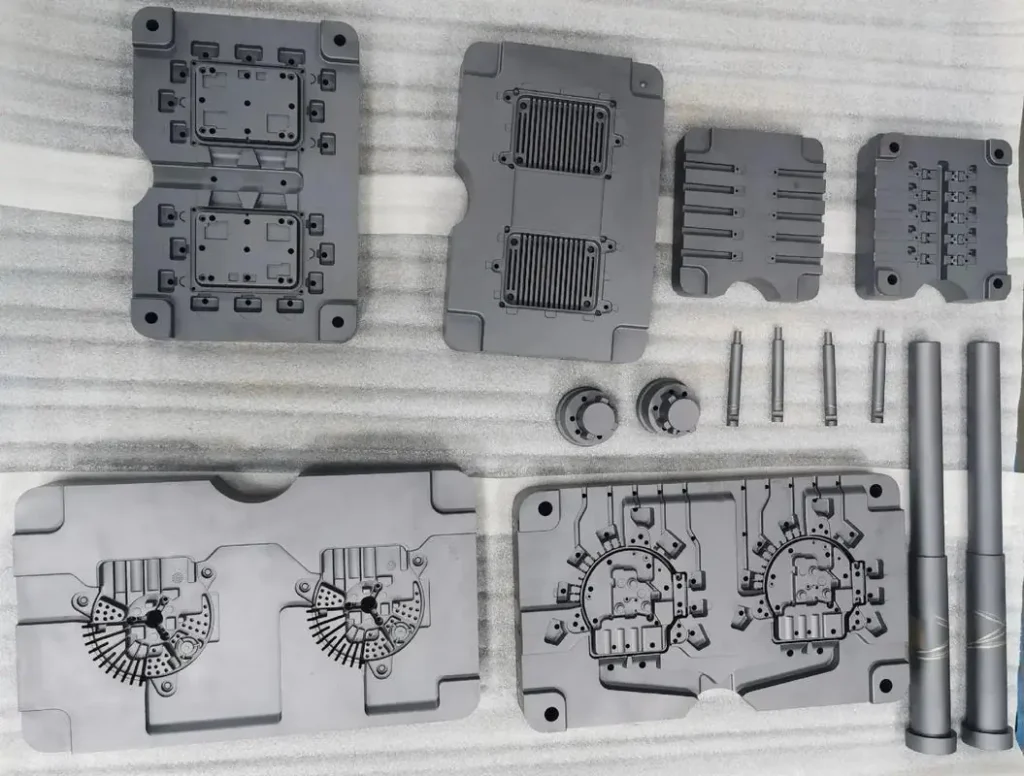
Aluminum Casting Die Surface Treatment Options and Costs – Maximize Die Life & Reduce Production Costs
Using the right surface treatment can extend aluminum die casting Die mold life by 1–3 years and reduce maintenance costs by up to 40%. Die casting tools without proper coating may wear out in 6–12 months, leading to higher scrap rates, frequent replacements, and production delays.
Why Surface Treatment Matters for Aluminum Casting Dies:
- Rapid die wear → Dies can fail in <12 months for medium production volumes.
- Aluminum sticking & build-up → Increases defective parts by 10–20%, requiring extra labor and rework.
- Corrosion & pitting → Reduces reliability, forcing early die replacement.
- High downtime & maintenance costs → Lost production can exceed thousands of dollars per month depending on output.
Professional Insight from IEC MOULD: Choosing the correct surface treatment is more than a technical choice—it’s a strategic investment. Even a small improvement in coating selection can save thousands annually while increasing die life and casting consistency.
Quick Takeaways for Production Teams:
- Extend die life → 1–3 years longer depending on coating type
- Reduce downtime & maintenance → up to 40% cost savings
- Improve casting quality → fewer defects and less scrap
- Increase ROI → right coating pays for itself quickly
👉 Tip: Identify your die challenges early. A proper surface treatment strategy can prevent expensive replacements and downtime before it happens.
Top Surface Treatment Options for Aluminum Casting Dies
Selecting the right surface treatment for your aluminum dies is crucial to extend die life, reduce maintenance, and improve casting quality. Below are the most commonly used surface treatments in the die casting industry, along with their key characteristics.
Nickel Plating (Ni)
Nickel plating is a widely used coating that enhances die hardness and reduces aluminum sticking. It’s suitable for low to medium production volumes and offers reliable protection against wear.
Key Points:
- Increases surface hardness and durability
- Reduces aluminum build-up
- Compatible with most aluminum die alloys
- Suitable for general-purpose casting operations
Hard Chrome Plating
Hard chrome plating provides high wear resistance, making it ideal for medium-volume production. It also improves corrosion resistance but requires professional handling due to environmental considerations.
Key Points:
- Excellent wear resistance
- Offers moderate corrosion protection
- Best for medium-volume applications
- Extends die lifespan while maintaining consistent casting quality
Physical Vapor Deposition (PVD)
PVD coatings deliver low friction and high wear resistance, suitable for high-precision or complex castings. They reduce sticking and help maintain consistent part quality over time.
Key Points:
- Low friction surface for smooth casting release
- High durability for precision parts
- Ideal for medium to high-volume operations
- Extends maintenance intervals
Diamond-Like Carbon (DLC) Coating
DLC is a premium coating that offers the highest wear resistance and longevity. It’s ideal for high-volume production or highly complex dies where minimizing downtime is critical.
Key Points:
- Maximum wear resistance and low friction
- Suitable for complex geometries and high-output dies
- Significantly extends die life and reduces downtime
- Often used in automotive and precision component industries
Other Options
Other surface treatments, such as ceramic coatings or anodizing, provide specialized protection for unique production requirements. These are less common but can be effective for specific applications where corrosion resistance or thermal stability is critical.
Key Points:
- Ceramic coatings: high temperature and wear resistance
- Anodizing: moderate corrosion protection, aesthetic finish
- Consider for specialized or niche applications
Cost & Selection Guidance
| Surface Treatment | Typical Use | Advantages | Considerations |
|---|---|---|---|
| Nickel Plating | Low–medium volume | Hardness, reduces sticking | Moderate lifespan, not for high-volume |
| Hard Chrome Plating | Medium volume | Wear and corrosion resistance | Environmental handling required |
| PVD | Medium–high volume | Low friction, precision | Higher initial cost |
| DLC | High volume, complex dies | Maximum durability, minimal downtime | Premium cost |
| Ceramic/Anodizing | Specialized | High temp/corrosion | Niche applications |
👉 Tip: Choosing the right coating depends on your production volume, part complexity, and maintenance goals. IEC MOULD can provide guidance to select the optimal solution for your dies.
If you want to extend die life, reduce downtime, and optimize production costs, our team at IEC MOULD can help assess your dies and recommend the most suitable surface treatment. Contact us for a free consultation today.
Cost Comparison and ROI of Aluminum Die Casting Die Surface Treatments
Understanding the cost of surface treatment is important—but what matters more is the total cost over the die’s lifetime. A lower upfront cost does not always mean lower overall expenses.
Typical cost ranges for aluminum die casting surface treatments:
| Surface Treatment | Estimated Cost (USD) | Typical Lifespan | Maintenance Frequency |
|---|---|---|---|
| Nickel Plating | $300 – $800 | 6–18 months | Moderate |
| Hard Chrome Plating | $600 – $1,200 | 1–2 years | Moderate |
| PVD Coating | $1,000 – $2,500 | 2–3 years | Low |
| DLC Coating | $2,000 – $5,000+ | 3+ years | Very Low |
| Ceramic Coating | $800 – $2,000 | 1–2 years | Low |
👉 Note: Actual costs vary depending on die size and production conditions
ROI Comparison: Which Option Saves the Most Money?
While premium coatings like PVD or DLC have higher upfront costs, they often deliver better long-term value by reducing downtime and extending die life.
| Surface Treatment | Initial Cost | Die Life Extension | Downtime Reduction | Overall ROI |
|---|---|---|---|---|
| Nickel Plating | Low | Low | Limited | ★★☆☆☆ |
| Hard Chrome | Medium | Medium | Moderate | ★★★☆☆ |
| PVD | Medium–High | High | Significant | ★★★★☆ |
| DLC | High | Very High | Maximum | ★★★★★ |
Hidden Costs You Should Not Ignore
Many manufacturers focus only on coating price, but the hidden costs often have a bigger impact:
- Frequent die replacement → increases tooling investment
- Production downtime → lost output and delayed delivery
- Scrap and rework → higher labor and material waste
- Maintenance labor → ongoing operational cost
👉 In many cases, choosing a higher-quality coating can reduce total production costs by 20–40% over time.
Key Takeaway for Buyers and Engineers
- Don’t choose based on price alone
- Evaluate cost per year of die life
- Consider downtime and production loss
- Match coating type with your production volume and part complexity
Choosing the right surface treatment depends on your specific die design and production requirements. At IEC MOULD, we help customers evaluate not just the coating cost, but the total lifecycle value—so you get the best return on your investment.
👉 Contact us today for a free cost analysis and coating recommendation tailored to your project.
How to Choose the Right Surface Treatment for Your Aluminum Casting Die?
Choosing the right surface treatment doesn’t have to be complicated. By focusing on a few key factors, you can quickly identify the best option for your production needs.
Step 1: Define Your Production Volume
Start by understanding how many parts you plan to produce.
- Low volume → Nickel plating is usually sufficient
- Medium volume → Hard chrome or PVD is more suitable
- High volume → DLC or advanced coatings are recommended
👉 Higher production volumes require more durable coatings to avoid frequent downtime and replacement.
Step 2: Evaluate Part Complexity
The geometry of your casting plays a major role in coating selection.
- Simple parts → Standard coatings work well
- Complex shapes / deep cavities → Low-friction coatings like PVD or DLC reduce sticking
- High precision parts → Require stable and consistent surface performance
👉 The more complex the part, the more important it is to reduce friction and sticking.
Step 3: Identify Your Main Problem
Different coatings solve different production issues.
- Wear problem → Choose hard coatings (Chrome, DLC)
- Sticking / soldering → Choose low-friction coatings (PVD, DLC)
- Corrosion issue → Choose protective coatings (Nickel, Chrome)
👉 Focus on your biggest pain point instead of choosing blindly.
Step 4: Consider Your Budget vs Long-Term Cost
- It’s important to balance initial investment and long-term savings.
- Lower-cost coatings → lower upfront cost, but more maintenance
- Premium coatings → higher upfront cost, but longer life and less downtime
👉 Always evaluate cost per year, not just initial price.
Step 5: Match Coating to Maintenance Capability
Some coatings require more frequent maintenance than others.
- Limited maintenance resources → choose durable coatings (PVD, DLC)
- Strong maintenance capability → standard coatings may be acceptable
👉 Choosing the wrong coating can increase hidden operational costs.
Step 6: Get Expert Evaluation Before Final Decision
Every die is different. Factors like alloy type, temperature, and cycle time can influence coating performance.
👉 A professional evaluation can help avoid costly trial-and-error.
Quick Selection Guide (Summary Table)
| Production Need | Recommended Treatment |
|---|---|
| Low volume, simple parts | Nickel Plating |
| Medium volume | Hard Chrome / PVD |
| High volume | DLC Coating |
| Complex geometry | PVD / DLC |
| High wear conditions | Chrome / DLC |
Key Takeaway
- Start with your production volume and main problem
- Choose coating based on performance, not just cost
- Consider long-term ROI and maintenance
- When in doubt, get expert input before making a decision
If you’re unsure which surface treatment is best for your die, a quick evaluation can save significant time and cost. At IEC MOULD, we help customers select the most suitable coating based on real production conditions—not guesswork.
👉 Contact us today for a free consultation and tailored recommendation.
Case Studies – Real Results from Aluminum Casting Die Surface Treatment
Real production results often speak louder than specifications. Below are examples of how the right surface treatment helped solve common die casting challenges and reduce overall costs.
Case 1: Solving Severe Aluminum Sticking in Automotive Parts
Customer Background:
An automotive parts manufacturer was producing high-volume aluminum components with complex geometry.
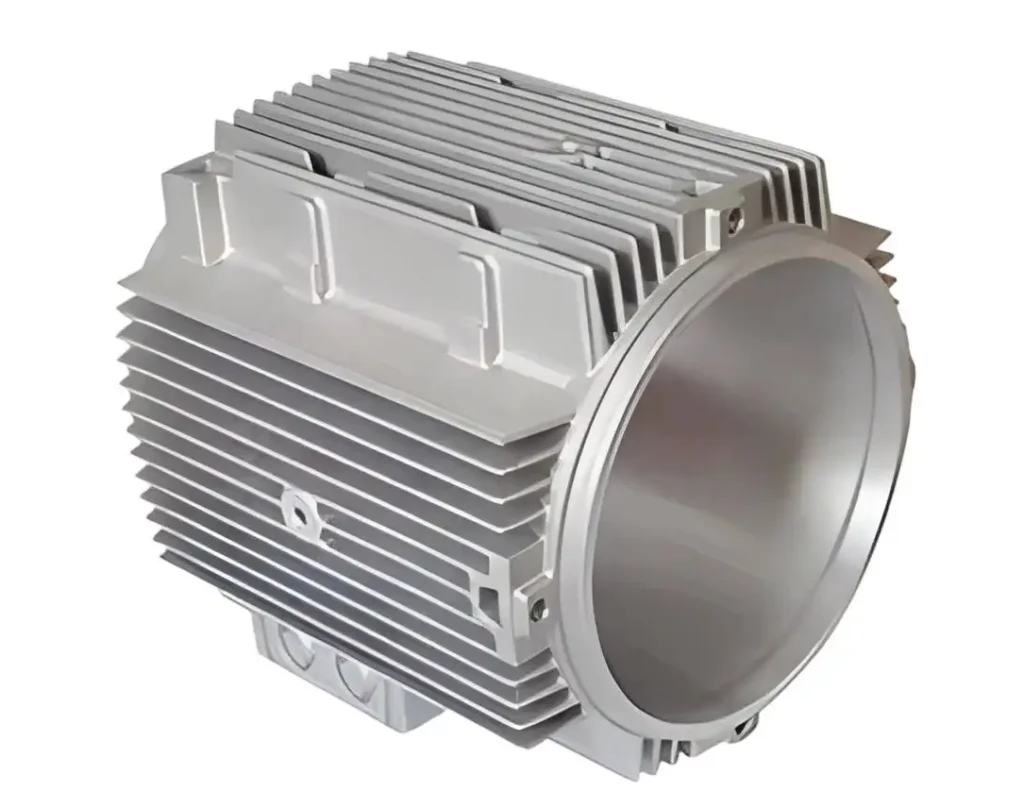
Problem:
- Severe aluminum sticking on the die surface
- Frequent cleaning required
- High scrap rate and unstable quality
Solution:
IEC MOULD recommended switching from standard nickel plating to a PVD coating with low friction properties.
Result:
- Sticking issue significantly reduced
- Scrap rate decreased by approximately 15%
- Maintenance intervals extended
- Overall production efficiency improved
👉 Impact: The customer achieved more stable production with less manual intervention.
Case 2: Extending Die Life for High-Volume Production
Customer Background:
A manufacturer producing large volumes of aluminum housing components.
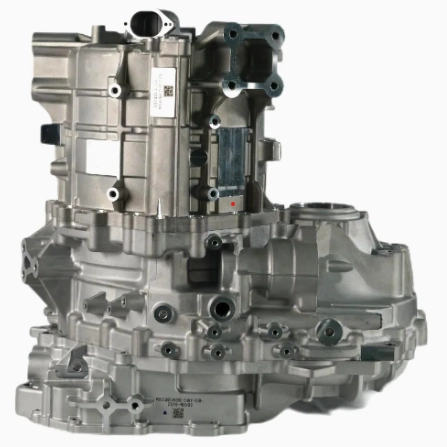
Problem:
- Dies wearing out within 8–10 months
- Frequent replacements increasing tooling costs
- Production interruptions affecting delivery
Solution:
IEC MOULD recommended upgrading to DLC coating for higher wear resistance and durability.
Result:
- Die life extended to over 2 years
- Downtime significantly reduced
- Maintenance frequency lowered
- Better consistency in casting quality
👉 Impact: The higher initial investment resulted in lower total cost over time.
What These Cases Mean for You
Across different industries and production volumes, the right surface treatment can:
- Reduce defects and scrap rates
- Extend die lifespan significantly
- Lower maintenance and downtime
- Improve overall production efficiency
Even small adjustments in coating selection can lead to measurable cost savings and performance improvements.
👉 Not sure which solution fits your case?
At IEC MOULD, we help customers identify the right surface treatment based on real production challenges. Contact us today for a free evaluation and recommendation.
Frequently Asked Questions (FAQ)
What is the best surface treatment for aluminum casting dies?
The best surface treatment depends on your production volume and main problem, but DLC and PVD coatings are generally the most effective for high performance and long die life.
For high-volume production or complex parts, low-friction and high-wear-resistant coatings like DLC can significantly reduce downtime and sticking. For simpler or lower-volume applications, nickel or chrome plating may be sufficient.
👉 If you’re unsure, selecting the wrong coating can increase long-term costs—getting expert advice early is recommended.
How much does aluminum die surface treatment cost?
Aluminum casting die surface treatment typically costs between $300 and $5,000+, depending on the coating type, die size, and complexity.
Basic coatings like nickel plating are more affordable, while advanced options such as DLC or PVD have higher upfront costs but longer lifespan and lower maintenance.
👉 The key is to evaluate total lifecycle cost, not just initial price.
Which coating lasts the longest for die casting dies?
DLC (Diamond-Like Carbon) coating typically offers the longest lifespan, often lasting 2–3 times longer than standard coatings.
It provides excellent wear resistance and low friction, making it ideal for high-volume production and complex geometries.
👉 Longer lifespan means fewer replacements and less downtime.
How can I reduce aluminum sticking in dies?
The most effective way to reduce aluminum sticking is to use low-friction coatings such as PVD or DLC.
These coatings minimize adhesion between molten aluminum and the aluminum casting die surface, improving part release and reducing defects.
👉 Proper coating selection can reduce scrap rates and improve production stability.
Is a more expensive coating always better?
No, the most expensive coating is not always the best choice—the best option depends on your production needs and ROI.
For low-volume production, a lower-cost coating may be sufficient. However, for high-volume or critical parts, premium coatings often provide better long-term value.
👉 Always compare cost vs performance over time, not just upfront price.
How often should aluminum casting die surface coatings be replaced?
Most standard coatings need replacement every 6–24 months, while advanced coatings like DLC can last 2–3 years or more depending on usage.
Maintenance frequency depends on production volume, alloy type, and operating conditions.
👉 Regular inspection helps prevent unexpected downtime.
👉 Still Not Sure Which Option Is Right for You?
Choosing the wrong surface treatment can lead to higher costs, more downtime, and shorter die life. At IEC MOULD, we help customers quickly identify the best solution based on real production conditions—saving both time and money.
👉 Contact us today for a free consultation and coating recommendation.