The 10 Commandments of Aluminum CNC Cutting: A Complete Guide to Precision Machining

Table of Contents
Get a Free Quote Now!

Aluminum CNC cutting is one of the most widely used manufacturing processes for producing high-precision metal parts. Thanks to aluminum’s excellent machinability, strength-to-weight ratio, and corrosion resistance, it has become a preferred material across industries such as aerospace, automotive, electronics, and industrial equipment.

This guide explains everything you need to know about aluminum CNC machining — from alloys and machines to design guidelines and cost optimization.

What is Aluminum CNC Cutting?

Aluminum CNC cutting is a precision manufacturing process where computer-controlled machines remove material from an aluminum workpiece to create custom parts and components. By following digital instructions (G-code) generated from CAD models, CNC machines achieve tolerances and repeatability that are impossible to achieve manually .

1.1 Definition

At its core, aluminum CNC machining uses automated cutting tools to shape aluminum stock. Whether through milling, turning, or routing, the process is subtractive—starting with a solid block and carving out the final geometry.

1.2 Advantages of Aluminum CNC Cutting

Aluminum CNC cutting offers several key benefits:

  • High precision – tolerances as tight as ±0.01 mm
  • Excellent surface finish
  • Fast production speed
  • High repeatability for mass production
  • Suitable for complex geometries
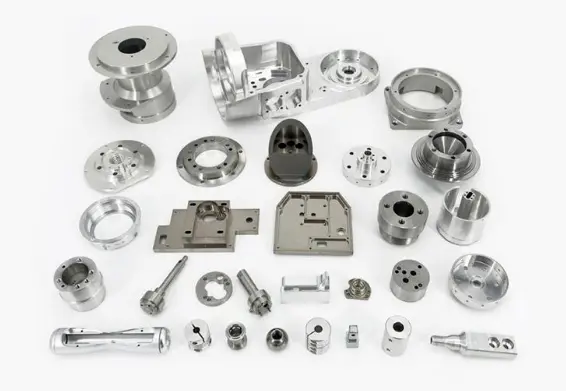
aluminium cnc cutting parts

1.3 Key industries using aluminum CNC parts

Aluminum CNC machining is widely used in:

  • Aerospace components

  • Automotive parts

  • Electronics housings

  • Medical equipment

  • Industrial machinery

aluminum CNC cutting - car parts

Why Aluminum is Ideal for CNC Machining

Aluminum is one of the most machinable metals available, which makes it ideal for aluminum CNC cutting.

2.1 Excellent Machinability

Compared with steel or titanium, aluminum is softer and easier to cut. This allows:

  • Faster machining speeds
  • Lower tool wear
  • Reduced production costs

2.2 High Strength-to-Weight Ratio

Aluminum is strong yet lightweight. This makes it perfect for applications where weight reduction is critical, such as aerospace and automotive parts.

2.3 Corrosion Resistance

Many aluminum alloys naturally form an oxide layer that protects them from corrosion. Additional surface treatments like anodizing can further improve durability.

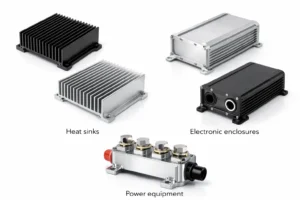
2.4 Thermal and Electrical Conductivity

Aluminum conducts heat and electricity efficiently, which is why it is widely used in:

  • Heat sinks

  • Electronic enclosures

  • Power equipment

aluminun cnc cutting parts - heat sinks, electronic enclosures, and power equipment

Common Aluminum Alloys Used in CNC Cutting

Different aluminum alloys provide different properties such as strength, corrosion resistance, and machinability, making them suitable for aluminum CNC cutting applications.

3.1 Aluminum 6061

Characteristics:

  • Good machinability
  • Excellent corrosion resistance
  • Good weldability

Common applications:

  • Mechanical components
  • Structural parts
  • Electronics housings

3.2 Aluminum 7075

Characteristics:

  • Extremely strong
  • Good fatigue resistance
  • Lower corrosion resistance than 6061

Applications:

  • Aerospace parts
  • High-performance automotive components
  • Structural components

3.3 Aluminum 5052

For CNC machining applications, 5052-H32 is the most common temper. It offers the ideal balance of workability and strength, making it the go-to choice for sheet metal enclosures and marine components.

Characteristics:

  • Excellent marine resistance
  • Good formability
  • Moderate strength

Applications:

  • Marine equipment
  • Enclosures
  • Sheet metal parts

3.4 Aluminum 2024

Characteristics:

  • Very strong
  • Excellent fatigue resistance
  • Lower corrosion resistance

Applications:

  • Aircraft structural components
  • High-load mechanical parts

3.5 Aluminum Alloy Comparison

AlloyStrengthMachinabilityCorrosion ResistanceTypical Use
6061MediumExcellentExcellentGeneral machining
7075Very HighGoodModerateAerospace
5052MediumGoodExcellentMarine
2024HighGoodLowAircraft structures

Types of CNC Machines for Aluminum Cutting

Different CNC machines are used depending on the shape and complexity of the aluminum parts.

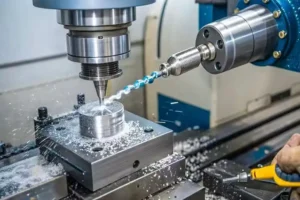
4.1 CNC Milling Machines

CNC milling is the most common process for aluminum parts.

Capabilities include:

  • Slot cutting
  • Pocket milling
  • Surface contouring
  • Complex 3D geometries
An aluminum CNC milling machine cutting process

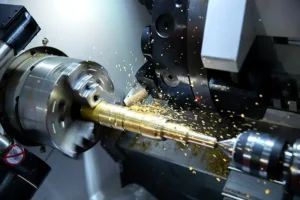
4.2 CNC Turning Machines

CNC lathes are used to machine cylindrical components such as:

  • Shafts
  • Bushings
  • Connectors
  • Housings
CNC lathe turning aluminum

4.3 CNC Routers

 Ideal for sheet aluminum. They operate at high speeds to cut out profiles, though they are less rigid than mills

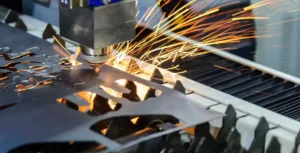
4.4 Laser Cutting Machines

Laser cutting is mainly used for:

  • Thin aluminum sheets
  • Precision profiles
  • High-speed sheet processing
Fiber laser cutting machine cutting through an aluminum sheet with a bright beam and sparks.

Aluminum CNC Machining Process

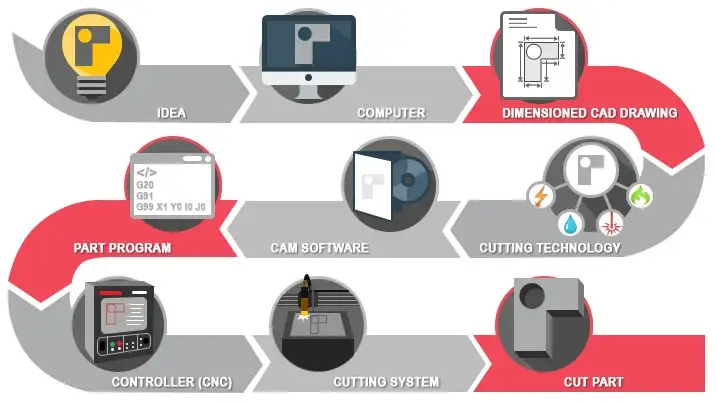
The journey from raw block to finished part follows a strict five-step workflow.

  1. CAD design: Engineers create a 3D model of the part using software like SolidWorks or AutoCAD.

  2. CAM programming: The CAD file is imported into CAM software, which generates toolpaths and G-code for the machine to follow.

  3. CNC machining: The machine executes the program, cutting away material to form the part. This step involves selecting the right speeds, feeds, and tools.

  4. Inspection: The finished part is measured using calipers, micrometers, or CMMs to ensure it meets the specified tolerances.

  5. Post-processing: Secondary operations like deburring or surface finishing are applied.

Aluminium CNC Cutting CAD to CAM to part workflow

Cutting Tools and Parameters for Aluminum CNC Machining

Using the correct cutting tools is critical for achieving good performance in aluminum CNC cutting.

6.1 Best Tools for Aluminum Machining

Carbide End Mills

Carbide tools provide high cutting speeds and durability.

High Helix Cutters

High helix angles help evacuate chips quickly and reduce tool vibration.

Single Flute Tools

Single-flute tools are excellent for aluminum because they allow better chip removal at high speeds.

6.2 Typical Cutting Speeds and Feeds

Tool TypeSpindle SpeedFeed RateApplication
Carbide end mill10,000–18,000 RPMHighGeneral milling
High helix cutter12,000–20,000 RPMMedium-highSmooth finishing
Single flute tool15,000–24,000 RPMHighHigh-speed machining

Common Challenges in Aluminum CNC Cutting

Although aluminum is easy to machine, some issues can still occur.

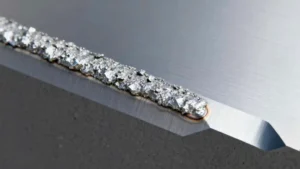
7.1 Built-Up Edge

Aluminum chips can stick to cutting tools, forming a built-up edge that affects surface finish.

Solution:

  • Use sharp tools
  • Increase cutting speed
  • Apply coolant
aluminum cnc cutting defects - Built-Up Edge

7.2 Burr Formation

Burrs often appear on edges after machining.

Solution:

  • Use optimized cutting parameters
  • Apply deburring processes
aluminum cnc cutting defects - burr

7.3 Chip Evacuation

Aluminum produces long chips that may clog the cutting area.

Solution:

  • Use high helix tools
  • Ensure good coolant flow
Aluminum CNC Cutting Defects - Chip Evacuation

7.4 Vibration and Chatter

Thin parts or aggressive cutting parameters may cause chatter.

Solution:

  • Increase rigidity

  • Optimize feeds and speeds

Aluminum CNC Cutting Defects - Vibration and Chatter

Key Design Considerations for Aluminum CNC Cutting

Designing for manufacturability (DFM) is the secret to affordable, machinable parts.

  • Wall thickness: Avoid walls thinner than 0.8 mm for metals. Thin walls vibrate during machining and are difficult to hold to tolerance .
  • Internal radius: Design internal vertical corners with a radius. Since CNC mills are round, sharp inside corners cannot be achieved without EDM.
  • Hole design: Use standard drill sizes to avoid custom tooling costs .
  • Thread design: Ensure there is enough material around threads to prevent bulging.
  • Deep pockets: Limit pocket depth to 4x the tool diameter. Deeper pockets require specialty long-reach tools that are prone to deflection.

Workholding Methods for Aluminum CNC Machining

Ideal for:

  • Thin aluminum plates

  • Flat sheet components

Commonly used for:

  • Solid aluminum blocks

  • Medium-size parts

For mass production, custom fixtures improve:

  • positioning accuracy

  • production efficiency

Surface Finishing Options for Aluminum CNC Parts

Machining marks don’t always tell the full story. Finishing enhances aesthetics and performance.

  • Anodizing: An electrochemical process that thickens the natural oxide layer. It adds color (clear, black, red) and hardness. 6061 and 5005 are best for anodizing.
  • Sand-blasting: Creates a uniform matte or satin finish by blasting the surface with fine media.
  • Polishing: Creates a mirror-like, high-gloss surface.
  • Powder coating: Adds a thick, durable, colored layer for enhanced protection

CNC Machining Tolerances for Aluminum

CNC machining can achieve very tight tolerances depending on machine capability and part geometry.

FeatureTypical Tolerance
Linear dimensions±0.01 – ±0.05 mm
Hole diameter±0.01 mm
Flatness±0.02 mm
Surface finishRa 0.8 – 3.2 μm

How to Reduce Aluminum CNC Machining Costs

CNC machining is cost-predictable if you follow these rules.

  • Simplify design: Complex 3D contours take longer to cut than simple 2.5D profiles.
  • Reduce machining operations: Design parts that can be machined in as few setups as possible. Flipping the part adds labor.
  • Avoid tight tolerances: Only apply tight tolerances to surfaces that mate with other parts. Letting the rest of the part relax to standard tolerances saves inspection time.
  • Use standard stock sizes: Design your part to fit within standard bar stock dimensions to minimize material waste.

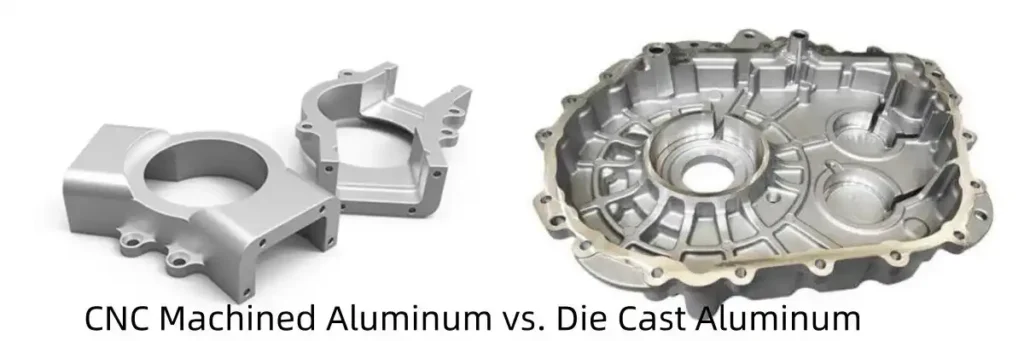
Aluminum CNC Machining vs Die Casting

Both CNC machining and die casting are commonly used for aluminum parts.

CNC machined part vs die casting part
FactorCNC MachiningDie Casting
Production volumeLow to mediumMedium to high
Tooling costLowHigh
Unit costHigherLower in mass production
Design complexityVery flexibleSome design limitations
Lead timeShortLonger mold development

For prototypes or low-volume parts, CNC machining is usually the best option.
For high-volume production, die casting can significantly reduce per-unit cost.

How to Reduce Aluminum CNC Machining Costs

Several strategies can help reduce machining costs without sacrificing quality.

  • Optimize part design to simplify machining
  • Avoid unnecessary tight tolerances
  • Choose the appropriate aluminum alloy
  • Use standard tool sizes
  • Combine processes such as die casting and CNC machining when possible

Working with an experienced manufacturer can significantly improve production efficiency.

How to Choose a Reliable Aluminum CNC Cutting Manufacturer

Selecting the right manufacturing partner is essential for ensuring product quality and on-time delivery.
Important factors to consider include:

  • Experience in aluminum machining
  • Advanced CNC equipment
  • Strong quality control systems
  • Surface finishing capabilities
  • Export experience with international customers

A professional manufacturer can also provide design optimization suggestions to improve manufacturability.

FAQ About Aluminum CNC Cutting

What aluminum alloy is best for machining?

6061 aluminum is the most widely used alloy due to its balance of strength, machinability, and corrosion resistance.

CNC machining is better for prototypes and low-volume production, while die casting is more cost-effective for large production volumes.

The cost depends on factors such as part complexity, material type, machining time, and surface finishing requirements.

Conclusion

Aluminum CNC cutting remains the cornerstone of precision manufacturing. Mastering this process ensures high-quality, cost-effective parts. By understanding the nuances of alloy selection, toolpath optimization, and design guidelines, you can produce parts that are lightweight, durable, and cost-effective.

If you are looking for a reliable aluminum CNC machining and die casting manufacturer, our engineering team can help you optimize your design and reduce manufacturing costs.

Picture of Dong Chen
Dong Chen

As a die casting engineer, I’ve spent years immersed in the design and optimization of high-pressure casting systems. I realized early on that dense technical specifications often create a barrier to understanding rather than a roadmap for success. This experience inspired me to translate complex metallurgical and mechanical engineering principles into clear, actionable insights, making the intricacies of die casting automation accessible and intuitive for everyone involved.
Contact With Us

Quick Info Exchange Helps Us Serve You Better

  • If you need to send drawings, please send them to this email address: [email protected]
  • We will contact you within 1 working day