Skip to content
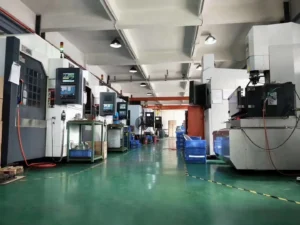
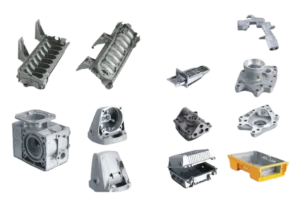
Custom die casting services are widely used in OEM manufacturing to produce high-precision metal components at scale. Custom die casting services offer a reliable solution for complex part geometries.
From automotive parts to electronic housings, this process enables manufacturers to achieve complex geometries, tight tolerances, and cost efficiency in mass production. Many OEMs turn to custom die casting services when consistency and repeatability are critical.
In this guide, you’ll learn:
- What custom die casting services are
- Key benefits for OEM projects
- Material selection (aluminum, zinc, magnesium)
- Step-by-step manufacturing process
- Cost drivers and supplier selection tips
What Are Custom Die Casting Services?
Custom die casting services refer to the manufacturing of metal components using high-pressure molds designed specifically for OEM parts. This process allows manufacturers to produce complex, high-precision parts in large volumes with excellent consistency.
A professional custom die-casting manufacturer can turn your CAD drawings into fully functional components while maintaining tight tolerances and consistent quality. These services are widely used in automotive, electronics, and industrial applications where both performance and scalability matter. Custom die casting services are particularly valued for their ability to integrate multiple features into a single part.
Key Benefits of Custom Die Casting for OEM Parts
✅1. High Precision and Tight Tolerances
Modern precision die casting services can achieve dimensional accuracy within ±0.02 mm to ±0.1 mm, reducing the need for excessive machining. Custom die casting services consistently deliver this level of accuracy across high-volume runs.
✅2. Fast Lead Time for Mass Production
Once tooling is ready, die casting manufacturing services enable rapid production cycles, ideal for OEM mass production.
✅3. Cost Efficiency at Scale
For high-volume projects, custom die casting significantly lowers per-unit cost compared to CNC machining or other metal forming methods.
✅4. Excellent Surface Finish
Parts produced by high-pressure die casting services often require minimal finishing due to smooth as-cast surfaces.
✅5. Complex Geometry Capability
Die casting allows for thin walls, intricate shapes, and integrated features such as bosses, ribs, and threads that other processes struggle to achieve.
How to Choose the Right Die Casting Material (Aluminum vs Zinc vs Magnesium)
Selecting the right material is one of the most critical decisions in custom die casting services. The choice directly affects part performance, cost, weight, and manufacturability. Fortunately, custom die casting services support all three major material families.
🟡1. Quick Material Selection Guide
Use the following decision logic to determine the most suitable material for your project:
🟡2. Material Selection Breakdown
| Material | Best For | Key Advantages | Limitations | Typical Applications |
|---|---|---|---|---|
| 🟢 Aluminum | General OEM projects | Lightweight, strong, corrosion-resistant | Moderate cost | Automotive, electronics, heat sinks |
| 🔵 Zinc | High-precision small parts | Excellent detail, smooth surface, cost-effective | Heavier | Connectors, locks, hardware |
| 🟣 Magnesium | Ultra-lightweight applications | Lightest metal, good EMI shielding | Higher cost, complex process | Aerospace, portable devices |
✅ Quick Selection Tips
- 👉 Choose Aluminum → If you want the best balance of performance and cost
- 👉 Choose Zinc → If precision and surface finish matter most
- 👉 Choose Magnesium → If weight reduction is your top priority
✅ IEC MOULD Engineering Insight
In real-world projects, material selection is rarely about choosing the “best” material—it’s about choosing the most suitable one based on application priorities.
- Aluminum is often the default starting point
- Zinc is selected when precision outweighs weight
- Magnesium is used when performance justifies a higher cost
Not sure which material fits your project?
👉 Send us your 3D drawing (STEP/IGS) or application details.
Our engineers will recommend the most suitable material and provide a free DFM analysis within 24 hours.
The Die Casting Process (Step-by-Step Guide for OEM Parts)
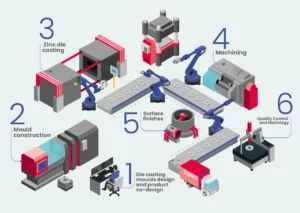
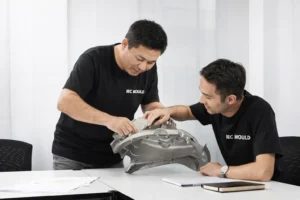
Understanding the die casting process helps both engineers and buyers choose the right die casting service provider. While specific workflows may vary, most custom die casting services follow a structured five-step process from design to final inspection.
🟡1. Process Overview
🟡2. Visual Process Flow
🟡3. Step-by-Step Breakdown
✅Step 1: Product Design & DFM Analysis
Engineers evaluate and optimize your design for manufacturability. A thorough Design for Manufacturability (DFM) review helps reduce defects, avoid undercuts, and minimize tooling complexity.
✅Step 2: Mold Design & Tooling
High-quality molds are the foundation of stable production and long tool life. Suppliers with in-house tooling capabilities can better control quality and shorten lead times.
✅ Step 3: Die Casting Production
Molten metal is injected into the mold under high pressure using the high-pressure die casting process. This ensures consistent wall thickness and repeatable results across large production runs. Custom die casting services excel at maintaining repeatability from the first part to the 100,000th.
✅ Step 4: Post Processing
Secondary operations such as CNC machining, deburring, polishing, or surface coating are applied to meet final specifications and functional requirements.
✅ Step 5: Quality Inspection
Strict dimensional and visual inspections ensure all custom die-cast parts meet OEM requirements. Advanced manufacturers often use CMM (Coordinate Measuring Machines) and X-ray inspection for critical components.
👉 IEC MOULD Engineering Insight
In practice, the final quality of a die casting part is largely determined during the design and tooling stages, rather than during production itself.
A well-executed DFM analysis can significantly reduce defects, shorten lead time, and lower overall manufacturing costs.
Custom Die Casting vs. Other Manufacturing Processes
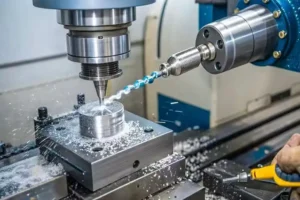
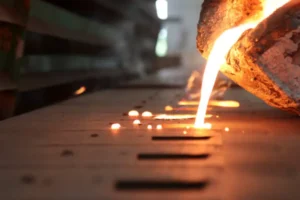
Choosing the right manufacturing process depends on production volume, required precision, and overall budget. Each method has its advantages depending on your project requirements.
| Process | Cost | Precision | Volume Suitability | Best For |
|---|---|---|---|---|
| Die Casting | Medium (low at scale) | High (±0.02–0.1 mm) | High volume | OEM mass production |
| CNC Machining | High | Very high (±0.005 mm) | Low to medium volume | Prototypes & tight tolerance parts |
| Sand Casting | Low | Low | Medium to large parts | Large, simple components |
🟡1. When to Choose Die Casting
👉 Custom die casting services are the best choice when:
- Production volume is high (typically 1,000+ units)
- Consistent quality and repeatability are required
- Complex geometries need to be produced at scale
- Cost per unit needs to be minimized in mass production
🟡2. Die Casting vs CNC Machining
CNC machining is ideal for low-volume production, prototyping, or parts requiring extremely tight tolerances. However, the cost per unit remains high as production scales.
In contrast, custom die casting services become significantly more cost-effective in high-volume production, especially when quantities exceed 1,000–5,000 units. Once tooling is established, unit costs drop dramatically.
🟡3. Die Casting vs Sand Casting
Sand casting is suitable for large, simple parts such as engine blocks and heavy components. However, it lacks the precision, surface finish, and repeatability required for high-quality OEM parts.
Precision die casting services offer tighter tolerances, smoother surfaces, and better consistency, making them ideal for industries such as automotive and electronics.
🔥 Key takeaway:
- 👉 Choose die casting → for high-volume, precision OEM parts
- 👉 Choose CNC machining → for low-volume or ultra-tight tolerance parts
- 👉 Choose sand casting → for large, low-precision components
How to Choose a Reliable Custom Die Casting Supplier (5 Proven Criteria for OEM Buyers)
Selecting the right custom die casting supplier is critical to your project’s success. A poor choice can lead to quality issues, delays, and unexpected costs. Here are five proven criteria every OEM buyer should evaluate:
✅1. Experience in OEM Projects
An experienced supplier understands complex OEM requirements, including NDA compliance, tight tolerances, and international quality expectations. Ask for similar project case studies before moving forward.
✅2. In-House Tooling Capability
Suppliers with in-house mold design and manufacturing can:
- Reduce communication gaps
- Improve tooling precision
- Shorten the lead time
This is especially important when working with a die casting supplier in China, where outsourcing tooling can introduce risks.
✅3. Robust Quality Control System
Look for:
- ISO 9001:2015 certification
- Defined inspection workflows (IQC, IPQC, FQC)
- Full traceability for materials and batches
These systems ensure consistent product quality across production runs.
✅4. Lead Time & Scalable Production Capacity
A reliable supplier should support:
- Rapid prototyping
- Small-batch production
- High-volume manufacturing
Without sacrificing quality or delivery timelines.
✅5. Engineering & DFM Support
Strong engineering support helps you:
- Optimize part design
- Reduce tooling cost
- Avoid casting defects early
DFM (Design for Manufacturability) feedback is a key indicator of a capable supplier.
💡 Practical Tip from IEC MOULD
Before committing, always request:
- A sample part
- A DFM report
This helps you evaluate both technical capability and communication efficiency.
Die Casting Cost & Lead Time Explained: 4 Key Factors That Impact Your Project
Understanding the key cost drivers in die casting helps OEM buyers avoid delays, control budgets, and make smarter sourcing decisions. Below are the four most critical factors:
| Factor | Impact on Cost | Impact on Lead Time |
|---|---|---|
| Mold Complexity | High | High |
| Production Volume | Reduces unit cost | Low |
| Material Selection | Medium | Medium |
| Secondary Operations | High | High |
✅1. Mold Complexity
Complex molds with slides, lifters, or tight tolerances significantly increase tooling cost and development time.
👉 Why it matters:
Over-engineered designs can increase tooling costs by 20–50% and extend lead time by several weeks.
👉 Optimization tip:
Simplifying geometry and reducing undercuts can dramatically lower both cost and lead time.
✅2. Production Volume
Higher production volumes distribute tooling and setup costs across more units.
👉 Why it matters:
Low-volume orders often result in high per-unit cost, while high-volume production makes custom die casting services highly cost-efficient.
✅3. Material Selection
Different materials impact both cost and cycle time:
- Aluminum → balanced cost and strength
- Zinc → excellent precision, lower melting point
- Magnesium → lightweight but higher material cost
👉 Why it matters:
Material choice directly affects casting speed, tool wear, and overall project cost.
✅4. Secondary Operations
Processes like CNC machining, polishing, coating, or assembly add both cost and lead time.
👉 Why it matters:
Poor initial design often leads to excessive secondary operations, increasing total cost significantly.
👉 Optimization tip:
Integrating features into the casting design can reduce or eliminate post-processing steps.
💡 Practical Tips to Reduce Cost and Lead Time
- Optimize design for manufacturability (DFM)
- Avoid unnecessary tight tolerances
- Choose materials based on function, not habit
- Minimize secondary operations through smart design
- Engage a custom die casting supplier early in the design phase
Typical OEM Applications of Custom Die Casting
Custom die casting services are widely used to manufacture functional metal components for OEM products. Instead of focusing only on industries, it’s more practical to look at real-world parts and applications.
Below are some of the most common custom die-cast components used across multiple sectors:
🔩 1. Structural & Housing Components
Typical Parts:
- Motor housings
- Pump housings
- Gearbox casings
- Transmission enclosures
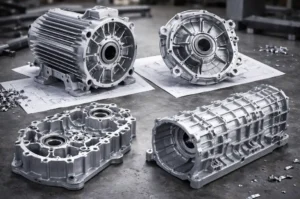
👉 Why die casting?
These parts require high strength, dimensional stability, and pressure resistance. Custom aluminum die casting is commonly used to achieve a balance of strength, weight, and corrosion resistance.
⚡ 2. Electronic Enclosures & Heat Management Parts
Typical Parts:
- Heat sinks
- LED lighting housings
- Power supply enclosures
- EMI shielding cases
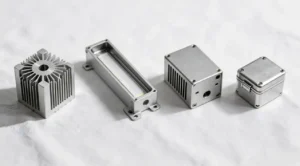
👉 Why die casting?
Die casting allows for thin walls and complex fin structures, which are essential for heat dissipation and electromagnetic shielding in electronics.
🚗 3. Automotive Functional Components
Typical Parts:
- Engine brackets
- Transmission parts
- Steering components
- EV motor housings
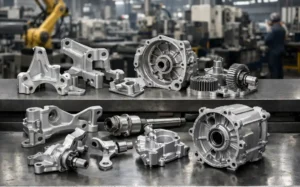
👉 Why die casting?
Automotive OEMs rely on die casting for lightweighting, consistency, and high-volume production. Aluminum and magnesium die casting are widely used in modern vehicle design.
🔧 4. Precision Small Parts & Hardware
Typical Parts:
- Connectors
- Locks and lock bodies
- Hinges
- Mechanical fittings
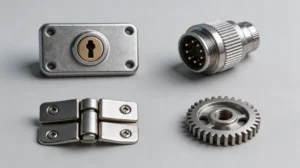
👉 Why die casting?
Zinc die casting is ideal for high-precision small parts with excellent surface finish and tight tolerances.
🏠 5. Consumer & Industrial Product Components
Typical Parts:
- Power tool housings
- Appliance components
- Furniture fittings
- Equipment covers
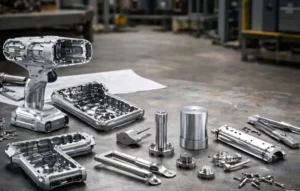
👉 Why die casting?
These applications benefit from cost-effective mass production and good surface quality, often requiring minimal post-processing.
💡 How to Identify If Your Part Is Suitable for Die Casting
Custom die casting is typically the best choice if your part requires:
✔ Complex geometry (ribs, bosses, thin walls)
✔ High-volume production (1,000+ units)
✔ Consistent quality and repeatability
✔ Integrated features to reduce machining
👉 IEC MOULD Practical Insight
In real OEM projects, many buyers don’t initially realize their parts can be optimized for die casting.
A simple redesign—such as adding draft angles, reducing undercuts, or integrating multiple components into one casting—can:
- Reduce total part cost
- Shorten production lead time
- Improve overall product reliability
FAQ: Custom Die Casting Services
What is custom die casting?
Custom die casting is a manufacturing process where molten metal is injected into a mold designed specifically for a customer’s part, enabling high-volume, high-precision production.
Is die casting suitable for low-volume production?
It is generally more suitable for medium to high volumes (typically 1,000+ units) due to tooling costs. CNC machining or 3D printing may be more economical for prototypes or very small batches.
What tolerance can die casting achieve?
Precision die casting services can typically achieve tolerances between ±0.02 mm and ±0.1 mm, depending on material, part size, and feature complexity.
How long does die casting take?
Tooling design and manufacturing usually take 3–8 weeks. Once molds are completed, production cycles range from seconds to a few minutes per shot, making mass production fast.
Is die casting cheaper than CNC machining?
For large volumes (typically above 1,000–5,000 units), custom die casting services are significantly more cost-effective per part. CNC machining is more economical for low-volume, high-precision parts.
Get a Quote for Custom Die Casting Services
If you’re looking for a reliable custom die casting manufacturer, choosing the right partner makes a significant difference in quality, cost, and delivery.
Whether you need custom aluminum die casting, zinc components, or high-precision OEM parts, working with an experienced supplier ensures better results from design to production.
👉 Send us your 3D drawings (STEP, IGS, or STP format) today.
Our engineering team will provide:
A free DFM (Design for Manufacturability) review
Detailed quotation with tooling and unit costs
Estimated lead time for your project