In the high-stakes world of New Energy Vehicle (NEV) manufacturing, selecting the right die casting materials isn’t just about cost—it’s about balancing weight, structural integrity, and thermal performance. As an IATF 16949 certified manufacturer with 15 years of experience, I’ve seen how choosing the correct diecast material can reduce a project’s Time-to-Market by 30% while ensuring automotive-grade reliability.
Whether you are evaluating die casting alloys for a battery housing or a precision sensor, understanding the metallurgical boundaries of each die cast material is critical.
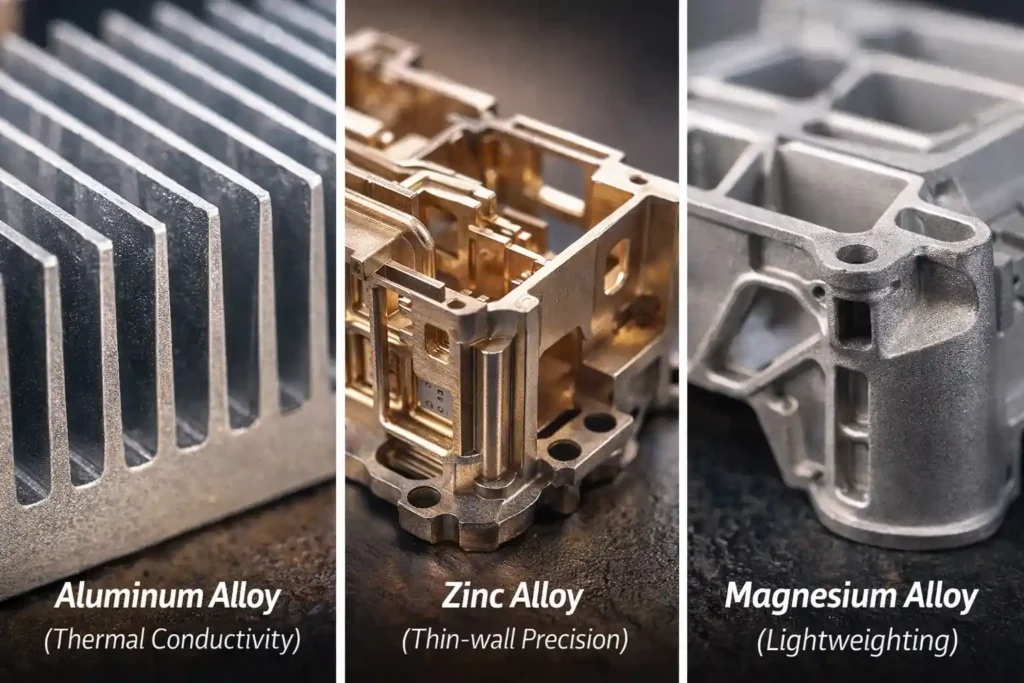
Quick Selection Matrix: Comparing Die Casting Alloys
Before we dive into specific aluminum die casting materials or zinc properties, this matrix provides a snapshot for initial DFM (Design for Manufacturing) assessment.
| Feature | Aluminum (A380/ADC12) | Zinc (Zamak 3) | Magnesium (AZ91D) |
|---|---|---|---|
| Density (g/cm³) | 2.70 | 6.60 | 1.81 (Ultra-Light) |
| Thermal Conductivity | 100–150 W/m·K | 113 W/m·K | 72 W/m·K |
| Max Tolerance (Raw) | ±0.1 mm | ±0.05 mm | ±0.08 mm |
| Min. Wall Thickness | 1.2 mm | 0.8 mm | 1.0 mm |
Process Matching: Hot-Chamber vs. Cold-Chamber Technology
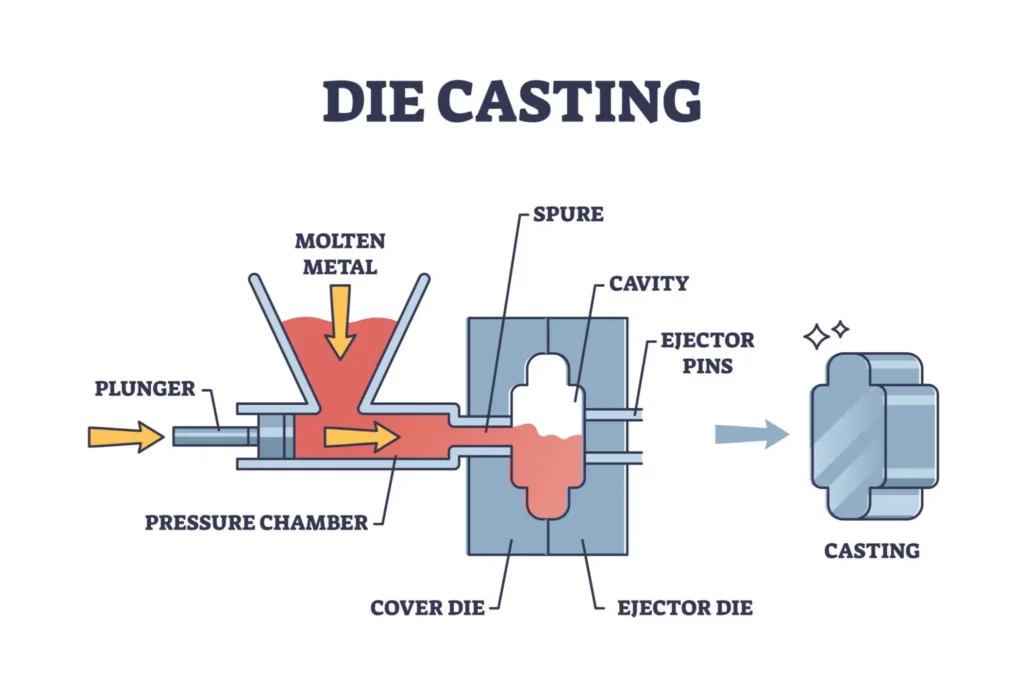
The choice of diecast material dictates the manufacturing process. The durability of pressure die casting dies depends heavily on the melting point of the alloy used.
Hot-Chamber: High-Speed Precision
This process is the gold standard for zinc die casting applications. Since the injection mechanism is submerged in the molten die casting alloys, we achieve cycle speeds up to 15 shots per minute. This is ideal for complex, high-volume zinc die casting applications like ADAS sensor brackets and precision connectors.
Cold-Chamber: High-Pressure Strength
For higher melting point aluminum die cast material, cold-chamber machines are required. Here, the molten metal is ladled into the sleeve to protect the pressure die casting dies from thermal shock. This is the primary method for producing structural aluminum die casting materials.
Aluminum Die Casting Materials (A380 & ADC12)
When engineers search for a versatile aluminum die cast material, they usually land on A380 or ADC12.
When to Use: Aluminum die casting materials are the “workhorse” for NEV inverter housings and motor cooling jackets due to their superior thermal management.
Expert Tip: While the casting itself is aluminum, the die cast steel used in the mold inserts must be high-grade H13 or premium die casting steel to withstand the high injection pressures required for dense, leak-proof structures.
Zinc Die Casting: Precision & Thin-Wall Geometry
When a design requires the structural complexity of plastic but the mechanical strength of metal, Zinc Die Casting is the premier solution for NEV components.
Extreme Precision: Zinc allows for exceptional dimensional stability. We can achieve tolerances as tight as ±0.05mm directly from the mold, often eliminating the need for secondary CNC machining on complex sensor housings.
Thin-Wall Capabilities: Its superior fluidity enables wall thicknesses as thin as 0.5mm to 0.8mm, which is critical for lightweight ADAS brackets and high-density connectors.
Extended Tooling Life: Unlike aluminum, zinc is non-corrosive to die casting steel. A high-quality H13 mold can exceed 1 million cycles, significantly lowering the total cost of ownership (TCO) for high-volume automotive projects.
Magnesium Die Casting (AZ91D): The Lightweight Leader
For NEV lightweighting, Magnesium Die Casting is the ultimate solution. Being 33% lighter than aluminum and 75% lighter than steel, AZ91D magnesium alloy offers the highest strength-to-weight ratio of all structural metals.
Superior Shielding & Damping: Beyond weight savings, magnesium provides excellent EMI/RFI shielding and vibration damping—ideal for NEV infotainment housings and gearbox casings.
High-Speed Machining: Magnesium allows for faster CNC machining speeds and longer tool life compared to aluminum, further reducing post-casting processing costs.
Technical Challenge: Because magnesium is more chemically active, our pressure die casting dies utilize specialized ceramic coatings and inert gas protection to ensure 100% part consistency and safety.
From Die Casting Steel to Finished Parts: Post-Casting Excellence
A superior die casting material requires high-performance tooling to realize its full potential. At our facility, the journey from raw alloy to automotive-grade component involves two critical pillars:
- Premium Tooling Steel: We use imported H13, Dievar, or 1.2344 steel for our mold inserts. This ensures our pressure die casting dies can withstand the thermal fatigue of high-volume NEV production without cracking or heat checking.
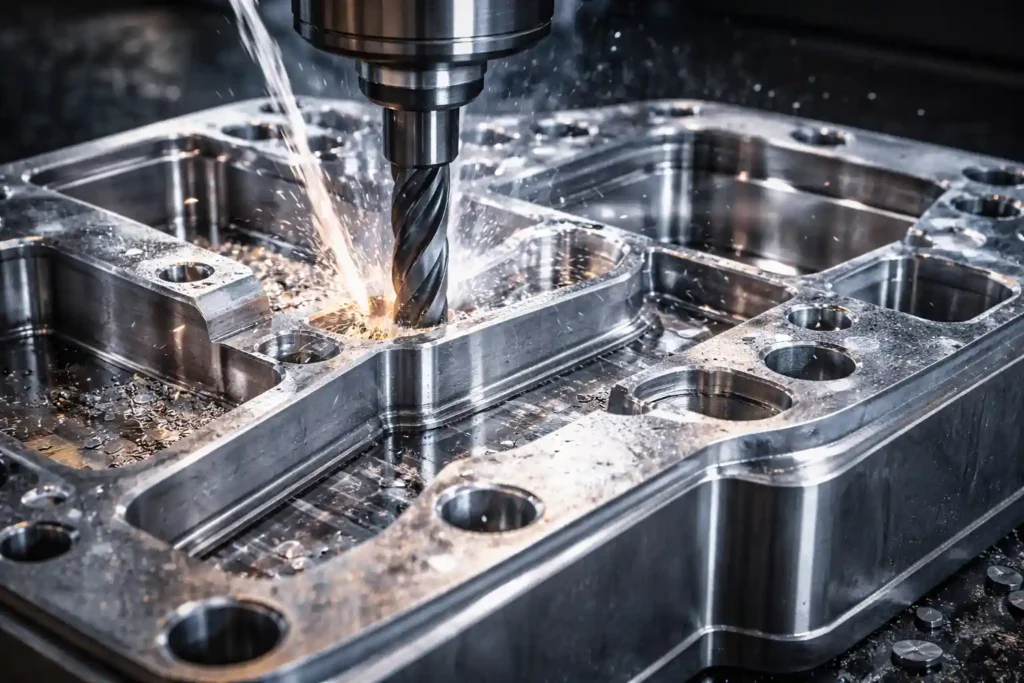
Precision CNC Machining: While die casting achieves near-net shapes, NEV components often require aerospace-level tolerances. Our in-house CNC center handles critical mating surfaces, thread tapping, and complex geometries that go beyond standard casting limits.
- Advanced Surface Finishing: We provide tailored treatments like E-coating (for salt spray resistance), Powder Coating, and Anodizing to ensure your aluminum die casting materials meet strict environmental and aesthetic standards.
Which Die Casting Materials Fits Your Project?
Choosing between different die casting materials requires a deep understanding of your part’s end-use environment.
Choose aluminum die casting materials for thermal and structural needs.
Choose zinc for extreme precision and high-volume ROI.
Choose magnesium for maximum weight reduction.
Need a DFM Analysis for your next project? Our engineering team can help you select the ideal diecast material and optimize your pressure die casting dies for maximum efficiency.