Skip to content
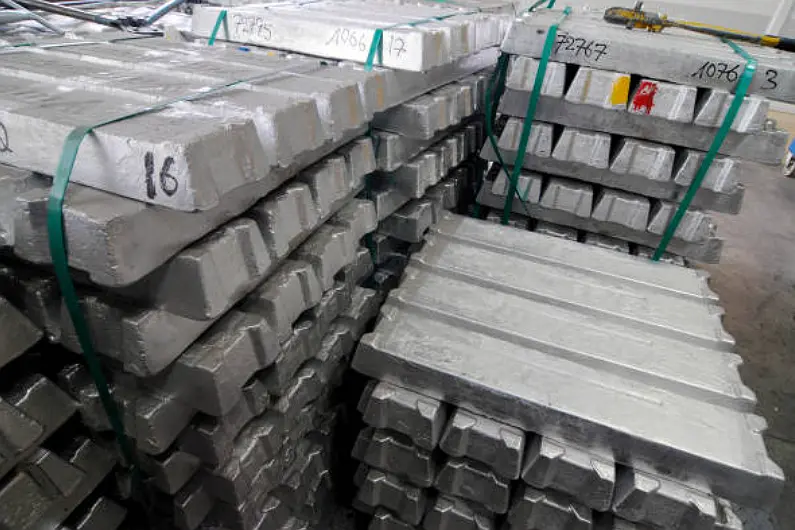
When evaluating manufacturing options, one of the most common questions engineers and buyers ask is: how much does Zamak casting actually cost? The answer isn’t a fixed number—it depends on several variables, including tooling, material, production volume, and finishing requirements.
In general, zamak casting cost per part ranges from $0.5 to $5, while mold (tooling) costs can range from a few thousand to tens of thousands of dollars. These costs are influenced by part complexity, order quantity, and post-processing needs.
Understanding this cost structure is essential—not only for budgeting, but also for identifying opportunities to reduce expenses without compromising quality. Compared with other processes such as aluminum die casting, zinc die casting (Zamak) often strikes a strong balance among precision, surface finish, and cost efficiency.
In this guide, we’ll break down every major cost component in zamak die casting, explain what drives pricing up or down, and share practical ways to reduce your overall project cost.
Tooling Cost (Mold Cost) in Zamak Casting
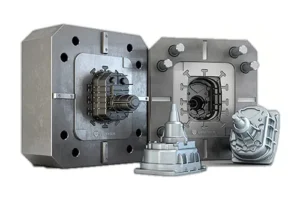
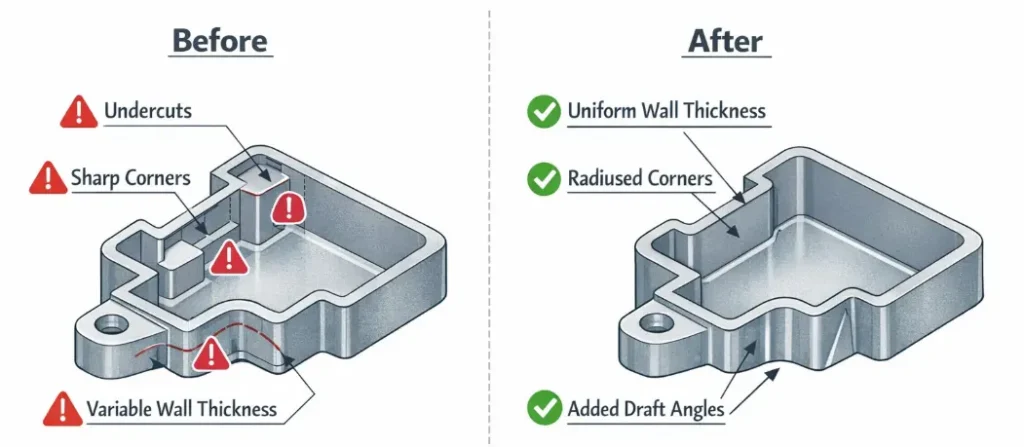
For most projects, tooling cost is the largest upfront investment in zamak casting—and often the first concern for buyers evaluating a new supplier.
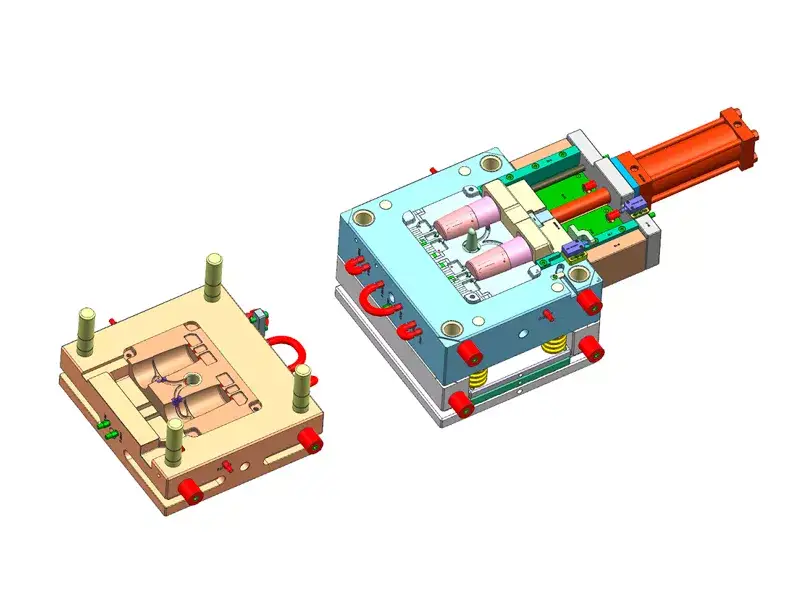
In general, zamak die casting mold costs typically range from $3,000 to $20,000, depending on part complexity, cavity number, and expected production volume. Simple parts with single-cavity molds are on the lower end, while complex geometries or multi-cavity molds designed for high-volume production can significantly increase the price.
1. What Drives Tooling Cost?
Several key factors determine the final zamak casting mold cost:
- Part complexity
Intricate designs, thin walls, undercuts, or tight tolerances require more advanced mold structures, increasing machining time and engineering effort. - Number of cavities
Multi-cavity molds produce multiple parts per cycle, reducing die casting cost per part in mass production—but they require higher initial investment. - Mold material and quality
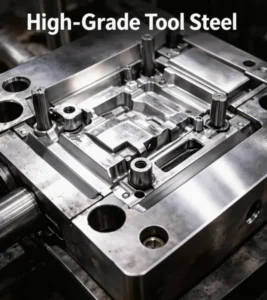
High-grade tool steel improves durability and consistency, especially for long production runs, but comes at a higher upfront cost. - Tool life expectancy
A well-designed Zamak mold can last anywhere from 50,000 to 500,000 shots, depending on maintenance and operating conditions. For large-volume projects, this makes the initial tooling investment more cost-effective over time.
2. Why Tooling Cost Shouldn’t Be Your Only Decision Factor
It’s tempting to choose the lowest tooling quote—but in zinc die casting, a cheaper mold often leads to higher long-term costs.
Poor mold design can result in:
- Higher defect rates (porosity, flashing, dimensional issues)
- Increased scrap and rework
- Inconsistent surface quality (affecting plating or coating)
- Shorter mold lifespan
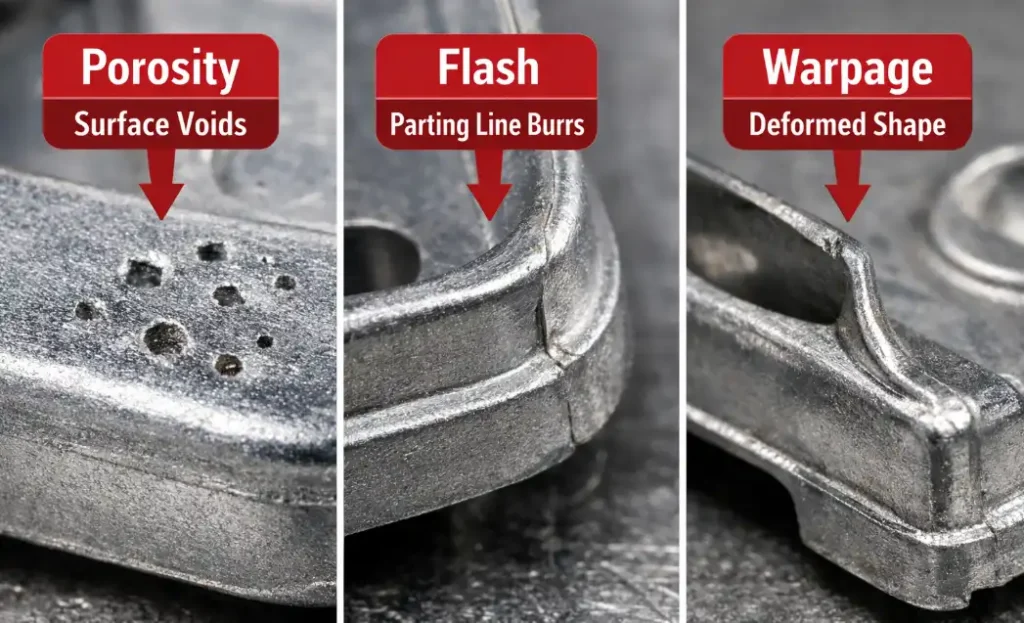
All of these will ultimately raise your zamak casting cost per part and delay your production timeline.
3. How to Reduce Tooling Cost (Without Sacrificing Quality)
If you’re looking to optimize your investment, there are several practical strategies to consider.
First, optimize part design for manufacturability (DFM). Simplifying geometry and avoiding unnecessary complexity can significantly reduce mold cost.
Second, start with a single-cavity mold for lower volumes. You can scale to multi-cavity tooling once demand increases.
Third, work with an experienced zamak casting supplier. A knowledgeable supplier can suggest cost-saving design improvements early in the process—before tooling is finalized.
🚀 An experienced supplier can often reduce tooling cost by 10–30% through smarter mold design and process optimization—without compromising quality.
Material Cost: Zamak vs Other Alloys
Material cost is one of the most important factors affecting the overall zamak casting cost, especially in medium to high-volume production. While tooling is a one-time investment, material cost directly impacts every single part you produce.
One of the main reasons why zinc die casting (Zamak) is widely used across industries is its cost efficiency compared to alternative alloys like aluminum and magnesium.
1. How Zamak Material Cost Compares
In general, Zamak alloys offer a favorable balance between price, performance, and processing efficiency. Here’s a practical comparison:
| Material | Relative Cost Level | Melting Temperature | Key Cost Advantage |
|---|---|---|---|
| Zamak (Zinc Alloy) | Low | ~380–420°C | Lower energy consumption, stable pricing |
| Aluminum Alloy | Medium | ~660°C | Lightweight but higher processing cost |
| Magnesium Alloy | High | ~650°C | Ultra-light but expensive and less common |
From a raw material perspective, zamak is typically more cost-stable than aluminum, and significantly cheaper than magnesium alloys. But the real advantage goes beyond just the price per kilogram.
2. Why Zamak Is More Cost-Efficient in Production
The lower melting temperature of Zamak plays a big role in reducing the overall Zamak die casting cost:
- Less energy consumption during melting and injection
- Shorter cycle times, improving production efficiency
- Reduced tool wear, extending mold life
All of these factors contribute to a lower die casting cost per part, especially in high-volume manufacturing.
In addition, Zamak offers excellent fluidity, which allows it to fill complex molds more easily. This reduces the risk of defects and minimizes scrap rates—another hidden but important cost advantage.
👉 Practical Insight for Buyers
If your part requires:
- High-dimensional accuracy
- Smooth surface finish (especially for plating)
- Medium-sized components with tight tolerances
Then zamak casting is usually the more cost-effective solution compared to aluminum.
🚀 Cost Optimization Tip
Where possible, simplify cosmetic requirements on non-visible surfaces, choose standard finishes instead of custom coatings, and optimize design to reduce hard-to-coat areas. These small adjustments can reduce finishing costs by 10–20% without affecting product performance.
Production Cost (Per-Part Manufacturing Cost)
When buyers evaluate zamak casting cost, what they ultimately care about is the cost per part. This is where production efficiency, process control, and supplier capability make a real difference.
In most cases, zamak casting cost per part ranges from $0.5 to $5, depending on part size, complexity, and order quantity. For small, simple components produced in high volumes, the cost can be even lower. On the other hand, larger or more intricate parts with tighter tolerances will naturally increase the price.
What Makes Up the Per-Part Production Cost?
The zamak die casting cost per part is mainly determined by the following factors:
- Machine time (cycle time)
Faster cycle times mean more parts produced per hour, directly lowering cost. Zamak’s excellent fluidity allows for shorter cycles compared to many other alloys. - Labor and automation level
Highly automated production lines reduce labor costs and improve consistency. This is especially important for large-volume orders. - Energy consumption
Thanks to its low melting point, Zamak requires less energy during melting and injection, which helps keep production costs down. - Process stability and scrap rate
A stable die casting process minimizes defects such as porosity or misruns. Lower scrap rates mean less wasted material and lower overall cost.
👉 Practical Advice for Buyers
When comparing quotes, don’t just look at the unit price. Ask your supplier about estimated cycle time, expected scrap rate, and whether the production line is automated. These details give you a clearer picture of the real zinc die casting cost. In many projects, improving production efficiency can reduce per-part cost by 10–25% without changing the design—which is why working with a technically strong supplier often delivers more value than simply choosing the lowest quote.
Surface Finishing Cost
Surface finishing is often an underestimated part of the total zamak casting cost, but in many projects—especially decorative or consumer-facing products—it can account for a significant portion of the final price.
Depending on the required appearance, corrosion resistance, and functional needs, surface finishing cost typically ranges from $0.2 to $2 per part. In some high-end applications, it can be even higher.
1. Common Surface Finishing Options and Costs
Here are the most widely used finishing processes in zinc die casting:
| Finishing Type | Typical Cost (Per Part) | Key Benefits |
|---|---|---|
| Electroplating (Chrome, Nickel, etc.) | $0.2 – $1.5 | Premium appearance, corrosion resistance |
| Powder Coating | $0.5 – $2.0 | Durable, uniform coating, good for outdoor use |
| Painting (Spray Coating) | $0.3 – $1.0 | Flexible colors, cost-effective for large batches |
| Polishing / Buffing | Varies | Improves surface smoothness before plating |
Among these, electroplating is the most commonly used for Zamak parts, especially in industries like bathroom hardware, furniture, and consumer electronics, where appearance is critical.
2. What Affects Surface Finishing Cost?
Several factors can significantly influence your final zamak die casting cost at this stage:
- Surface quality of the casting
A smoother as-cast surface reduces the need for polishing or rework, lowering finishing costs. - Part geometry
Complex shapes or deep cavities can make coating more difficult and increase cost. - Quality requirements
Higher standards (e.g., multi-layer plating, salt spray resistance) require more processing steps. - Batch size
Larger volumes typically reduce per-part finishing cost due to process efficiency.
3. The Hidden Link Between Casting Quality and Finishing Cost
One key insight many buyers overlook:
Better casting quality directly reduces surface finishing cost.
If the casting has defects such as porosity, surface roughness, or flow marks, it will require additional polishing, rework, or even rejection before finishing.
That’s why experienced zamak casting suppliers focus on optimizing mold design and process parameters to ensure a high-quality surface right from the start.
👉 Practical Advice for Buyers
If your product requires plating or coating, always evaluate:
- Whether the supplier can achieve plating-grade surface quality directly from casting
- If pre-treatment steps (polishing, grinding) are included in the quote
- The expected rejection rate after finishing
These factors have a direct impact on your real zinc die casting cost per part.
How Volume Affects Zamak Casting Cost
Production volume is one of the most decisive factors influencing the total zamak casting cost—and more importantly, the cost per part.
In simple terms, the more parts you produce, the lower your unit price becomes.
1. A Simple Way to Understand Cost per Part
At a basic level, the zamak casting cost per part can be estimated using this formula:
Cost per part = (Tooling Cost + Total Production Cost) ÷ Quantity
This explains why two projects with the same design can have very different pricing—as volume increases, fixed costs are distributed across more units.
2. How Cost Changes with Production Volume
In real manufacturing scenarios, the cost structure typically looks like this:
- Low volume (1,000 – 5,000 parts)
Higher unit cost due to tooling investment being spread over fewer parts. Suitable for prototyping or market testing. - Medium volume (10,000 – 50,000 parts)
More balanced pricing. Tooling cost impact decreases, and production efficiency improves. - High volume (100,000+ parts)
Highly competitive zinc die casting cost per part. Ideal for mass production with stable demand.
This scalability is one of the main reasons why zamak die casting is widely used in industries such as automotive components, consumer hardware, and electronics.
3. Why High Volume Unlocks Lower Costs
As volume increases, several cost advantages come into play:
- Tooling cost dilution
The initial mold investment becomes negligible per unit at high volumes. - Improved production efficiency
Machines run continuously with fewer interruptions, reducing downtime. - Lower labor cost per unit
Automation becomes more effective in large-scale production. - Better process stability
Consistent runs reduce defects and scrap rates, lowering overall cost.
👉 Strategic Advice for Buyers
If you’re planning a long-term project, it’s often more cost-effective to:
- Plan for higher initial volumes, if feasible
- Invest in multi-cavity molds to increase output per cycle
- Work with a supplier who can scale production efficiently
Even a moderate increase in order quantity can reduce your zamak casting cost per part by 20–40%, depending on the project.
When Low Volume Still Makes Sense
That said, low-volume production isn’t always a bad choice. It can be useful for:
- Product validation and prototyping
- Testing market demand
- Reducing upfront financial risk
In these cases, starting with a simpler mold and scaling later is often the smartest approach.
🚀 Cost Optimization Tip
If you’re unsure about your ideal order quantity, ask your supplier for a price break analysis (e.g., 5k / 10k / 50k / 100k units). This gives you a clear view of how volume impacts your total zamak casting cost—and helps you make a more informed decision.
Zamak Casting Cost vs Aluminum Die Casting Cost Comparison
When comparing manufacturing options, one of the most common questions is:
Is zamak casting cheaper than aluminum die casting?
The short answer is: in many cases, yes—especially for small to medium-sized parts requiring high precision and surface quality. However, the full picture depends on your application, volume, and performance requirements.
1. Cost Comparison Overview
Here’s a side-by-side comparison of zamak die casting cost vs aluminum die casting cost:
| Factor | Zamak (Zinc Die Casting) | Aluminum Die Casting |
|---|---|---|
| Tooling Cost | Lower | Higher |
| Material Cost | More stable, generally lower | More volatile, medium level |
| Melting Temperature | ~380–420°C (low) | ~660°C (high) |
| Energy Consumption | Lower | Higher |
| Cycle Time | Shorter | Longer |
| Surface Finish | Excellent (plating-friendly) | Moderate |
| Machining Requirement | Less | More |
| Cost per Part | Lower (high volume) | Moderate to higher |
From a cost perspective, zinc die casting (Zamak) often delivers a lower per-part die casting cost, especially when surface finishing and post-processing are considered.
2. Why Zamak Is Often More Cost-Effective
There are several reasons why the zamak casting cost is typically lower than that of aluminum:
- Lower processing temperature
Zamak melts at a much lower temperature, reducing energy consumption and machine wear. - Better fluidity and precision
This allows for near-net-shape casting, minimizing the need for secondary machining. - Superior surface finish
Zamak parts are ideal for electroplating, often eliminating additional surface preparation costs. - Shorter cycle times
Faster production improves efficiency and reduces per-part manufacturing cost.
All of these factors contribute to a more competitive zamak casting cost per part, particularly in large production runs.
3. When Aluminum Die Casting Is the Better Choice
Despite its cost advantages, Zamak is not always the best option. Aluminum die casting may be preferred when:
- Weight is a critical factor
Aluminum is significantly lighter than zinc. - Higher temperature resistance is required
Aluminum performs better in high-heat environments. - Large structural components are needed
Aluminum is more suitable for bigger parts due to its strength-to-weight ratio.
In these cases, even with a higher aluminum die casting cost, the material choice is justified by performance requirements.
👉 Practical Decision Guide
If your project prioritizes:
- High-dimensional accuracy
- Smooth, decorative surface (plating or coating)
- Medium-sized components
- Cost efficiency in mass production
Then, zamak die casting is usually the more economical choice. On the other hand, if your design requires lightweight structures or high-temperature performance, aluminum may be worth the additional cost.
5 Proven Ways to Reduce Zamak Casting Cost
Reducing zamak casting cost isn’t just about negotiating a lower price—it’s about making smarter decisions across design, production, and supplier selection.
In real projects, most cost savings come from early-stage optimization rather than last-minute adjustments. Here are five proven strategies that can significantly lower your zamak die casting cost per part without sacrificing quality.
1. Optimize Your Design for Manufacturing (DFM)
One of the most effective ways to reduce die casting cost per part is to simplify the design before tooling begins.
Small design changes can make a big difference, such as:
- Avoiding unnecessary undercuts or complex features
- Maintaining uniform wall thickness
- Reducing tight tolerances where not essential
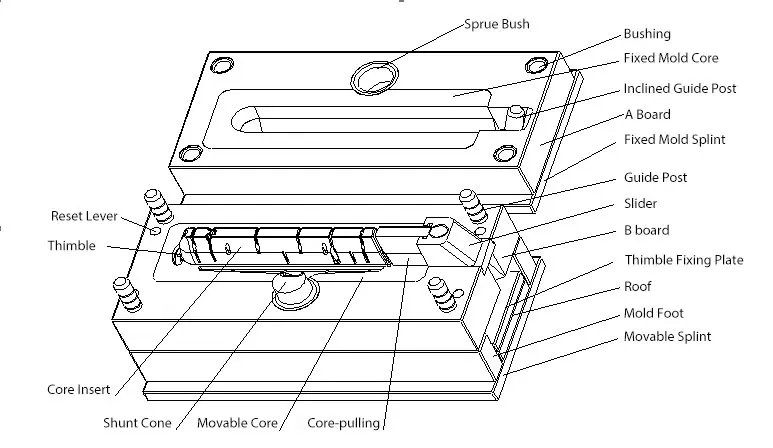
A design optimized for zinc die casting not only lowers tooling cost but also improves production efficiency and reduces defect rates.
👉 In many cases, proper DFM can reduce total project cost by 10–20%.
2. Increase Production Volume (When Possible)
As discussed earlier, zamak casting cost per part decreases significantly with higher production volumes.
If your project allows it:
- Consolidate orders into larger batches
- Plan long-term production instead of small repeated runs
Even a moderate increase in volume can unlock better pricing due to:
- Tooling cost distribution
- Improved machine utilization
- Lower labor cost per unit
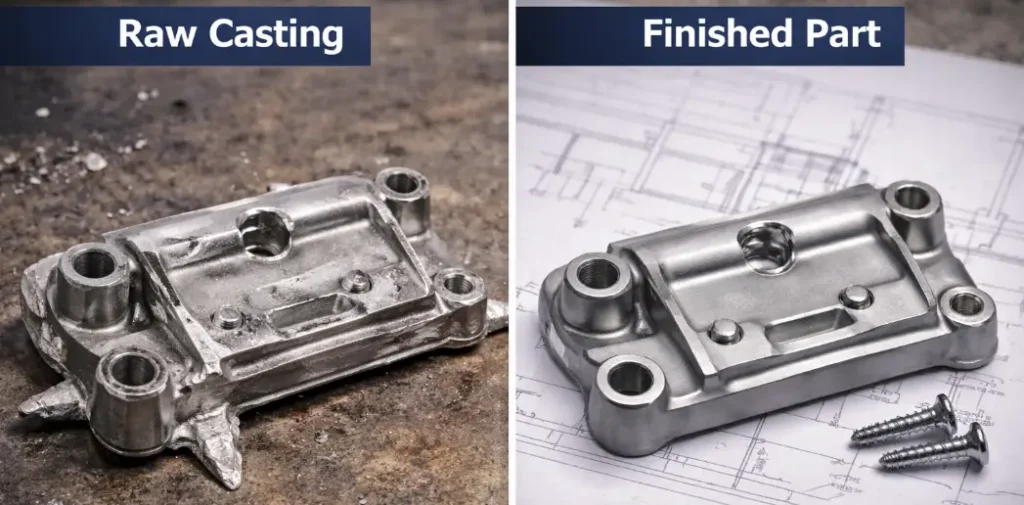
3. Minimize Secondary Operations
Machining, drilling, and polishing add cost and lead time—often accounting for 10–30% of total project cost. Design parts to be near-net-shape whenever possible, integrating features directly into the mold to reduce post-processing needs. A well-optimized design combined with a capable supplier can significantly reduce these hidden costs.
Whenever possible:
- Design parts to be near-net-shape
- Integrate features directly into the mold
- Reduce the need for post-processing
This not only cuts costs but also shortens lead time and improves consistency.
4. Choose the Right Surface Finishing Strategy
Surface finishing can be a major cost driver, especially for decorative parts.
To optimize:
- Use standard finishes instead of custom coatings
- Limit high-end finishing to visible surfaces only
- Ensure good as-cast surface quality to reduce pre-treatment
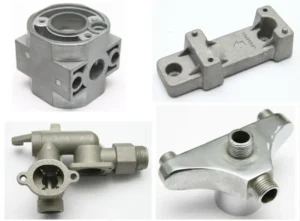
A well-planned finishing approach can reduce overall zamak casting cost by 10–15%.
5. Work with an Experienced Zamak Casting Supplier
Perhaps the most overlooked factor: your supplier.
An experienced zamak casting supplier can:
- Optimize mold design to reduce tooling cost
- Improve cycle time and production efficiency
- Minimize defects and scrap rates
- Suggest material or design alternatives

In many cases, choosing the right partner can save more than simply selecting the lowest quote.
👉 What Smart Buyers Do Differently
Instead of focusing only on unit price, experienced buyers look at the total cost structure, including:
- Tooling efficiency
- Production stability
- Yield and defect rate
- Long-term scalability
This approach leads to a more competitive and predictable zamak die casting cost per part over time.
🚀 Final Tip
If you want to reduce costs effectively, the best time to act is before tooling is finalized. Once the mold is made, your flexibility becomes limited.
That’s why many buyers request a DFM and cost optimization review early in the project—it often reveals savings opportunities that are easy to implement at that stage.
FAQ: Zamak Casting Cost
Q1: How much does Zamak casting cost per part?
The zamak casting cost per part typically ranges from $0.5 to $5, depending on part size, complexity, production volume, and surface finishing requirements.
- High-volume, simple parts → $0.5–$1
- Medium complexity parts → $1–$3
- Complex or large parts → $3–$5+
For accurate pricing, it’s best to request a quote based on your drawings and quantity.
Q2: Is Zamak cheaper than aluminum die casting?
Yes, zamak casting is generally cheaper than aluminum die casting for small to medium-sized parts.
Zamak offers:
- Lower melting temperature → reduced energy cost
- Better fluidity → less machining required
- Superior surface finish → lower finishing cost
However, aluminum may still be preferred for lightweight or high-temperature applications.
Q3: What is the typical Zamak mold cost?
The typical zamak die casting mold cost ranges from $3,000 to $20,000, depending on part complexity, mold size, and number of cavities.
Simple molds are on the lower end, while multi-cavity or high-precision molds can be significantly more expensive.
Q4: How can I reduce die casting cost?
You can reduce zamak casting cost by:
- Optimizing design for manufacturability (DFM)
- Increasing production volume
- Reducing secondary machining operations
- Choosing standard surface finishes
- Working with an experienced supplier
Most cost savings come from design and process optimization rather than price negotiation alone.
Q5: What affects zinc die casting price the most?
The main factors affecting zinc die casting price include:
- Tooling (mold) cost
- Production volume
- Cycle time and automation level
- Surface finishing requirements
- Secondary operations
Among these, volume and mold design have the biggest impact on cost per part.
Q6: What is the minimum order quantity (MOQ) for Zamak casting?
The minimum order quantity for zamak casting typically ranges from 1,000 to 5,000 parts, depending on the supplier and project requirements.
Lower quantities are possible, but the cost per part will be higher due to tooling and setup costs.
Conclusion: Is Zamak Casting Cost-Effective?
For many applications, the answer is clearly yes.
With its combination of low material cost, fast production cycles, excellent surface finish, and high dimensional accuracy, Zamak offers a strong advantage—especially for small to medium-sized parts produced at scale. When compared to alternatives like aluminum, it often delivers a lower die casting cost per part, particularly when finishing and secondary operations are taken into account.
Of course, the total zamak casting cost depends on multiple factors, including tooling design, production volume, and supplier capability. But with the right approach, there is significant room for cost optimization—often without changing the core design.
Ready to Optimize Your Zamak Casting Cost?
Every project is different—and the best way to reduce cost is to evaluate your design, volume, and requirements together.
If you’re currently sourcing zamak die casting parts or comparing suppliers, consider getting a professional cost analysis and DFM review before moving forward. It can often reveal practical ways to lower your total cost by 10–30%.
Whether you already have technical drawings or just an initial concept, getting early feedback from an experienced supplier can make a significant difference in both cost and production success.