Skip to content
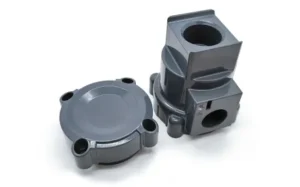
Zamak die casting has become a preferred manufacturing method for engineers and buyers seeking high precision, excellent surface finish, and cost-effective mass production. China has emerged as a leading hub for Zamak casting, offering advanced tooling capabilities, integrated production workflows, and significant cost advantages.
In this guide, you will learn:
✅ The complete Zamak casting process—from mold design to finishing
✅ Mechanical properties and grade comparison (Zamak 2, 3, 5, 7)
✅ How Zamak compares to aluminum and plastic for your application
✅ Real-world cost structure and defect prevention strategies
✅ Why sourcing from China delivers both quality and ROI
Common challenges this guide addresses:
❌ Porosity and dimensional instability in precision parts
❌ High tooling costs and long lead times
❌ Surface finish issues affecting plating or coating
❌ Selecting the wrong alloy grade for your application
Whether you’re developing automotive components, electronic housings, or decorative hardware, this guide provides the technical insights and practical recommendations you need to make informed decisions.
Among experienced suppliers, IEC MOULD stands out for its engineering-driven approach—offering DFM analysis, Moldflow optimization, and fully integrated tooling-to-production services that reduce defects and accelerate time-to-market.
What Is Zamak?
Zamak is a family of zinc-aluminum alloys widely used in high-pressure die casting. The name comes from the German acronym for the main alloying elements: Zinc, Aluminum, Magnesium, and Kupfer (copper).
Designed specifically for precision casting, Zamak alloys offer an excellent balance of strength, ductility, and dimensional stability. Their low melting point (380–420°C) enables energy-efficient production with longer tool life.
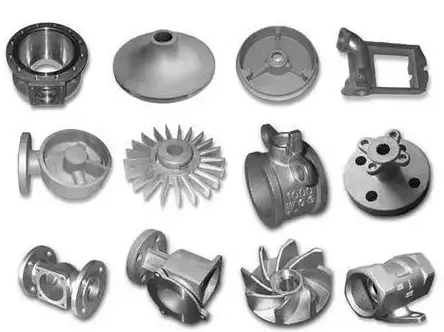
Common grades include Zamak 3 (general-purpose) and Zamak 5 (higher strength). These materials are ideal for producing complex, thin-walled components with smooth surface finishes—often requiring minimal secondary machining.
Thanks to its superior fluidity, cost-efficiency, and compatibility with electroplating, Zamak is widely used in automotive, electronics, hardware, and consumer products.
Zamak Casting Process (Step-by-Step)
Zamak casting is a highly efficient manufacturing method that uses high-pressure die casting to produce precise and complex metal parts with excellent surface quality. Understanding each step of the process helps engineers and buyers optimize design, reduce defects, and control production costs.
1. Mold Design & Tooling
The process begins with designing a precision steel mold (die), which determines the final shape, tolerance, and surface finish of the part.
- Molds are typically made from hardened tool steel for long service life
- Proper gate and runner design ensures smooth metal flow
- Cooling channels are integrated to control solidification speed
👉 Engineering insight:
A well-designed mold can significantly reduce porosity and improve dimensional stability, which is critical for high-precision Zamak components.
2. Melting the Zamak Alloy
Zamak alloy (typically Zamak 3 or Zamak 5) is melted at a relatively low temperature of 380–420°C, much lower than aluminum’s melting point.
- Lower melting point = reduced energy consumption
- Stable composition ensures consistent casting quality
- Less thermal stress on tooling
👉 Cost advantage:
Lower melting temperature directly translates into lower production costs and longer mold life.
3. High-Pressure Injection
The molten Zamak is injected into the mold cavity under high pressure using a die casting machine.
- Injection pressure ensures complete filling of complex geometries
- Ideal for thin-wall and intricate parts
- High repeatability for mass production
👉 Why it matters:
This step is what gives Zamak casting its excellent dimensional accuracy and surface finish.
4. Cooling & Solidification
Once injected, the molten metal rapidly cools and solidifies inside the mold.
- Fast cooling improves mechanical properties
- Reduces cycle time (high efficiency)
- Maintains tight tolerances
👉 Production insight:
Efficient cooling design can dramatically improve production speed and reduce unit cost.
5. Ejection & Trimming
After solidification, the part is ejected from the mold, and excess material is removed.
- Flash, runners, and gates are trimmed
- Minimal deformation due to low shrinkage
- Parts are ready for finishing or assembly
6. Surface Finishing (Optional)
Depending on the application, Zamak parts may undergo additional surface treatments.
- Electroplating (chrome, nickel, zinc)
- Powder coating
- Painting or polishing
👉 Value-added benefit:
Zamak offers excellent adhesion for coatings, making it ideal for decorative and functional finishes.
Zamak Material Properties
Zamak alloys are widely used in die casting due to their balanced combination of mechanical strength, casting performance, and cost efficiency. These properties make Zamak an ideal material for producing high-precision components in large volumes.
1. Key Mechanical Properties of Zamak
Below are the typical mechanical and physical properties of Zamak alloys used in die casting:
| Property | Typical Value | Significance |
|---|---|---|
| Density | ~6.6 g/cm³ | Provides solid feel and durability |
| Tensile Strength | 280–330 MPa | Suitable for functional and load-bearing parts |
| Yield Strength | 200–250 MPa | Maintains shape under stress |
| Elongation | 3–10% | Reduces risk of cracking |
| Melting Point | ~380–420°C | Enables energy-efficient casting |
| Hardness | 80–100 HB | Offers good wear resistance |
| Thermal Conductivity | ~110 W/m·K | Supports heat dissipation |
| Electrical Conductivity | Good | Suitable for electronic components |
👉 These properties make Zamak especially suitable for precision components that require both mechanical integrity and dimensional stability.
2. Casting Performance & Dimensional Stability
One of the biggest advantages of Zamak is its excellent casting behavior:
- High fluidity allows complex and thin-wall designs
- Low melting point reduces energy consumption and tooling wear
- Low shrinkage ensures tight tolerances (typically ±0.02–0.05 mm)
- Excellent repeatability for mass production
👉 Engineering insight:
These characteristics significantly reduce the need for secondary machining, helping manufacturers lower production costs.
3. Corrosion Resistance & Surface Finishing
Zamak alloys offer moderate natural corrosion resistance, which can be significantly enhanced through surface treatments:
- Electroplating (chrome, nickel, zinc)
- Powder coating
- Painting and polishing
👉 Practical tip from IEC MOULD:
For outdoor or high-humidity environments, surface finishing is strongly recommended to improve durability and appearance.
4. Limitations of Zamak Material
While Zamak offers many advantages, it is important to consider its limitations:
- Lower strength compared to aluminum for structural applications
- Heavier than aluminum
- Not suitable for high-temperature environments
👉 Material selection tip:
Zamak is best suited for high-precision, high-volume parts, rather than lightweight structural components.
Real-World Application Insight
In real manufacturing projects, Zamak material properties are especially valuable in applications where precision, surface quality, and cost efficiency must be balanced.
It is particularly suitable for:
- Small precision components with tight tolerances
- Parts requiring high-quality surface finishing
- High-volume production where cost control is critical
👉 Practical insight:
By selecting the right Zamak grade and optimizing part design early in the development stage, manufacturers can achieve an optimal balance between performance, quality, and cost.
Zamak Grades Comparison (Zamak 2 vs 3 vs 5 vs 7)
Zamak alloys are available in several grades, each offering different levels of strength, fluidity, and corrosion resistance. Understanding the differences between Zamak 2, Zamak 3, Zamak 5, and Zamak 7 is essential for selecting the right material for your application.
Zamak 2, 3, 5, and 7 Comparison Table
| Grade | Tensile Strength | Hardness | Elongation | Fluidity | Best Applications |
|---|---|---|---|---|---|
| Zamak 2 | Highest (330–360 MPa) | High | 3–7% | Moderate | Gears, heavy-duty mechanical parts requiring maximum wear resistance |
| Zamak 3 | Good (280–320 MPa) | Medium | 6–10% | Excellent | General-purpose—best balance of strength, ductility, and cost |
| Zamak 5 | High (300–330 MPa) | Medium-High | 5–8% | Good | Automotive components, hardware requiring higher strength than Zamak 3 |
| Zamak 7 | Moderate | Medium | 8–12% | Highest | Thin-wall, complex precision parts; superior surface finish |
How to Choose the Right Zamak Grade for Your Project
Start with Zamak 3 – It covers 80% of applications, offering the best overall balance.
Choose Zamak 5 – When components face higher mechanical loads or require better corrosion resistance.
Choose Zamak 2 – For moving parts under friction (e.g., gears, bushings) where wear resistance is critical.
Choose Zamak 7 – For extremely thin walls or intricate geometries where maximum fluidity is needed.
💡 Practical tip: Zamak 3 and Zamak 5 are the most cost-effective starting points for most projects. Moving to Zamak 2 or 7 should be driven by specific performance requirements, not general preference
Zamak vs Aluminum vs Plastic (Cost & Performance)
Selecting the right material is critical for cost, performance, and manufacturability. Zamak, aluminum, and plastic each have unique advantages depending on your project’s needs for strength, precision, surface finish, and production volume.
Quick summary:
- Zamak – Ideal for high-volume, precision, thin-wall parts with excellent surface finish.
- Aluminum – Best for lightweight, structural, or heat-resistant components.
- Plastic – Suited for simple, low-cost, low-load applications.
💡 Pro Tip: Check the comparison table and visual decision guide below to quickly identify the optimal material for your project.
1. Quick Comparison Table
| Factor | Zamak | Aluminum | Plastic |
|---|---|---|---|
| Cost | Low | Medium | Low |
| Strength | Medium | High | Low |
| Precision | High | Medium | Low |
2. Visual Decision Guide (Material Selection Map)
Zamak offers the best balance between cost, precision, and performance for high-volume parts.
👉 Why this matters:
This chart helps you quickly identify the best material based on strength, cost, and precision trade-offs.
3. Zamak vs. Aluminum vs. Plastic: Which Is Right for You?
🔹Zamak vs. Aluminum Die Casting
- Aluminum offers a higher strength-to-weight ratio and better heat resistance, making it ideal for structural or high-temperature components.
- Zamak offers superior fluidity, tighter tolerances, and a smoother as-cast surface, making it ideal for small- to medium-sized precision parts at high volumes.
🔹Zamak vs. Plastic Injection Molding
- Plastic is cheaper and lighter, but lacks strength, rigidity, and a premium metallic appearance.
- Zamak is preferred when parts require: mechanical durability, tight tolerances, or plating-ready finish.
🔹When to Choose Zamak
Choose Zamak when your project requires:
- High precision & tight tolerances
- Complex geometries with thin walls
- Excellent surface finish suitable for electroplating or coating
- Cost-effective mass production with minimal secondary machining
💡 Key Takeaways
- Zamak = sweet spot between aluminum and plastic for precision, appearance, and cost
- Aluminum = superior strength + heat resistance
- Plastic = low-cost, simple parts
- Use table + visual map + checklist combo for fastest understanding and highest conversion
Applications of Zamak Casting
Zamak casting is a versatile process used across multiple industries thanks to its excellent precision, smooth surface finish, and cost-effectiveness. Below is a detailed industry-wise breakdown of Zamak applications and why Zamak is used in each sector.
| Industry | Common Parts | Why Zamak Is Used |
|---|---|---|
| 🚗 Automotive | Door handles, Lock components, Brackets | High strength & dimensional stability; smooth surface finish suitable for plating/painting |
| 📱 Electronics | Connector housings, Heat sinks | Excellent thin-wall casting & complex shapes; good thermal conductivity for heat dissipation |
| 🏠 Hardware | Hinges, Locks, Decorative parts | Durable for moving parts; easy to plate/coated for a premium look |
| 🛒 Consumer Products | Zippers, Fashion accessories | High precision & intricate detailing; corrosion resistance ensures long-lasting appearance |
💡 Key takeaway:
Zamak casting delivers precision, aesthetic appeal, and cost efficiency, making it ideal for high-volume production in automotive, electronics, hardware, and consumer products.
Zamak Casting Cost Breakdown
Understanding the cost structure of Zamak casting is essential for accurate budgeting and optimizing your design for manufacturing. The total cost typically includes material, tooling, production, and secondary operations.
Cost distribution varies depending on volume, complexity, and finishing requirements.
1. Material Cost: Zamak vs. Aluminum
Zamak alloy is generally more cost-effective than aluminum on a per-volume basis. Its lower melting point (~385°C) also reduces energy consumption during casting.
👉 Result: Zamak typically offers lower overall production cost for high-volume precision parts, due to reduced energy consumption and faster cycle times.
2. Tooling Cost (Mold Investment)
Zamak die casting requires precision steel molds designed for high-pressure injection.
- Typical cost: $2,000 – $15,000+
- Key factors:
- Part complexity
- Mold size & cavity number
- Surface finish requirements
💡 Insight: Tooling cost is a one-time investment and becomes negligible as production volume increases.
3. Production Cost & Volume Impact
Unit cost decreases significantly as production volume increases due to tooling amortization and efficiency gains.
Zamak’s excellent fluidity and fast solidification enable short cycle times, reducing labor and machine costs.
📊 Unit Cost vs Volume:
- 100 pcs → ~$5.00 / part
- 1,000 pcs → ~$1.50 / part
- 10,000 pcs → ~$0.80 / part
👉 Key takeaway: The higher the volume, the lower the unit cost—making Zamak ideal for mass production.
4. Secondary Operations: Finishing & Machining
Post-processing can significantly impact final cost, including:
Electroplating (chrome, nickel)
Powder coating or painting
CNC machining (threads, holes, tolerances)
Typical cost range: $0.10 – $2.00+ per part
💡 IEC MOULD Tip: Integrating finishing processes with your supplier can reduce handling, lead time, and overall cost.
Final Cost Insight
Zamak casting offers one of the best cost-performance ratios in manufacturing:
- Lower material and energy costs than aluminum
- Fast production cycles
- Excellent scalability for high-volume orders
👉 Best suited for:
High-precision, thin-wall, and decorative parts where cost efficiency and surface quality both matter.
Common Defects in Zamak Casting and Solutions
Even though Zamak casting is known for its excellent precision and surface quality, defects can still occur if process parameters are not properly controlled. Below are the most common defects in Zamak die casting—along with practical, factory-level solutions.
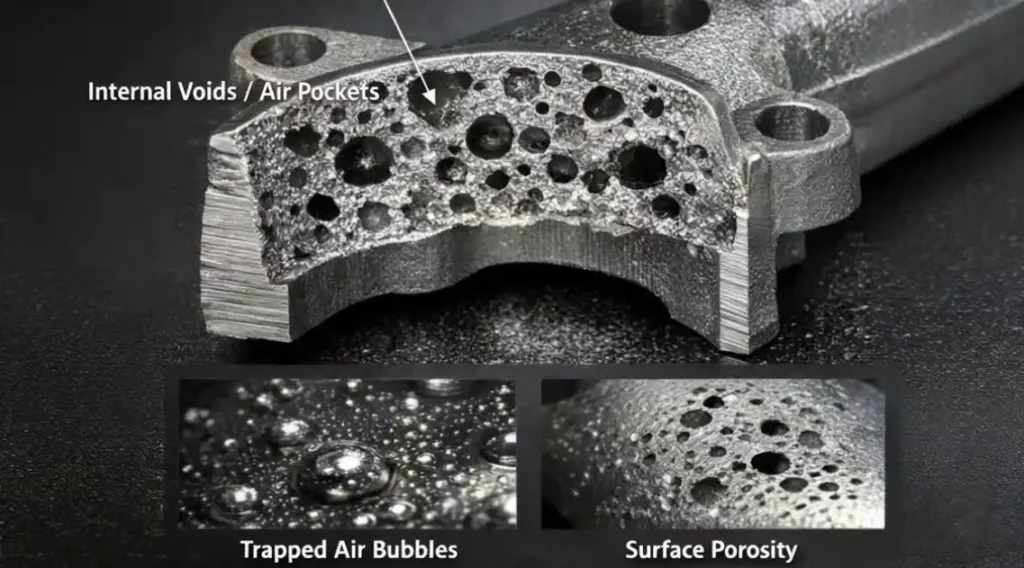
1. Porosity
What it is:
Small internal voids or air pockets inside the casting, often invisible from the outside but affecting strength and plating quality.
Main Causes:
- Trapped air during high-pressure injection
- Improper venting design
- Excessive injection speed or turbulence
Solutions (Factory Best Practices):
- Optimize mold venting and overflow system
- Use vacuum die casting when needed
- Adjust injection speed profile (fast fill + controlled pressure)
- Maintain stable melt temperature to reduce gas entrapment
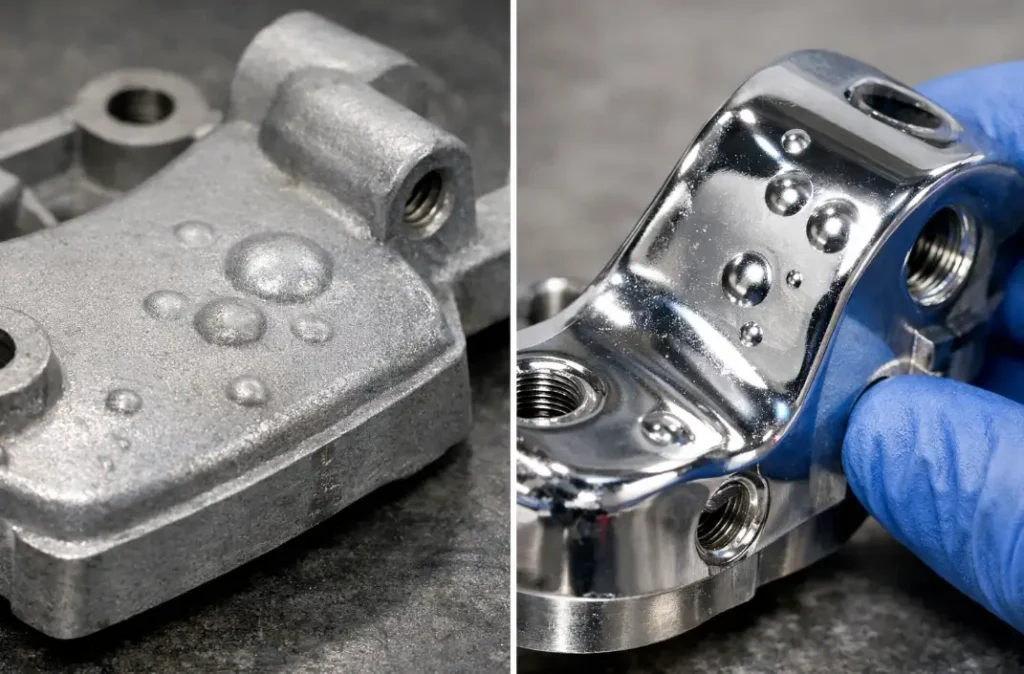
2. Surface Bubbles
What it is:
Visible bubbles or blisters on the surface, especially after electroplating or coating.
Main Causes:
- Subsurface porosity expanding during heating (plating or baking)
- Contamination (oil, release agents) on the surface
- Poor degassing of molten alloy
Solutions:
- Improve pre-treatment cleaning (degreasing, ultrasonic cleaning)
- Control die temperature to ensure uniform solidification
- Use high-purity Zamak alloy
- Apply pre-plating baking to release trapped gases
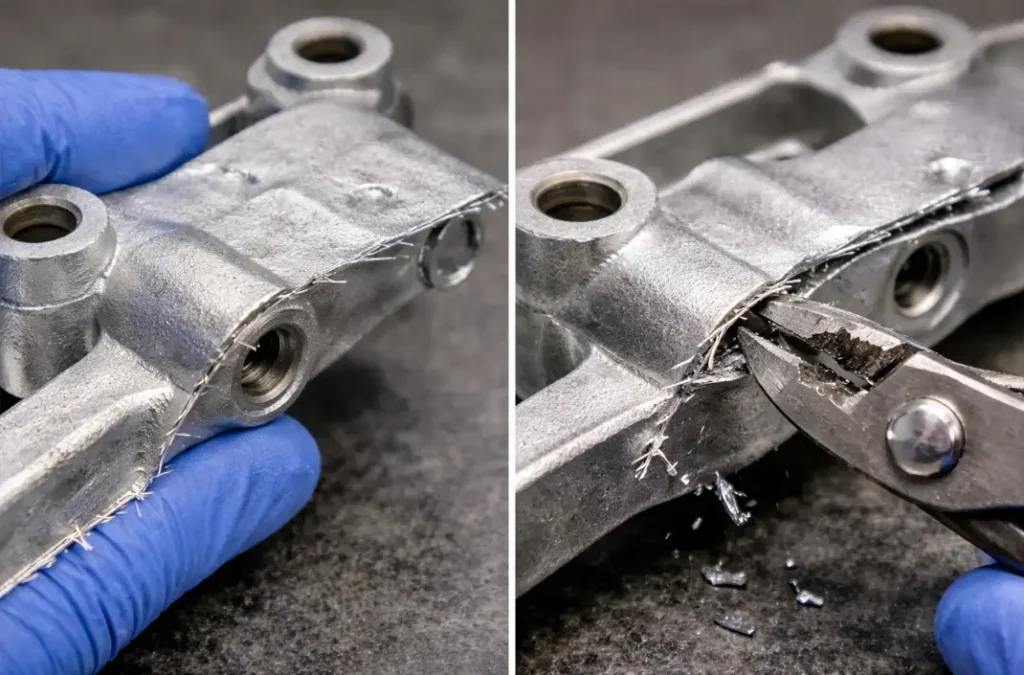
3. Flash
What it is:
Thin excess metal that leaks out along the parting line of the mold.
Main Causes:
- Worn or poorly fitted molds
- Excessive injection pressure
- Improper clamping force
Solutions:
- Regular mold maintenance and polishing
- Optimize clamping force vs injection pressure
- Improve tooling precision and alignment
- Add secondary trimming or deburring process if necessary
Why Source Zamak Casting from China?
For global buyers, sourcing Zamak casting from China has become a strategic choice—not just for cost savings, but for speed, scalability, and manufacturing expertise. Here’s why many companies choose Chinese suppliers for their die casting projects:
1. Significant Cost Advantage (30–50%)
China offers a 30–50% cost reduction compared to many Western markets. This is driven by:
- Lower labor and operational costs
- Highly optimized die casting production lines
- Strong competition among suppliers
👉 What it means for you: Lower unit prices without sacrificing quality—especially for high-volume orders.
2. Mature & Complete Supply Chain
China has one of the world’s most integrated die casting ecosystems, including:
- Raw material suppliers (Zamak alloys)
- Tooling and mold manufacturers
- Surface finishing providers (plating, coating, polishing)
👉 What it means for you: Faster turnaround and the ability to handle everything from prototyping to mass production in one place.
3. Fast Tooling & Development Speed
Chinese manufacturers are known for their rapid mold development capabilities:
- Mold lead time: typically 2–4 weeks
- Quick design iterations and modifications
- Strong DFM (Design for Manufacturability) support
👉 What it means for you: Faster time-to-market and the ability to validate designs quickly.
4. Strong Export Experience (US & EU Standards)
Top Chinese Zamak casting suppliers are highly experienced in international projects:
- Familiar with ASTM, DIN, ISO standards
- Experienced in exporting to North America and Europe
- Strict quality control and inspection processes
👉 What it means for you: Smooth communication, reliable quality, and compliance with global requirements.
🏆 IEC MOULD Advantages (Why Work With Us)
As a specialized Zamak die casting manufacturer, we provide:
- ✅ End-to-end service: From mold design → die casting → surface finishing
- ✅ Free DFM analysis: Optimize your design for cost and manufacturability
- ✅ Flexible MOQ: Suitable for both prototyping and mass production
- ✅ Strict quality control: Ensuring consistent precision and surface quality
- ✅ Export-ready team: Fast response, clear communication, and on-time delivery
Key Takeaway:
Sourcing Zamak casting from China is not just about lower cost—it’s about gaining a competitive edge in speed, scalability, and manufacturing efficiency.
FAQ: Zamak Casting
What is the lifespan of Zamak parts?
Zamak parts can last 10–20 years or more, depending on the environment and surface treatment. Proper finishing significantly extends durability and appearance.
What are the advantages of Zamak casting?
Zamak casting offers:
- High dimensional accuracy (tight tolerances)
- Excellent surface finish
- Low production cost for large volumes
- Ability to cast complex shapes
How long does Zamak tooling last?
With proper maintenance, Zamak die casting molds can last 100,000 to 500,000 cycles, depending on part complexity and material grade. The lower melting temperature of Zamak extends tooling life compared to aluminum die casting.
Is Zamak better than aluminum?
Zamak is better than aluminum for high-precision, small, and decorative parts due to its lower cost and superior surface finish. Aluminum is better for lightweight and high-strength structural applications.
Does Zamak rust?
Zamak does not rust like steel, but it can corrode over time if unprotected. To improve corrosion resistance, it is often plated (nickel, chrome) or coated.
Conclusion
Zamak casting is one of the most efficient and cost-effective solutions for manufacturing high-volume precision metal parts. With its excellent dimensional accuracy, smooth surface finish, and strong casting performance, it is widely used across automotive, electronics, hardware, and consumer product industries.
Start Your Zamak Casting Project Today
Whether you’re developing a new product or optimizing an existing design, choosing the right manufacturing partner is critical to your success.
- Request a quote
- Get a free DFM analysis
- Send your drawings (STEP / IGES / PDF) for a fast evaluation
We offer a fast 24-hour response, engineering support to reduce costs and improve design, and full-service production, including tooling, casting, machining, and finishing.
Let’s help you turn your ideas into high-quality, cost-effective Zamak castings。