
The Aluminum Die Casting Process is a high-pressure manufacturing method in which molten aluminum is injected into a hardened steel mold to produce complex, high-precision metal parts at scale. Unlike traditional casting methods, this process enables tight tolerances, excellent surface finish, and repeatable mass production, making it widely used in automotive, electronics, and industrial equipment.
In a typical aluminum die casting manufacturing process, six critical steps determine the final part quality:
- Tooling design & DFM optimization
- Aluminum alloy selection
- Melting, degassing & high-pressure injection
- Solidification & cooling control
- Ejection, trimming & inspection
- Secondary machining & surface finishing
Each step is interconnected. Poor control in any stage—especially during die casting mold design or injection parameters—can directly lead to defects such as porosity, warpage, or dimensional instability.
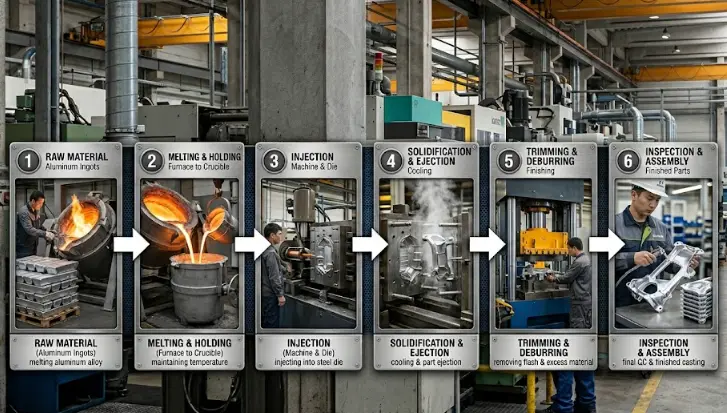
There Are Six Steps in the Aluminum Die Casting Process
Step 1–Tooling Design & DFM Optimization
Before molten aluminum enters, the stage is set inside the die casting mold. This preparatory phase is the foundational first step in the aluminum die casting process. Proper lubrication ensures the success of subsequent stages in the aluminum die casting process.
1. DFM Analysis: Designing for Manufacturability
Before mold fabrication begins, experienced engineers perform a DFM (Design for Manufacturability) review. This stage focuses on adapting the part geometry to suit the high-pressure die casting process.
Key considerations include:
- Wall thickness uniformity: Uneven sections create hot spots, increasing shrinkage porosity risk
- Fillet radii: Sharp corners restrict metal flow and concentrate stress
- Draft angles: Necessary for smooth ejection and to avoid surface damage
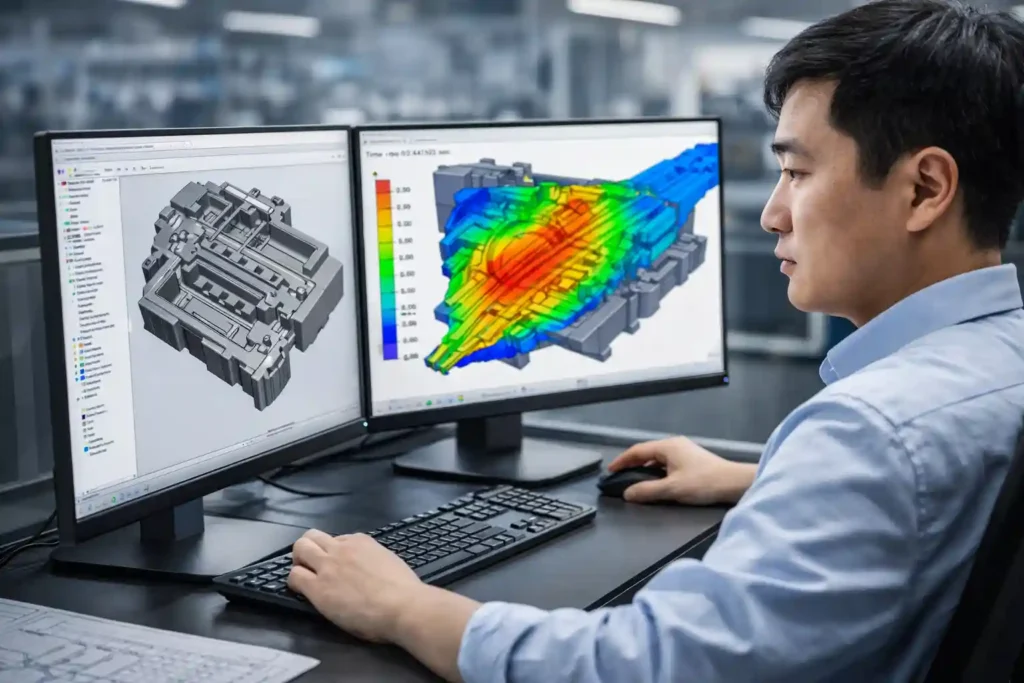
In real production, many casting defects originate not from the machine—but from geometry that was never optimized for die casting.
2. Gating & Runner System Engineering
The gating system controls how molten aluminum fills the cavity.
In a well-executed die casting mold design, engineers carefully balance:
- Flow velocity
- Flow direction
- Air evacuation
Improper gate placement often leads to:
- Turbulent flow → gas entrapment (porosity)
- Unbalanced filling → cold shuts or misruns
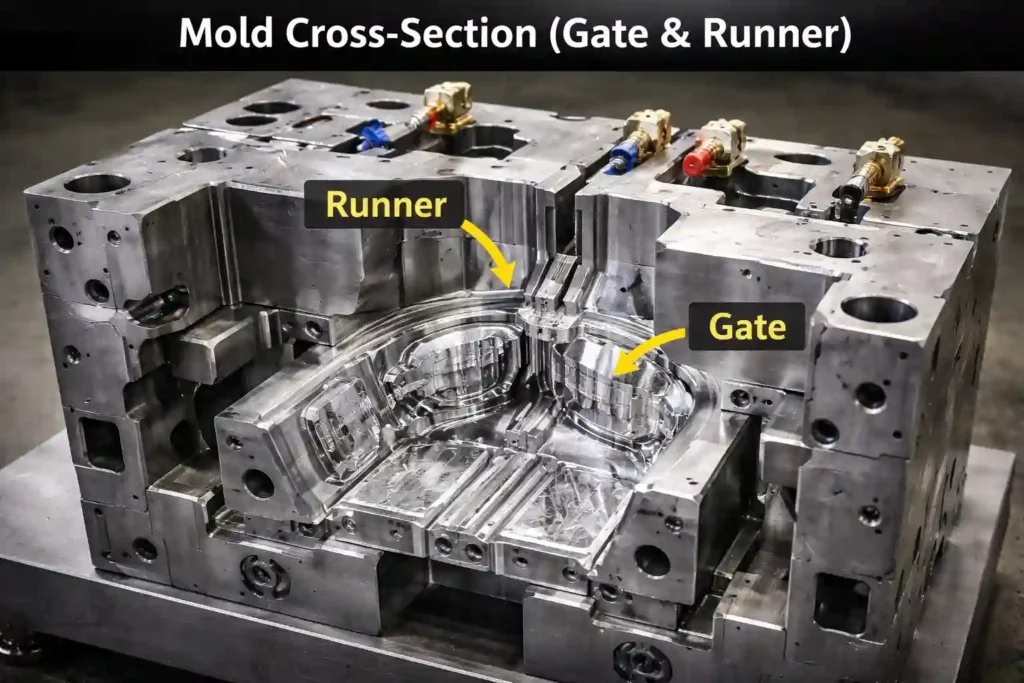
Advanced manufacturers use mold flow simulation to visualize the aluminum die casting process before the mold is even built, significantly reducing trial-and-error costs.
3. Thermal Management & Tool Life
Thermal balance inside the mold is another critical factor. Without proper cooling design:
- Local overheating reduces tool life
- Uneven cooling causes part deformation
Typical solutions include:
- Optimized cooling channel layout
- Localized cooling inserts (baffles, bubblers)
- Controlled mold temperature systems
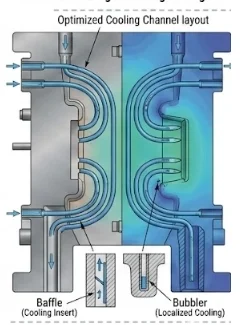
For most aluminum die casting tooling, H13 tool steel is used due to its resistance to thermal fatigue. However, even with high-grade steel, poor thermal design can drastically shorten mold life.
Step 2 – Aluminum Alloy Selection
Material selection in the Aluminum Die Casting Process is not just about strength—it directly affects fluidity, defect formation, machinability, and long-term performance.
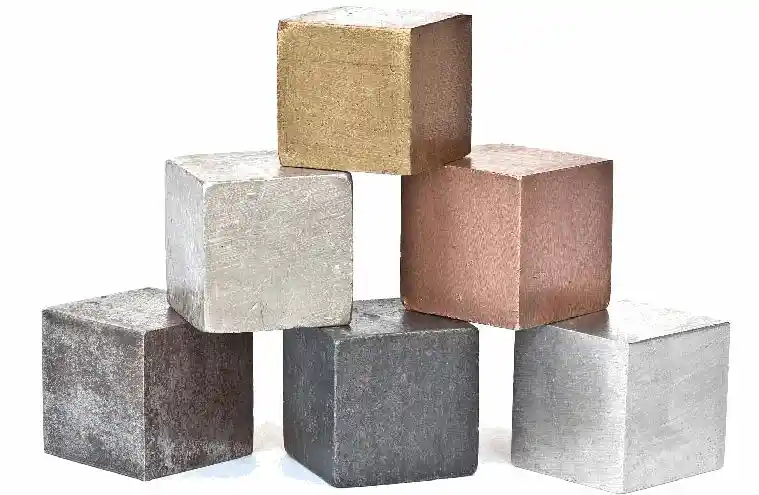
1. Common Aluminum Die Casting Alloys
The most widely used alloys in aluminum die casting manufacturing include:
- A380 aluminum alloy
→ Excellent balance of strength, fluidity, and cost
→ Widely used in automotive and structural components - ADC12
→ High fluidity, suitable for thin-wall and complex geometries
→ Common in electronics housings - AlSi9Cu3
→ Better pressure tightness
→ Preferred for pump housings and hydraulic components
2. How Alloy Choice Affects the Process
Different alloys behave very differently during the die casting process:
- High fluidity alloys reduce misruns but increase risk of gas entrapment
- High strength alloys may increase hot cracking tendency
- Higher silicon content improves casting ability but reduces ductility
This is why experienced suppliers don’t just accept a material spec—they often recommend optimization based on part function and production conditions.
3. Application-Based Selection Strategy
A practical selection approach looks like this:
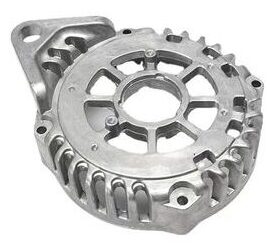
- Automotive parts prioritize strength and fatigue resistance
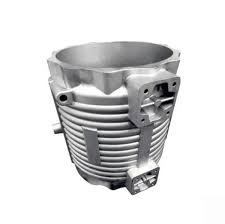
- Electronic enclosures → prioritize thermal conductivity and surface finish
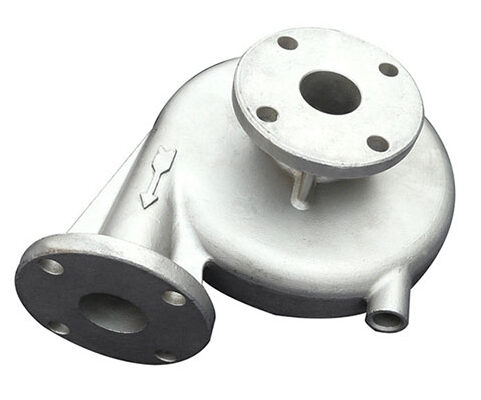
- Pump and valve castings prioritize pressure tightness and corrosion resistance
Choosing the wrong alloy can make even a perfectly designed mold fail in real production.
Step 3 – Melting, Degassing & High-Pressure Injection
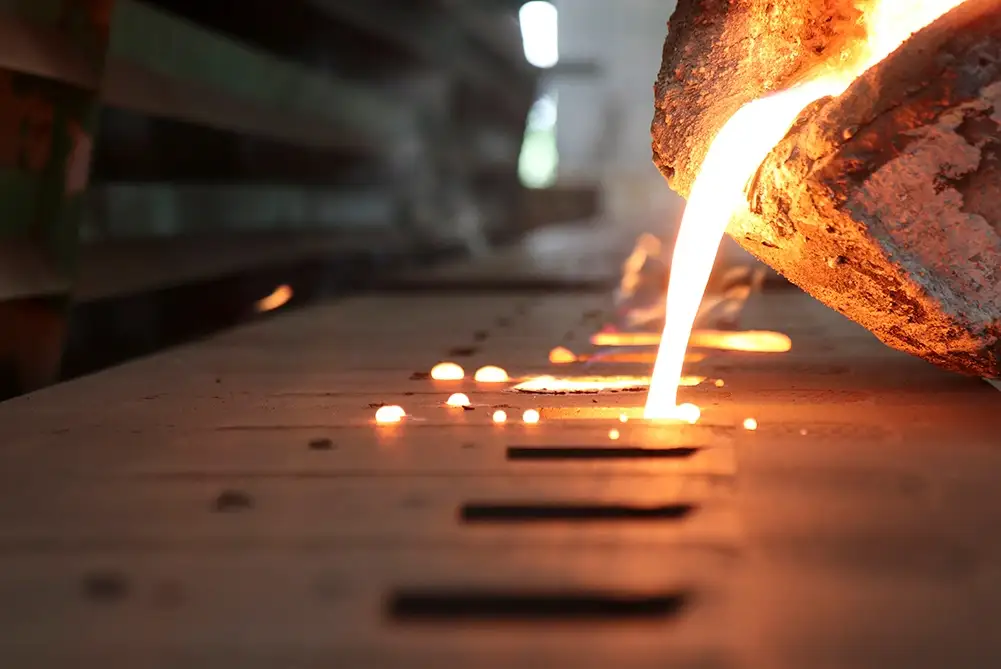
Once tooling and material are defined, the next stage in the Aluminum Die Casting Process is metal preparation and injection—this is where internal quality is largely determined.
1. Melting Process Control
Aluminum is typically melted at temperatures between 680°C and 720°C. At this stage, controlling melt quality is critical.
Common risks include:
- Oxide formation from exposure to air
- Inclusions that become internal defects
Even minor contamination can result in significant quality issues during the high pressure die casting process.
2. Degassing and Melt Refinement
To minimize gas porosity, molten aluminum undergoes degassing treatment, typically using:
- Argon or nitrogen gas
- Flux refining agents
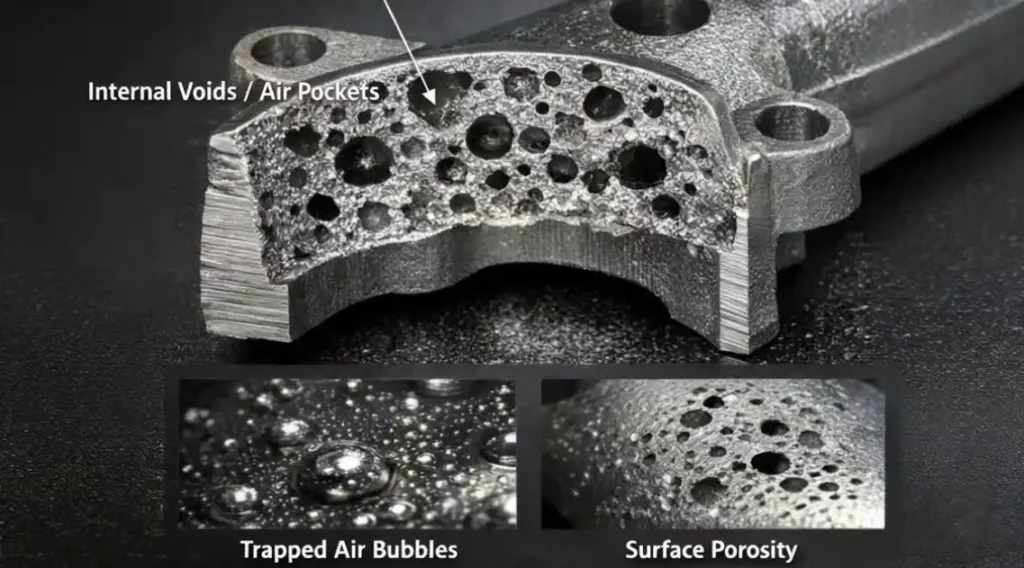
This step removes dissolved hydrogen, which is one of the primary causes of porosity in aluminum die casting.
Skipping or poorly controlling this step is a common reason why low-cost suppliers struggle with consistent quality.
3. Injection Phase: Speed, Pressure, and Timing
The injection stage is usually divided into three phases:
- Slow shot phase
- Pushes molten aluminum toward the gate
- Prevents air entrapment
- Fast shot phase
- Rapid cavity filling
- Critical for thin-wall parts
- Intensification phase
- High pressure applied to compensate shrinkage
- Improves density and mechanical properties
In a controlled die casting process, these parameters are not fixed—they are optimized for each part based on geometry and alloy.
4. Machine Parameters That Matter
Key variables include:
- Injection speed profile
- Injection pressure
- Clamping force (to prevent flash)
Improper settings can lead to:
- Flash (excess material leakage)
- Cold shuts (incomplete fusion)
- Internal porosity
This is why advanced manufacturers rely on process monitoring systems rather than manual adjustments.
Step 4 – Solidification & Cooling Control
In the Aluminum Die Casting Process, solidification is the stage where internal structure is formed—and where most hidden defects originate. Even with perfect mold design and injection control, improper cooling will still result in unstable quality.
1. Understanding Solidification Behavior
During the die casting process, molten aluminum transitions from liquid to solid under controlled cooling conditions. The key objective is to achieve directional solidification, where the metal solidifies progressively to avoid trapped shrinkage.
However, in real production, the following issues often occur:
- Non-uniform cooling → internal stress and warpage
- Isolated hot spots → shrinkage porosity
- Rapid surface cooling → internal void formation
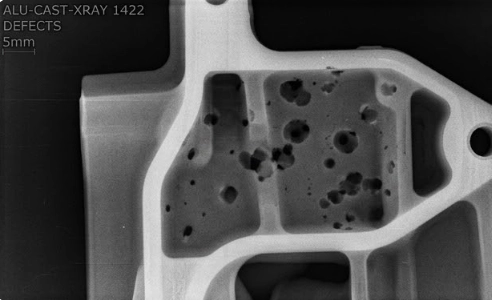
This is why cooling design is considered just as critical as injection parameters in high-quality aluminum die casting manufacturing.
2. Defect Mechanisms in Cooling
Most common defects in the aluminum die casting process are directly linked to solidification:
- Gas porosity → trapped air or hydrogen during filling
- Shrinkage porosity → insufficient feeding during solidification
- Cold shut → premature cooling before full fusion
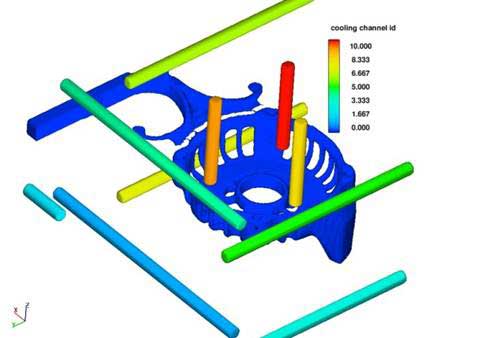
These are not random defects—they are predictable results of thermal imbalance and process inconsistency.
3. Thermal Control Strategies
Professional manufacturers control cooling through:
- Mold temperature controllers (MTC) to stabilize thermal conditions
- Optimized cooling channel layout for uniform heat extraction
- Localized cooling solutions to eliminate hot spots
A stable thermal cycle not only reduces defects but also improves cycle time, which directly impacts the overall die casting cost per part.
Step 5 – Ejection, Trimming & Inline Quality Control
After solidification, the part enters the mechanical handling stage of the Aluminum Die Casting Process. While often underestimated, this step plays a key role in maintaining dimensional stability and surface integrity.
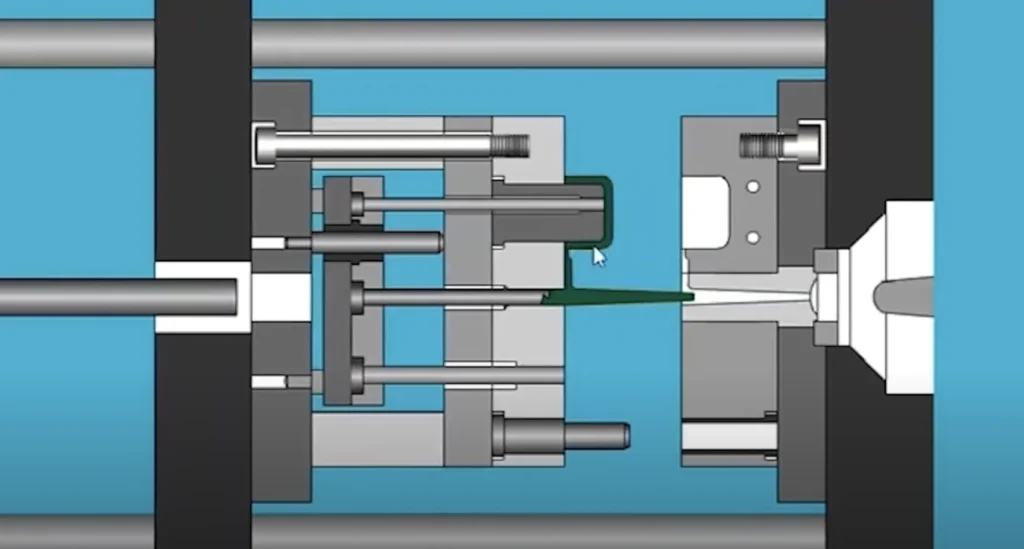
1. Ejection System Design
A well-designed ejection system ensures that the part is removed without deformation.
Key factors include:
- Ejector pin placement to distribute force evenly
- Draft angle design to reduce resistance during release
- Ejection timing to avoid distortion when the part is still hot
Poor ejection design often leads to:
- Surface marks
- Part bending
- Micro-cracks (especially in thin-wall sections)
2. Trimming and Flash Removal
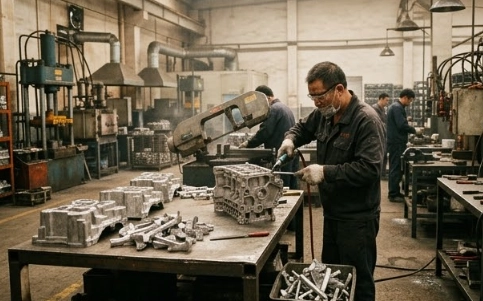
After ejection, excess material must be removed:
- Gates and runners are cut off using trimming dies
- Flash is removed either manually or through automated systems
In high-volume aluminum die casting production, automated trimming significantly improves consistency and reduces labor cost.
3. Inline Quality Inspection
At this stage, quality control is integrated directly into the die casting process workflow:
- Visual inspection → detects surface defects
- X-ray inspection → identifies internal porosity
- Leak testing → critical for sealed components like pump housings
Step 6 – Secondary Machining & Surface Finishing
Reliable die casting manufacturers implement inline inspection to prevent defective parts from moving downstream, reducing overall scrap rates.
Even with high precision, the Aluminum Die Casting Process typically produces a near-net-shape part—not a finished product. Secondary operations are required to meet functional and cosmetic requirements.
1. CNC Machining for Critical Features
Key areas such as:
- Sealing surfaces
- Threaded holes
- Tight tolerance interfaces
require CNC machining to achieve tolerances as tight as ±0.01 mm.
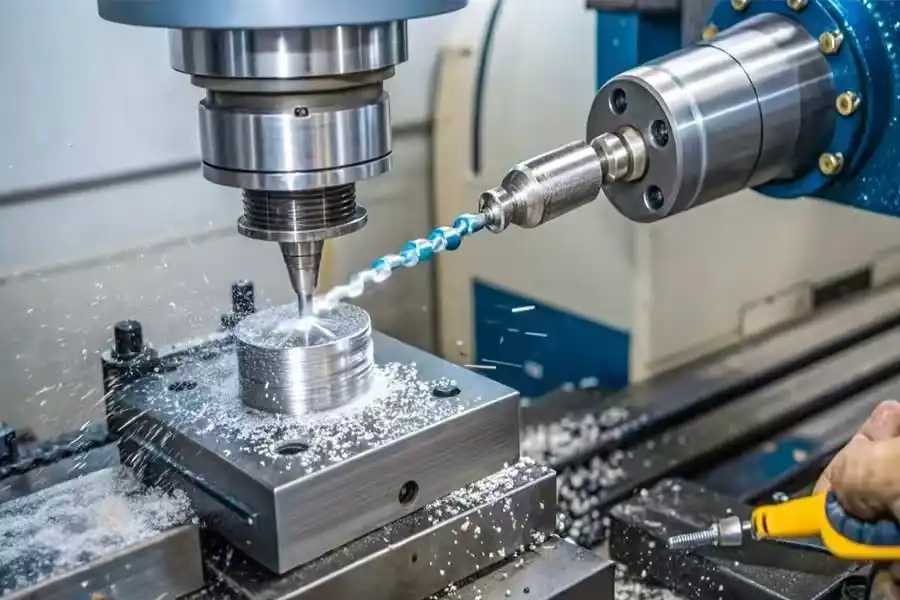
In industries like automotive and fluid systems, this step determines whether the part will function reliably in real-world conditions.
2. Surface Finishing Options
Depending on application requirements, common finishing processes include:
- Powder coating → improved corrosion resistance
- Anodizing → enhanced surface hardness and appearance
- Sandblasting → uniform surface texture
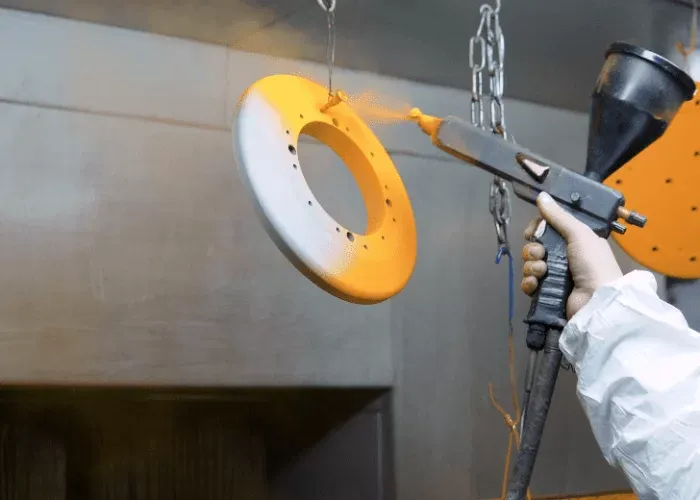
These treatments not only improve aesthetics but also extend product lifespan in demanding environments.
3. Functional Finishing Considerations
Beyond appearance, finishing can enhance:
- Corrosion resistance
- Electrical conductivity
- Wear resistance
This is why finishing is often tailored to the final application—not just specified as a standard process.
Process Integration: Why Every Step Matters
A key reality of the Aluminum Die Casting Process is that no step operates independently.
- Tooling design determines flow behavior and defect risk
- Material selection affects fluidity and mechanical performance
- Injection control influences internal density
- Cooling impacts cycle time and defect formation
- Finishing defines final usability
In practice, optimizing only one step rarely works. High-quality results come from system-level process control, which is what separates professional manufacturers from low-cost suppliers.
Common Defects in Aluminum Die Casting (Root Cause & Solutions)
| Defect | Root Cause | Engineering Solution |
|---|---|---|
| Porosity | Gas entrapment / hydrogen | Degassing + optimized injection speed |
| Cold shut | Low temperature / slow filling | Increase melt temp + improve gate design |
| Flash | Excess pressure / low clamping force | Adjust machine parameters |
| Warpage | Uneven cooling | Improve thermal balance |
| Shrinkage | Poor solidification control | Optimize intensification pressure |
Understanding these defects is essential when evaluating any aluminum die casting supplier.
Why Work with a Professional Manufacturer Like IEC Mould
Choosing the right partner is just as important as understanding the Aluminum Die Casting Process itself.
IEC Mould offers a fully integrated approach:
- In-house tooling design and manufacturing
- High-pressure aluminum die casting production
- CNC machining and surface finishing
- DFM support to optimize your part before production
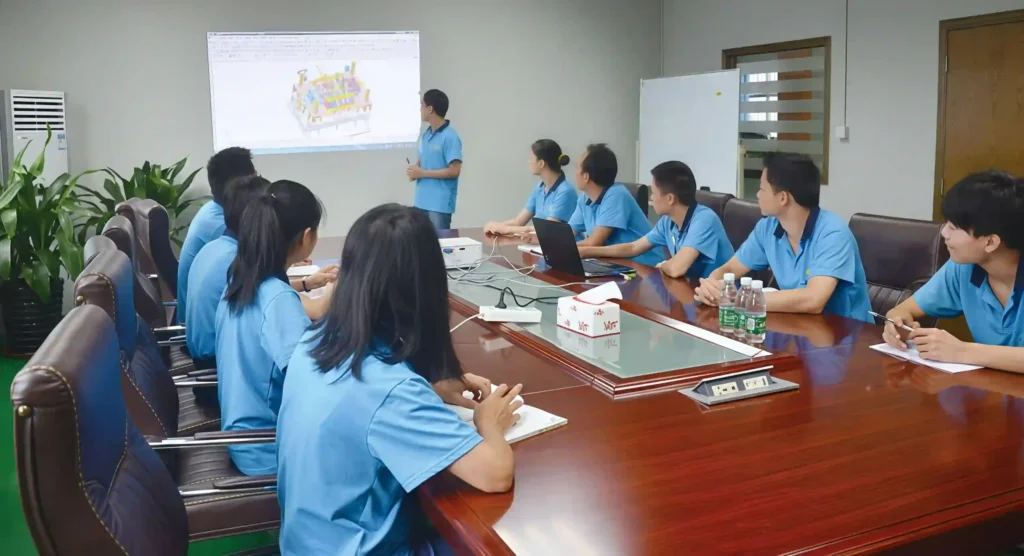
This integrated capability ensures better control over quality, cost, and lead time—especially for high-volume projects.
Get a Quote for Your Aluminum Die Casting Project
If you’re sourcing a reliable aluminum die casting manufacturer, providing the right information upfront can significantly speed up evaluation.
What IEC can do:
- Custom aluminum die casting parts
- Tooling design & cost optimization
- Mass production with stable quality
- Secondary machining & finishing
What you should provide:
- 3D files (STEP / STP format)
- Annual volume
- Material or performance requirements
- Surface finishing expectations
With this information, an experienced team can quickly assess feasibility and provide accurate pricing.
Conclusion: Mastering the Aluminum Die Casting Process for Better Quality and Lower Cost
The Aluminum Die Casting Process is far more than a simple manufacturing method—it is a highly integrated engineering system where every step, from tooling design to final finishing, directly impacts product quality, cost efficiency, and production stability.
As discussed, achieving consistent results requires more than just equipment. It depends on:
- Well-optimized die casting mold design to ensure balanced filling
- Proper aluminum alloy selection based on application needs
- Controlled high pressure die casting process parameters
- Stable cooling and solidification management to prevent defects
- Reliable inspection and finishing processes to meet functional requirements
In real-world production, most casting issues—such as porosity, warpage, or dimensional variation—are not caused by a single mistake, but by a lack of control across the entire process.
FAQ for Aluminum Die Casting Process
What is the aluminum die casting process step by step?
It includes mold design, material selection, melting and injection, cooling, ejection, and finishing operations.
What causes porosity in aluminum die casting?
Porosity is mainly caused by trapped gas or insufficient degassing during the aluminum die casting process.
What is the best aluminum alloy for die casting?
A380 is the most widely used due to its balance of strength, fluidity, and cost.
Is aluminum die casting suitable for high-volume production?
Yes, the aluminum die casting process is ideal for mass production due to its high efficiency and repeatability.
How much does aluminum die casting cost per part?
Cost depends on tooling, material, part complexity, and production volume. High volume significantly reduces unit cost.
How long does a die casting mold last?
Typically 50,000 to 150,000 shots, depending on material, design, and process control.