
When people evaluate die casting aluminum projects, the most common mistake is focusing only on the unit price quoted by suppliers. On the surface, one offer may look cheaper, but in real production, the total cost can be very different once the project enters mass manufacturing.
In aluminum die casting manufacturing, the real cost is not only the price of casting parts. It includes tooling design, material behavior, production efficiency, secondary machining, and quality stability. In fact, for most die casting aluminum components, hidden costs can account for 30–50% of the total production cost.
This is why many companies experience a situation where the initial quotation looks competitive, but the final production cost increases significantly during scaling.
The truth is simple:
👉 The real cost of die casting aluminum parts is determined long before production starts—mainly during design and tooling development.
Typical hidden cost drivers in aluminum die casting include:
- Poor die casting part design that increases scrap rate
- Inefficient die casting mold design affecting cycle time
- Wrong aluminum alloy selection impacting casting stability
- Excessive CNC machining or secondary operations
- Unstable process control in die casting production
- Choosing the wrong die casting supplier
Understanding these cost traps is essential for engineers, buyers, and product developers who want to reduce die casting aluminum cost and improve long-term profitability.
In this article, we will break down 7 hidden die casting aluminum cost traps that are commonly ignored but directly affect manufacturing cost, quality, and production efficiency.
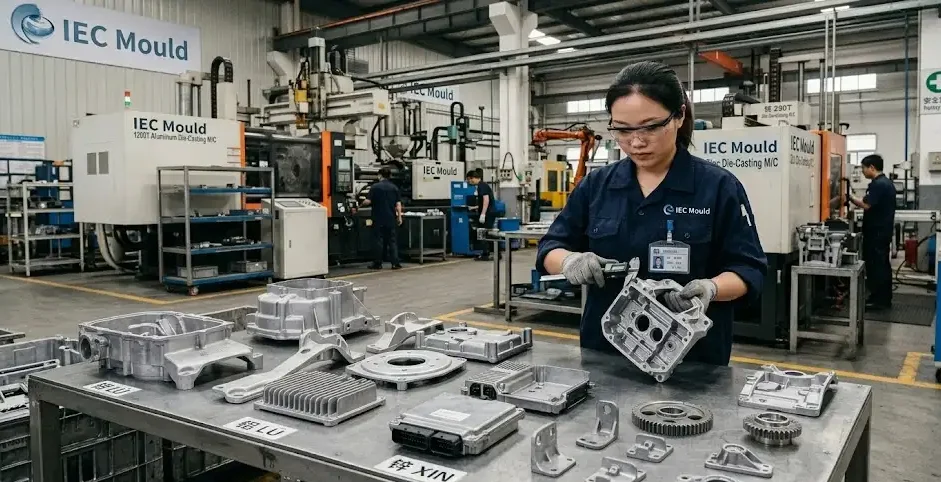
7 Hidden Cost Traps in Die Casting Aluminum You Must Avoid
Trap 1: Non-Manufacturable Die Casting Aluminum Design
One of the most expensive mistakes in die casting aluminum design happens before tooling even starts. A part may look perfect in CAD, but it may not be optimized for high-pressure die casting. Common issues include uneven wall thickness, lack of draft angles, and overly complex geometries. In aluminum die casting processes, these issues directly affect metal flow and solidification behavior.
For example, when wall thickness variation exceeds ±1.5 mm, molten aluminum flow becomes unstable, which increases the risk of porosity and shrinkage defects.
From a cost perspective, poor design in die casting aluminum parts leads to:
- Scrap rate increase by 10–25%
- Tooling complexity cost increase by 15–40%
- Longer cycle time due to unstable filling
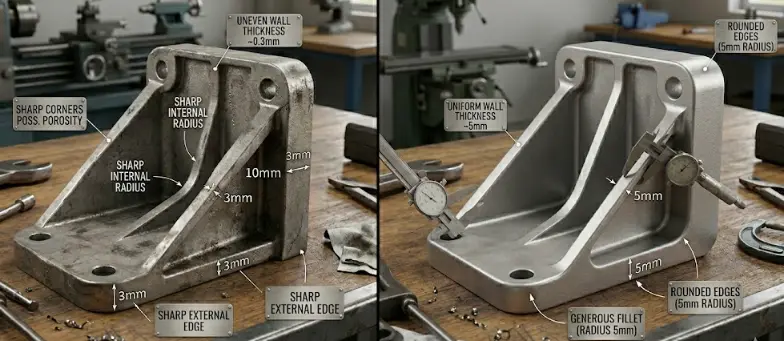
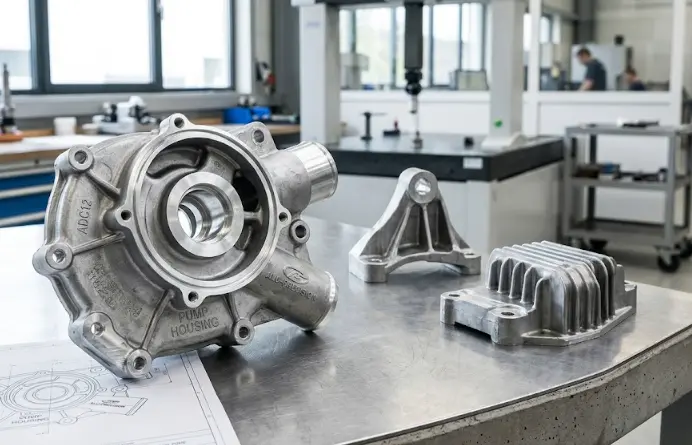
In real production cases such as pump housing and valve body casting, poor geometry often leads to internal defects in flow transition areas.
To reduce die casting aluminum cost, early-stage DFM (Design for Manufacturability) review is critical. A stable aluminum die casting design usually keeps wall thickness between 2–4 mm for balanced flow and strength.
Trap 2: Poor Die Casting Mold Design
Tooling is one of the most important cost drivers in die casting production. A poorly designed die casting mold will continuously generate defects and inefficiencies. Common problems include improper gating systems, unbalanced runner design, insufficient venting, and poor cooling channel layout. These issues cause turbulence during molten aluminum filling, which leads to gas porosity and inconsistent solidification.
Cost impact of poor die casting mold design:
- Cycle time increases by 10–30%
- Higher defect rate in aluminum die casting production
- Increased maintenance cost for tooling
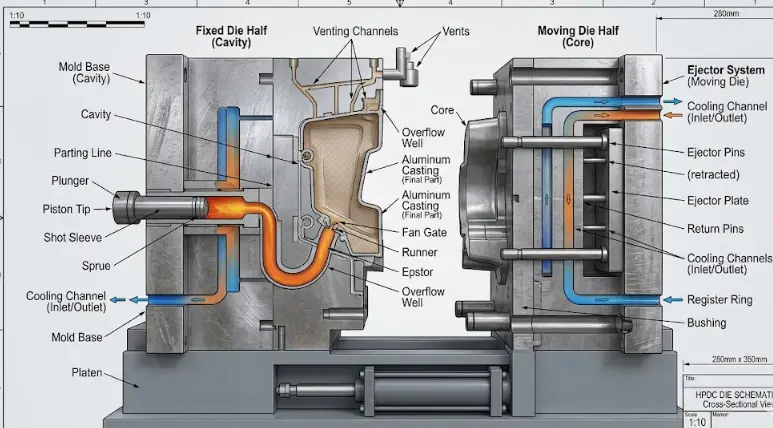
In high-volume die casting aluminum manufacturing, even a few seconds of cycle time increase can significantly raise annual production cost.
That is why mold flow simulation is widely used in modern die casting aluminum factory systems. It helps predict flow behavior, optimize cooling design, and reduce production risk before tooling is built.
Trap 3: Wrong Aluminum Alloy Selection in Die Casting
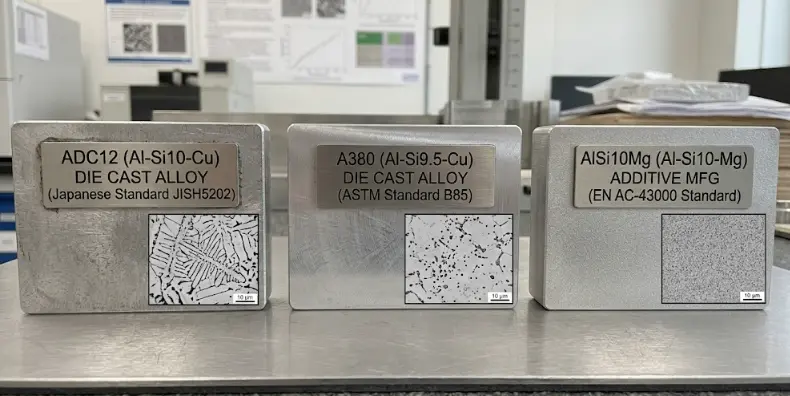
Aluminum alloy selection has a direct impact on casting quality, cost, and performance. In die casting aluminum processes, common alloys include ADC12, A380, and AlSi10Mg.
Each alloy has different characteristics:
- ADC12: excellent flowability, lower strength, cost-effective
- A380: balanced mechanical properties for general die casting aluminum parts
- AlSi10Mg: high strength but higher cost and more machining difficulty
A common mistake is selecting a high-performance alloy when it is not necessary for the application.
This leads to:
- 20–35% increase in material cost
- Higher machining wear during CNC operations
- Increased defect sensitivity in die casting aluminum production
For example, in pump casting applications, alloy selection must balance corrosion resistance, pressure resistance, and machinability rather than just strength.
Trap 4: Hidden Cost in Secondary Operations
Many people underestimate the cost of secondary operations in die casting aluminum manufacturing.
Even though die casting is a near-net-shape process, most parts still require CNC machining, surface treatment, and inspection.
Common secondary operations include:
- CNC machining for sealing surfaces
- Anodizing or powder coating
- Deburring and polishing
- Leak testing for pump casting and valve components
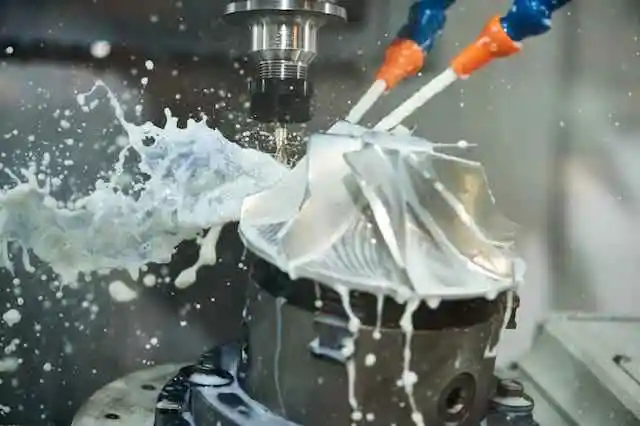
In many aluminum die casting projects, secondary operations can account for 25–45% of total cost.
If the part design is not optimized, machining requirements can significantly increase production time and cost.
A better approach is near-net-shape die casting aluminum design, where only functional surfaces are machined.
Trap 5: Incorrect Production Volume Strategy
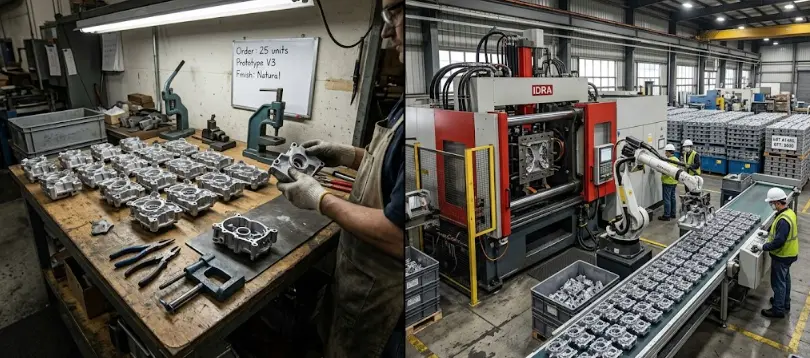
Die casting aluminum is best suited for medium to high-volume production. The tooling cost is relatively high, but unit cost decreases significantly at scale. A common mistake is using die casting aluminum for low-volume production without proper cost analysis.
Below typical break-even range:
- Below 5,000–10,000 pcs: die casting aluminum is usually not cost-effective
- Above this range: unit cost becomes highly competitive
Without proper volume planning, tooling cost cannot be amortized effectively, leading to higher per-part cost and poor ROI.
Trap 6: Weak Quality Control in Aluminum Die Casting
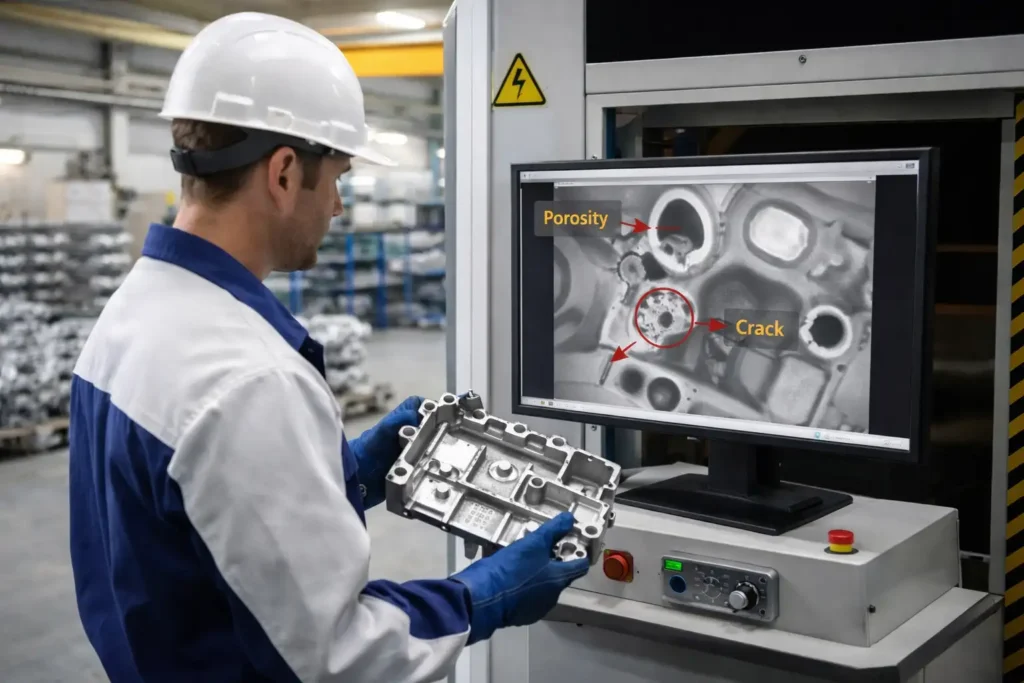
Quality instability is one of the most expensive hidden costs in die casting aluminum production. Without proper process control, defects such as porosity, shrinkage, and dimensional variation can fluctuate between batches. In some unstable die casting aluminum environments, scrap rates can vary from 5% to over 20%.
Professional aluminum die casting manufacturers implement:
- IQC / IPQC / FQC systems
- X-ray inspection for internal defects
- Pressure and leak testing for sealing components
For pump casting and hydraulic components, leak testing is especially critical.
Trap 7: Choosing the Wrong Die Casting Aluminum Supplier
Supplier selection plays a major role in total die casting aluminum cost. Choosing a supplier based only on price often leads to hidden engineering and quality problems later.
Common issues include:
- Repeated mold modifications
- Lack of engineering support
- Poor project communication
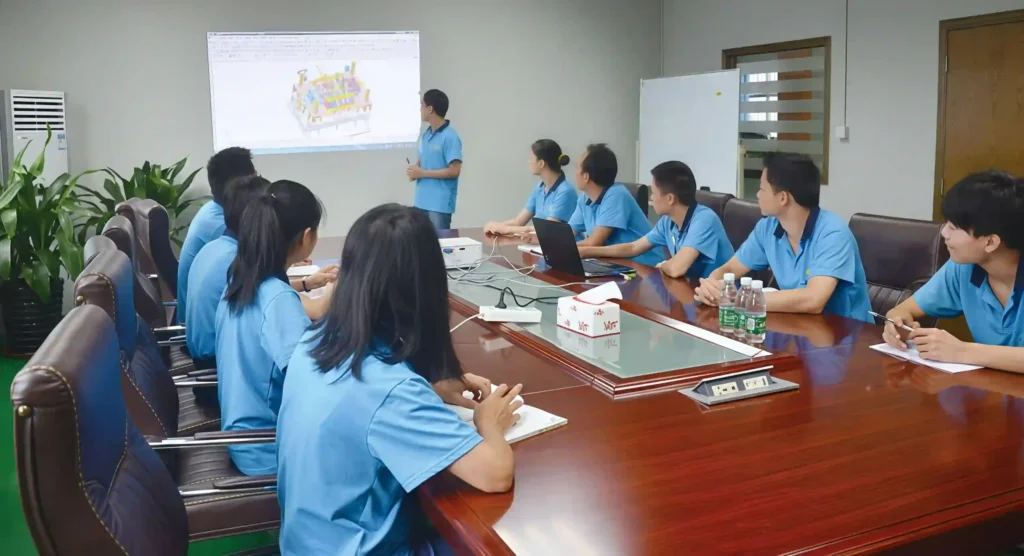
A reliable die casting aluminum supplier should provide:
- DFM analysis before tooling
- Mold flow simulation capability
- Integrated manufacturing (tooling + casting + CNC + finishing)
- Strong project management system
Real Cost Structure of Die Casting Aluminum
Understanding cost structure is key to controlling die casting aluminum expenses.
Typical breakdown:
- Tooling: 20–40%
- Material: 15–25%
- Die casting production: 20–30%
- Secondary machining: 10–30%
- Scrap and quality loss: 5–15%
The most overlooked parts are secondary machining and quality loss, which often determine actual profit margins in aluminum die casting projects.
How to Reduce Die Casting Aluminum Cost Systematically
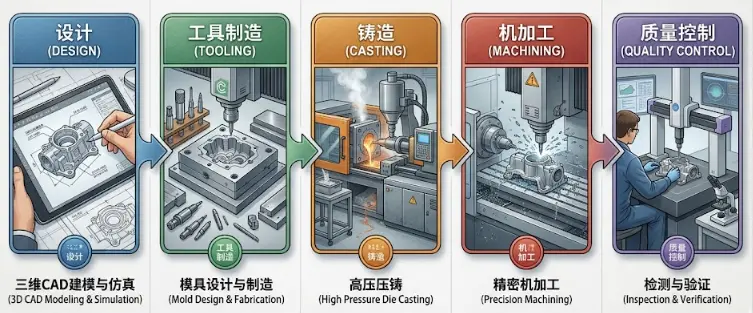
Cost reduction in die casting aluminum is not achieved by negotiation alone. It requires engineering optimization across the entire process:
- Optimize design using DFM principles
- Improve die casting mold design (flow, cooling, venting)
- Select proper aluminum alloy based on application
- Reduce secondary machining requirements
- Stabilize production process control
- Choose an experienced die casting aluminum supplier
Conclusion: Engineering-Driven Cost Control in Die Casting Aluminum
In casting aluminum projects, cost is not defined by the quotation—it is defined by engineering decisions made before production begins.
Most cost overruns come from three core issues:
- Poor part design increases scrap rate and defect risk
- Inefficient mold design increases cycle time and instability
- Excessive secondary machining reduces profit margins
A stable and competitive die casting cost structure can only be achieved when design, tooling, process, and supplier capability are aligned.
Real cost control is not about lowering price—it is about improving engineering quality at every stage of development.
Get Engineering Cost Optimization Support from IEC Mould
At IEC Mould, we help customers reduce total casting aluminum die cost through engineering optimization before production starts.
What We Can Do:
- Free DFM (Design for Manufacturability) analysis
- Mold flow simulation before tooling
- Die casting mold optimization (gating, cooling, venting)
- Material selection guidance
- Cost reduction proposals based on real manufacturing experience
- One-stop manufacturing:
- Tooling
- Aluminum die casting
- CNC machining
- Surface finishing
What We Need From You:
- 2D or 3D CAD files (STEP / IGES preferred)
- Annual production volume
- Material requirements
- Surface finish requirements
- Critical dimensions or functional areas
- Target cost range (if available)
We usually respond within 24 hours with engineering feedback and cost optimization suggestions.
FAQ: Strategic Sourcing for Die Casting Aluminum
What is the biggest hidden cost in die casting aluminum?
Secondary machining and poor part design are the most common hidden cost drivers.
Why does die casting aluminum cost vary between suppliers?
Because engineering capability, tooling design, and process control levels are different.
How can I reduce die casting aluminum cost?
Through DFM optimization, better mold design, and reducing unnecessary machining.
Is die aluminum suitable for low-volume production?
Generally no, due to high tooling cost and amortization limits.
What causes high scrap rates in die casting aluminum?
Poor design, unstable process control, and improper mold flow behavior.
How important is supplier selection in die casting aluminum projects?
Very important—it directly affects cost, quality stability, and delivery performance.