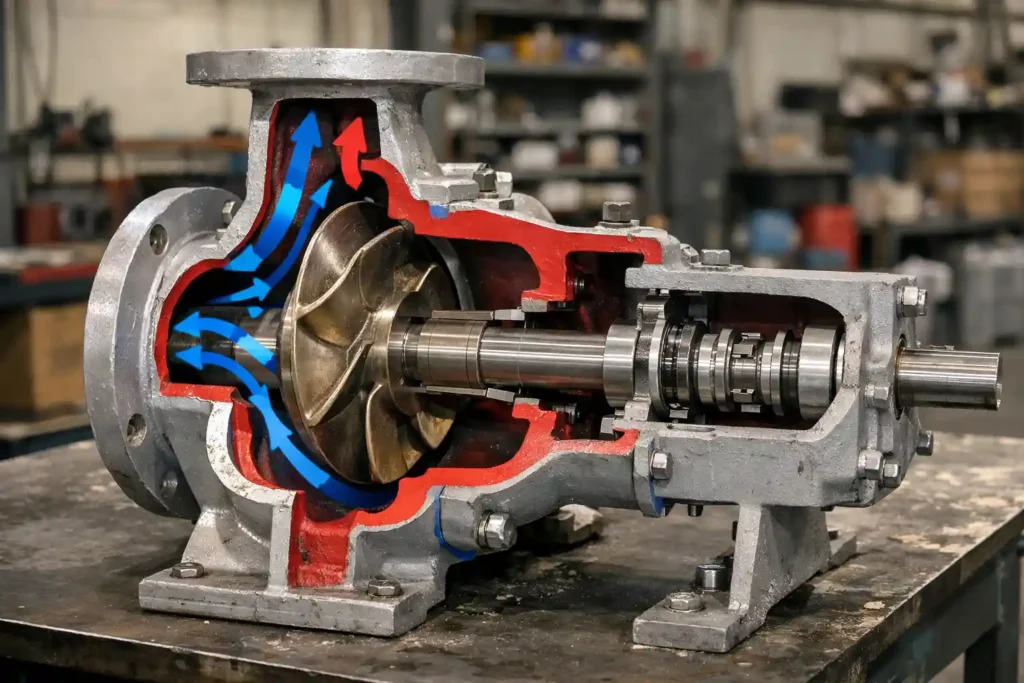
Choosing reliable pump casting manufacturers requires evaluating both engineering capability and production quality.
A qualified supplier should meet the following key criteria:
- Strong engineering support for pressure-tight components
- Experience with pump-specific materials and applications
- In-house tooling and mold manufacturing capability
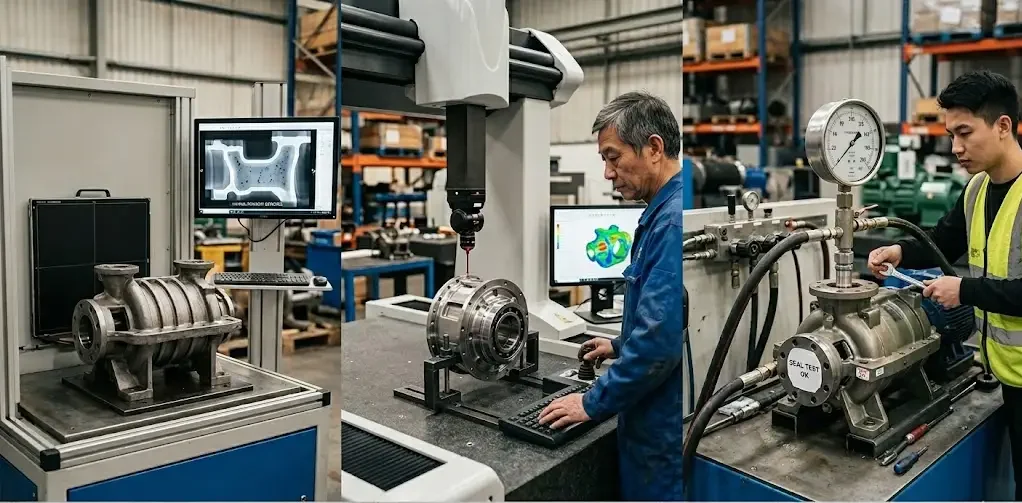
- Advanced quality control, including X-ray and leak testing
- Stable production with consistent dimensional accuracy
These factors directly impact the performance, sealing reliability, and lifespan of pump components.
What Makes a Reliable Pump Casting Manufacturer?
A reliable pump casting manufacturer is not defined by production capacity alone, but by its ability to consistently deliver pressure-tight, dimensionally stable, and machining-ready components. In pump applications, performance depends on how well the supplier controls the entire process—from design and tooling to casting and finishing—rather than any single step.
In practice, a qualified manufacturer should demonstrate the following capabilities:
- Engineering-driven design optimization
Instead of simply following drawings, the supplier should perform DFM analysis to identify risks such as porosity, shrinkage, and machining distortion, especially in sealing and pressure-bearing areas. - Control of internal casting quality
Reliable pump casting manufacturers focus on minimizing internal defects through proper gating design, controlled filling conditions, and solidification management, rather than relying only on post-inspection. - Precision in functional and sealing surfaces
Pump components require tight flatness and tolerance control after machining. This requires coordination between casting allowance and machining processes from the beginning. - Integrated tooling and process capability
In-house mold design and manufacturing allow faster iteration, better process control, and more stable production results, especially for complex geometries. - Consistency in mass production
The ability to maintain stable quality across production batches depends on process standardization, parameter control, and mold life management.
In essence, a reliable supplier is one that can predict, control, and continuously improve the factors that affect pump performance, rather than reacting to defects after they occur.
Why Pump Casting Requires Specialized Expertise
Not all casting suppliers are equipped to produce high-quality pump components.
1. Pump castings typically involve:
- Pressure-tight structures
- Complex internal flow channels
- Machined sealing surfaces
2. Common issues include:
- Internal porosity leading to leakage
- Shrinkage defects in thick sections
- Poor flatness on sealing areas
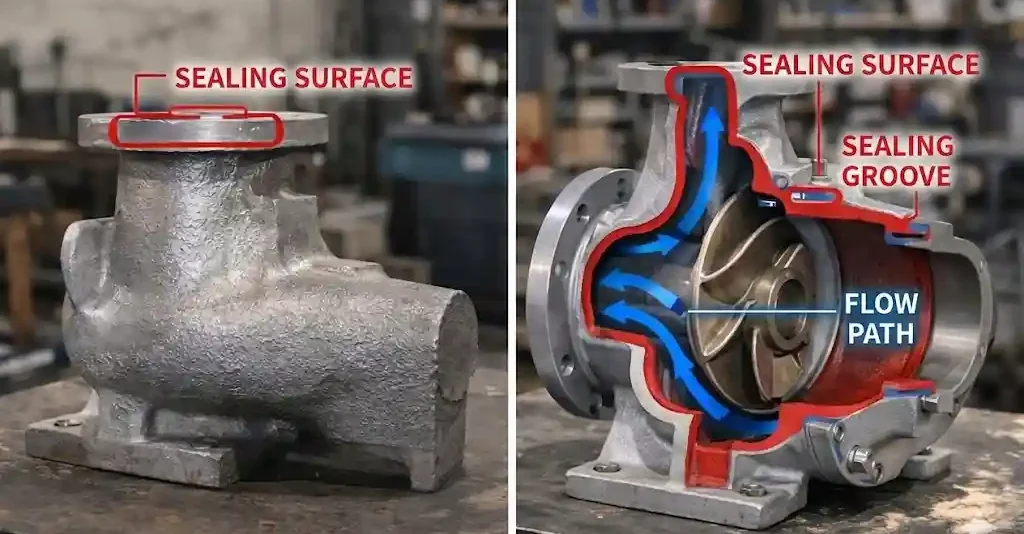
Experienced pump casting manufacturers address these risks through optimized mold design and strict process control.
Pump Casting Design Challenges (And How They Are Solved)
Pump components place much higher demands on casting design compared to general industrial parts. In real production, most quality issues—such as leakage, dimensional instability, or machining failure—can be traced back to design-stage decisions.
Experienced pump casting manufacturers focus on identifying and solving these challenges before tooling is finalized.
1. Controlling Internal Porosity in Pressure Zones
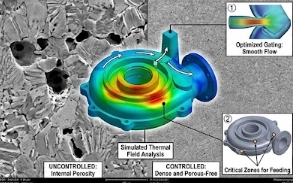
One of the most critical challenges in pump casting is internal porosity, especially in pressure-bearing areas and sealing zones. If not properly controlled, gas porosity or shrinkage cavities can lead to leakage under working pressure.
How it is solved:
- Gating systems are designed to promote smooth, directional metal flow, reducing turbulence and air entrapment
- Critical zones are positioned to allow better feeding during solidification
- Simulation tools are used to identify high-risk porosity areas before mold manufacturing
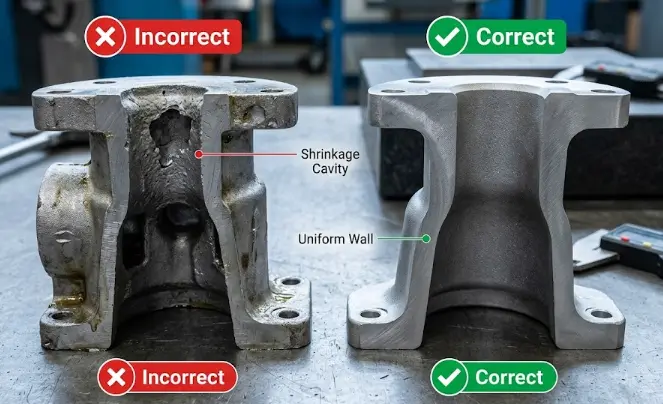
2. Managing Wall Thickness to Prevent Shrinkage Defects
Pump housings often include thick sections combined with thin walls, which creates uneven cooling conditions.
This can result in:
- Internal shrinkage cavities
- Surface sink marks
- Structural weakness
How it is solved:
- Wall thickness is optimized during DFM to ensure more uniform solidification
- Local geometry is adjusted to avoid sudden thickness transitions
- Cooling channels in the mold are designed to balance heat distribution
3. Ensuring Machining Allowance for Sealing Surfaces
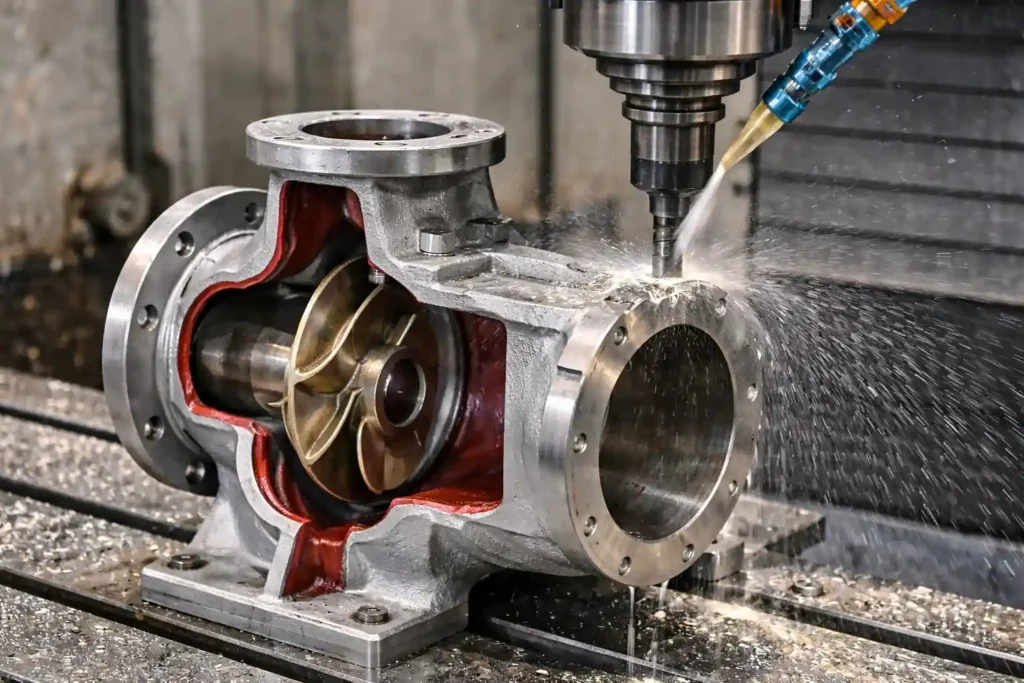
Sealing surfaces are critical to pump performance and must meet strict flatness and tolerance requirements after machining.
A common issue is:
- Insufficient machining allowance → cannot remove casting defects
- Excessive allowance → increased machining cost and distortion risk
How it is solved:
- Machining allowance is defined based on casting capability and tolerance requirements
- Critical sealing areas are designed with controlled stock for finishing
- Casting deformation risks are evaluated to ensure machining stability
4. Air Entrapment and Venting in Complex Geometries
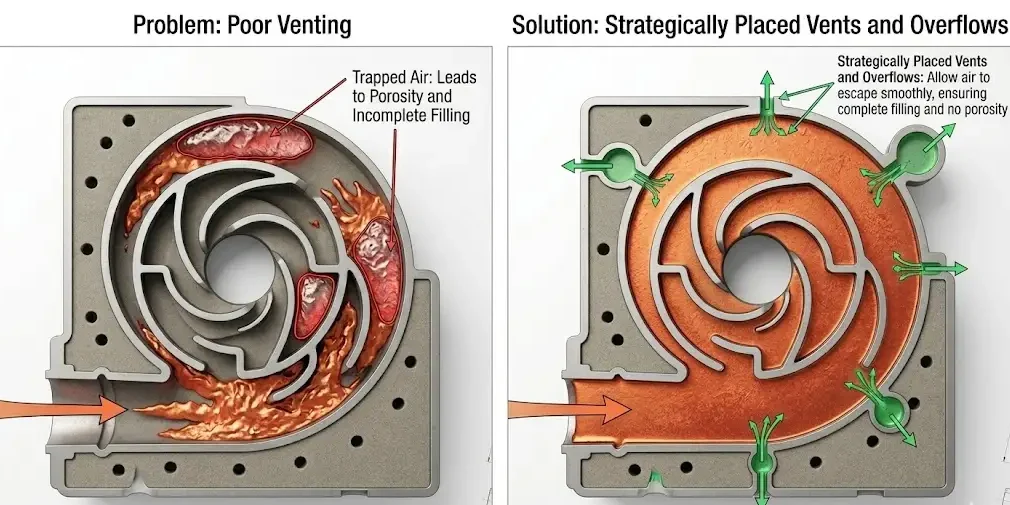
Pump components often include internal cavities and enclosed structures, making air evacuation difficult during filling.
Trapped air leads to:
- Gas porosity
- Incomplete filling
- Weak internal structure
How it is solved:
- Venting channels are strategically placed to improve air evacuation
- Overflow systems are used to carry trapped air out of the cavity
- Filling speed and pressure are adjusted to reduce turbulence
5. Controlling Dimensional Stability for Assembly Interfaces
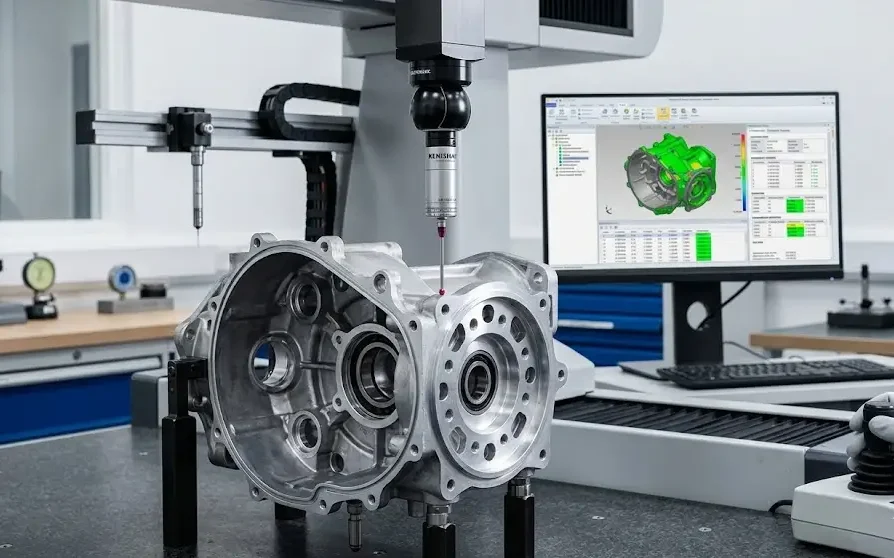
Pump castings must integrate with other components, requiring tight dimensional tolerances.
Challenges include:
- Thermal deformation during solidification
- Variation over long production runs
- Mold wear affecting repeatability
How it is solved:
- Key dimensions are controlled through precision mold design and machining
- Critical features are reserved for post-machining
- Mold maintenance and life cycle monitoring ensure consistent output
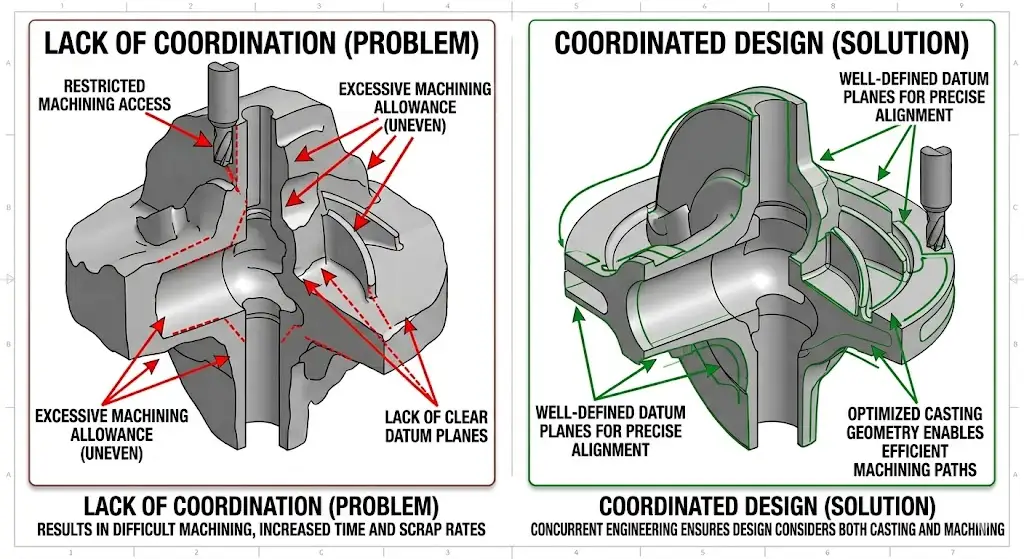
6. Balancing Casting Design with Machining Requirements
Pump components are not purely casting parts—they are casting + machining combined products.
A common issue is poor coordination between the two processes, leading to:
- Difficult machining access
- Increased machining time
- Higher scrap rates
How it is solved:
- Casting geometry is designed to allow efficient machining paths
- Datum surfaces are defined clearly for positioning
- Engineering teams consider both casting and machining simultaneously
✔ Summary
These challenges highlight why pump casting is not a standard process.
Reliable custom pump casting manufacturers do more than produce parts—they optimize the entire process from design to machining to ensure:
- Leak-free performance
- Stable dimensions
- Efficient production
Top 10 Qualities to Look for in Pump Casting Manufacturers
1. Engineering Capability for Pressure-Tight Components
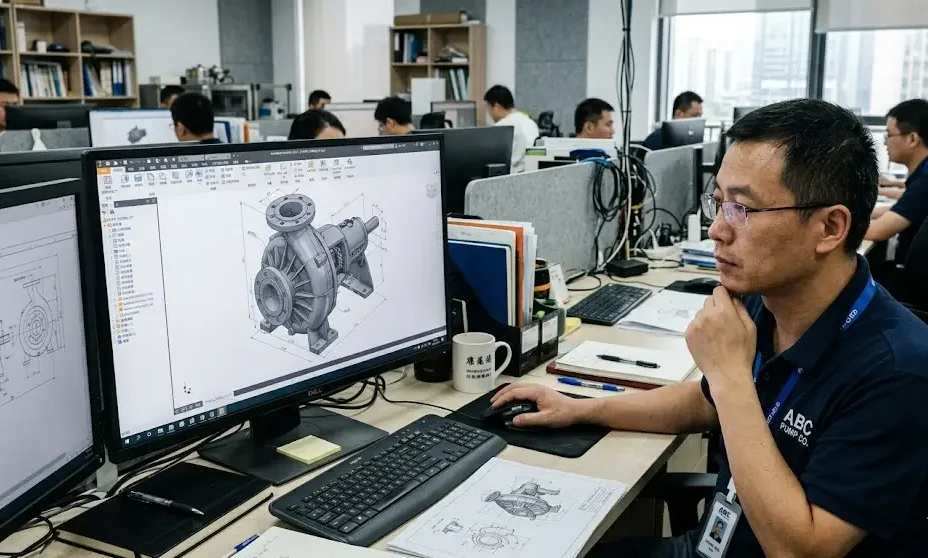
Reliable pump casting manufacturers provide engineering input early in development.
Typical capabilities include:
- DFM (Design for Manufacturability) analysis
- Mold flow simulation
- Porosity risk evaluation and control
Early-stage optimization reduces defects and improves overall manufacturability.
2. Material Expertise for Pump Applications
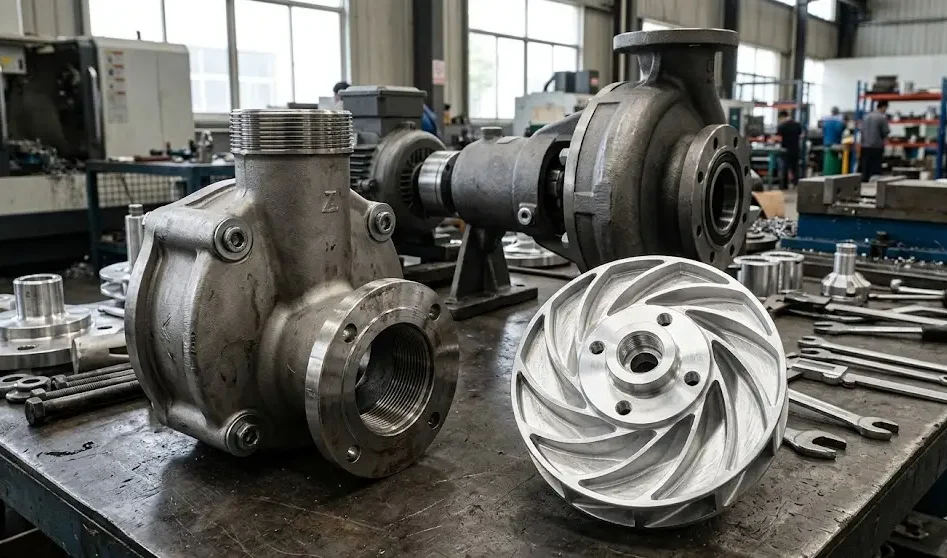
Material selection should match actual working conditions.
Common options include:
- Aluminum alloys – lightweight with good thermal performance
- Zinc alloys – suitable for high-precision components
- Stainless steel or cast iron – better corrosion resistance
A professional pump casting supplier will recommend materials based on application, not just cost.
3. In-House Tooling and Mold Manufacturing
Tooling quality defines casting consistency.
Working with pump casting manufacturers that offer in-house mold production allows:
- Faster sampling and iteration
- Better dimensional accuracy
- Improved mold lifespan
At IEC Mould, tooling and casting are closely integrated to ensure process control from the start.
4. Advanced Quality Control for Leak Prevention
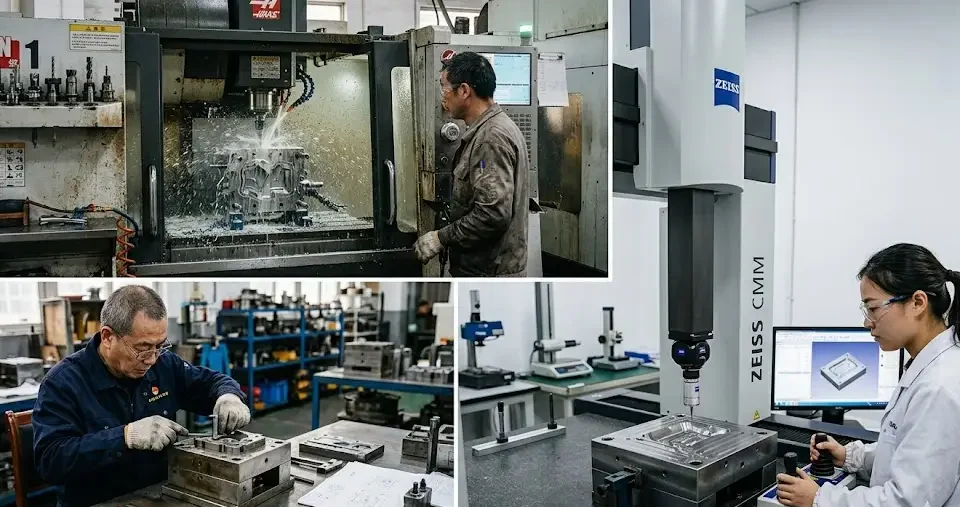
For pump components, internal quality is critical.
Key inspection methods include:
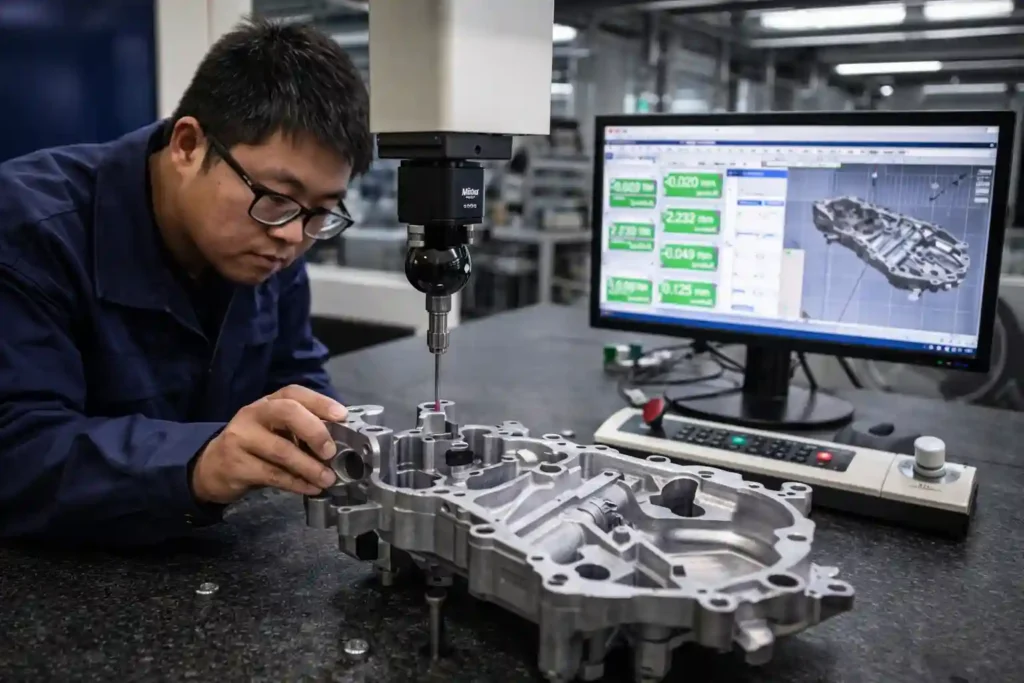
- X-ray inspection for internal porosity
- CMM for dimensional verification
- Leak and pressure testing for sealing performance
Experienced industrial pump casting manufacturers focus on preventing leakage risks rather than only detecting defects.
🔹 Engineering Support Matters Early
For complex pump components, early engineering input can significantly reduce casting defects and machining costs.
If needed, you can share your drawings with our team for a quick feasibility check.
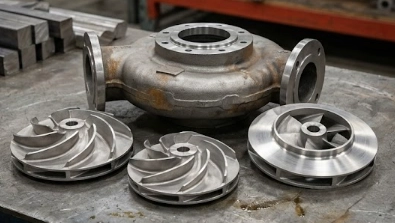
5. Proven Experience in Pump Component Production
Suppliers with real project experience better understand functional requirements.
Typical components include:
- Pump housings
- Impeller housings
- Fluid system parts
An experienced pump housing casting supplier is more likely to anticipate potential issues before production.
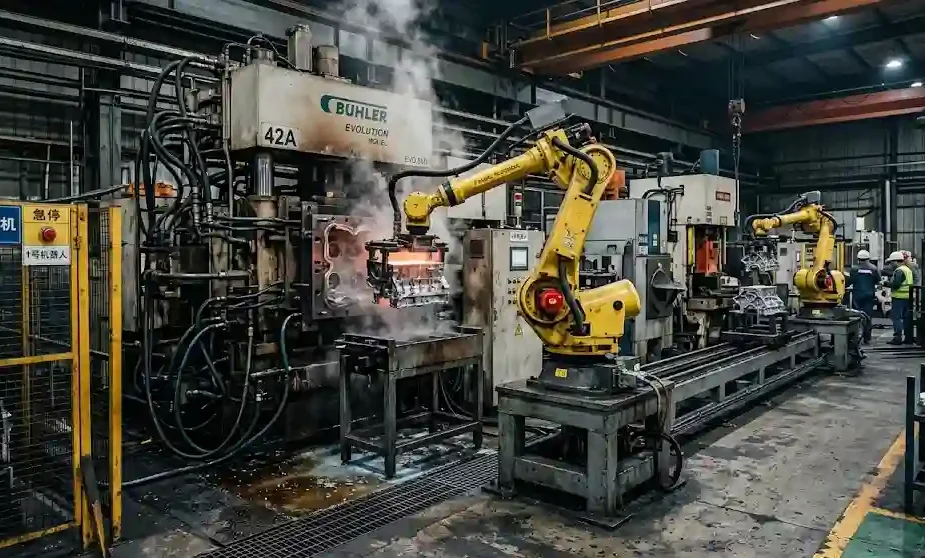
6. Stable High-Volume Production Capability
Consistency is essential for large-scale production.
Reliable pump casting manufacturers typically operate:
- Automated die casting machines
- Robotic handling systems
- Standardized process controls
This ensures repeatable quality across batches.
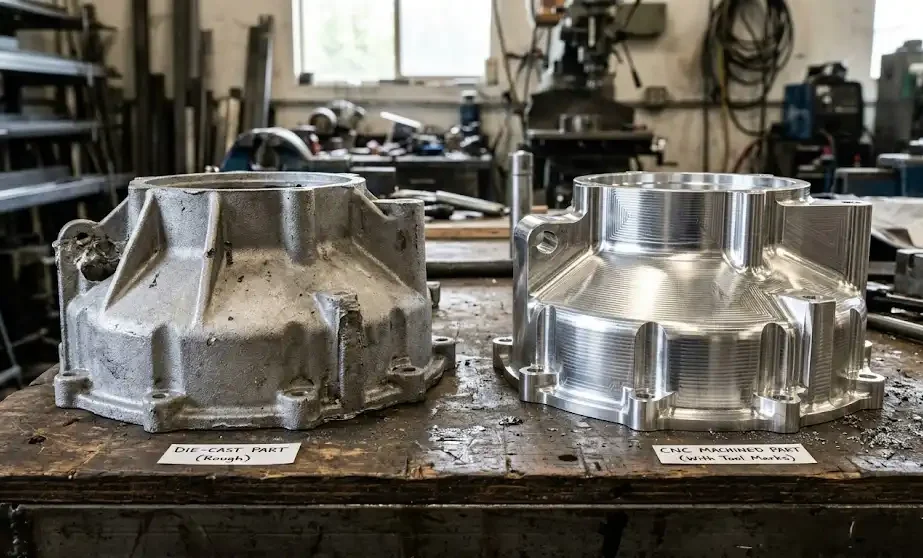
7. Precision Machining for Functional Surfaces
Casting defines shape, but machining defines performance.
Critical machining aspects include:
- Sealing surface flatness
- Thread accuracy
- Tight tolerance control
A capable custom pump casting manufacturer should offer integrated machining solutions.
8. Cost Control Through Engineering Optimization
Cost reduction should come from smarter engineering, not lower quality.
Common approaches:
- Reducing unnecessary machining operations
- Optimizing part structure
- Extending mold life to distribute tooling cost
Professional pump casting manufacturers help balance cost efficiency with performance.
9. Clear Communication and Project Management
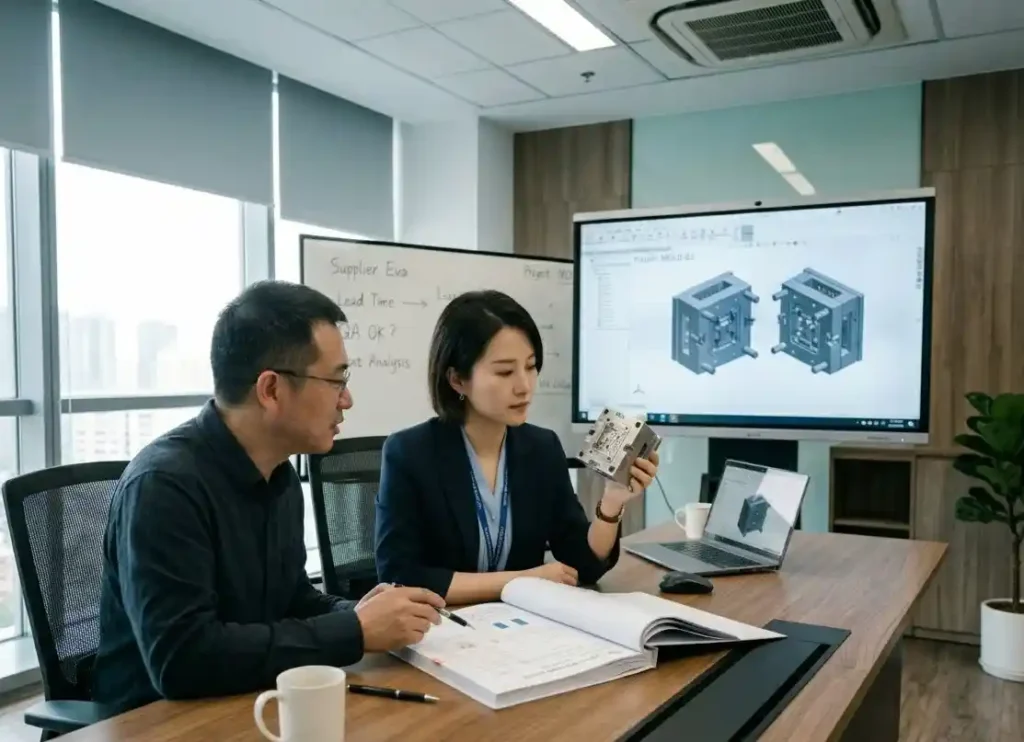
Effective communication reduces delays and misunderstandings.
Reliable suppliers provide:
- Timely responses
- Clear technical feedback
- Structured project tracking
This is particularly important in international sourcing.
10. Long-Term Technical Support and Improvement
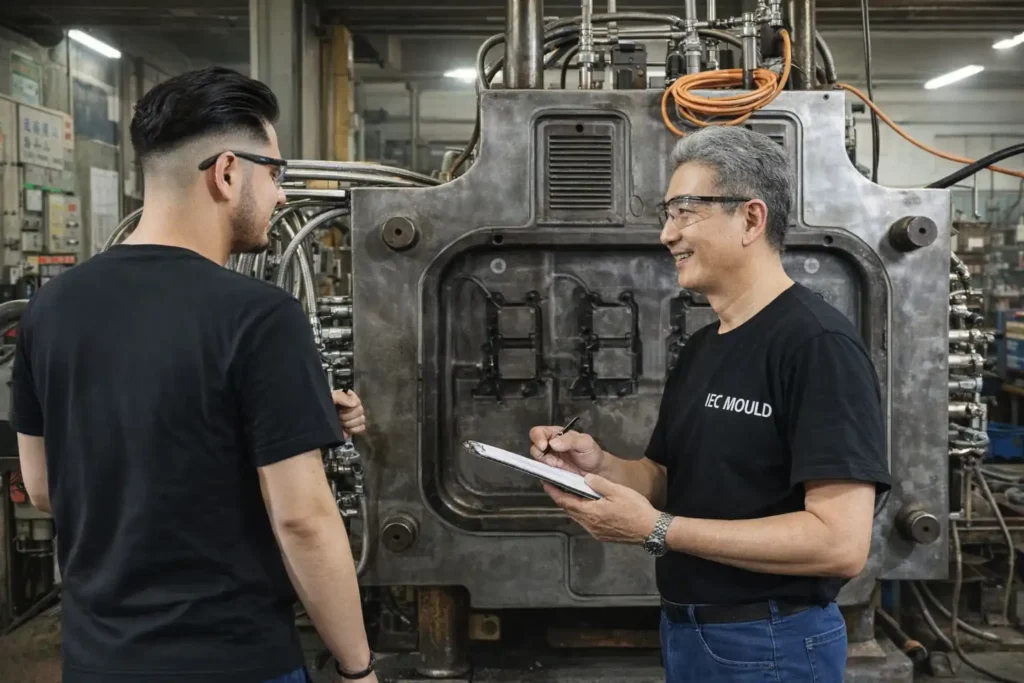
Strong suppliers continue to support improvement after production starts.
They typically:
- Optimize process stability
- Improve tooling performance
- Suggest design refinements
This leads to better long-term reliability and cost control.
Common Mistakes When Choosing Pump Casting Manufacturers
Many sourcing issues come from evaluation gaps rather than production failures.
Common mistakes include:
- Choosing based on price alone
- Ignoring tooling capability
- Overlooking leak testing requirements
- Skipping engineering evaluation
Avoiding these can significantly reduce project risk.
Checklist: How to Evaluate a Pump Casting Supplier
| Criteria | What to Check |
|---|---|
| Engineering | DFM and simulation capability |
| Tooling | In-house mold manufacturing |
| Quality | X-ray and leak testing |
| Experience | Pump-related projects |
| Production | Automation and consistency |
Why IEC Mould
IEC Mould focuses on engineering-driven manufacturing rather than volume alone.
Key capabilities include:
- In-house mold design and manufacturing
- Precision die casting combined with machining
- Strong emphasis on defect prevention
- Support for custom pump casting projects
This approach enables better control over quality, lead time, and overall project risk.
Get Engineering Support for Your Pump Casting Project
If you are evaluating pump casting manufacturers, starting with a professional engineering review can help identify risks early and avoid costly revisions.
You can send us:
- 2D or 3D drawings
- Material requirements
- Estimated annual volume
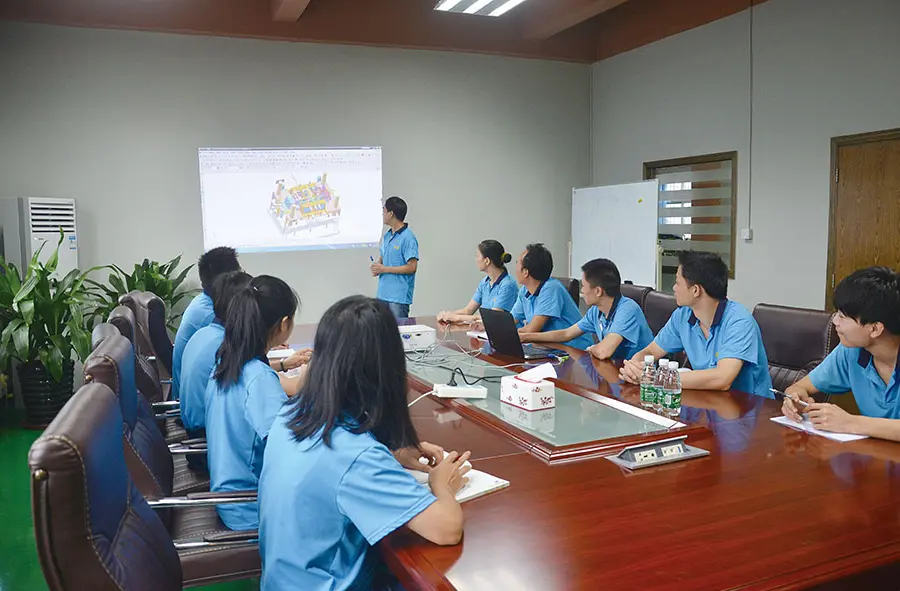
Our engineering team will provide:
- Manufacturability feedback
- Potential defect risks (such as porosity or sealing issues)
- Suggestions for cost optimization
💌 Contact IEC Mould today for a professional, manufacturing-ready solution for your custom die casting components. We deliver actionable feedback based on real production experience.Typically, you will receive a detailed response within 24 hours.
FAQ
What do pump casting manufacturers do?
Pump casting manufacturers produce metal components such as pump housings and impellers using casting processes, combined with machining and quality control to ensure sealing performance and dimensional accuracy.
How do I choose reliable pump casting manufacturers?
Look for suppliers with strong engineering capability, in-house tooling, and experience in pressure-tight components. Reliable pump casting manufacturers also provide X-ray inspection and leak testing.
What materials are commonly used in pump casting?
Common materials include aluminum alloys, zinc alloys, stainless steel, and cast iron. The selection depends on pressure requirements, corrosion resistance, and application environment.
Why is porosity a critical issue in pump castings?
Porosity can cause leakage under pressure, especially in sealing areas. Experienced pump casting manufacturers control porosity through mold design, process parameters, and inspection methods such as X-ray testing.
Do pump casting manufacturers provide machining services?
Most professional pump casting suppliers offer integrated machining services, including sealing surface finishing, threading, and tolerance control to ensure proper assembly and performance.
Can pump casting manufacturers help reduce production cost?
Yes. Experienced custom pump casting manufacturers optimize design, reduce machining requirements, and improve mold life to lower overall production cost without compromising quality.