
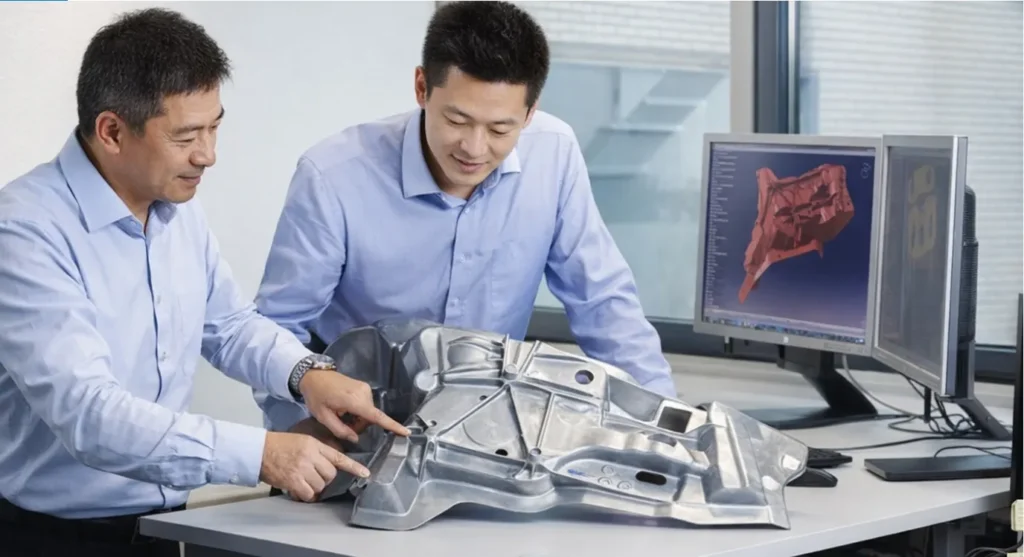
Before You Send an Die Casting RFQ, Ask Yourself This First
In many die casting projects, the RFQ stage is treated as the starting point. OEM buyers often rush to get quotes without realizing that choosing the right die casting supplier before sending an RFQ can determine whether the project stays on time and on budget—or turns into a costly headache.
We’ve observed numerous cases where suppliers provided a competitive quote, but later the project faced repeated delays, unstable quality, or unexpected machining and secondary operation costs. By that time, switching suppliers is difficult, and resolving problems often becomes expensive.
That’s why experienced buyers ask a simple but critical question before any RFQ:
“Is this supplier capable of delivering reliable die casting parts, or are we just asking for a quote?”
Answering this question early saves time, cost, and frustration. To make this assessment practical, here are the first questions every OEM buyer should ask when evaluating a die casting supplier.
Will They Challenge Your Design — or Just Quote It?
One of the most telling signs of a reliable supplier is how they approach your design. Many suppliers will take the drawing, run a calculation, and return a quote. This seems efficient, but it often leaves the responsibility for design risks entirely on your team, creating problems down the line.
1. Why Ignoring DFM Can Be Costly
If a supplier does not review the design, these issues often appear later:
- Complex geometries or thin walls increase die casting defects and scrap rate
- Missing draft angles or undercuts can cause tooling modifications
- Parts may require additional machining, driving up total cost
These challenges add delays and increase total die casting project costs, even if the initial quote seemed low.
2. What a Supplier with Strong DFM Support Does
A reliable supplier doesn’t just provide a quote—they offer practical advice to improve manufacturability:
- Suggest minor design changes that simplify tooling
- Identify areas where secondary machining or finishing can be reduced
- Flag potential production or quality risks
- Provide insight that may reduce overall die casting cost
Even small improvements in the design can prevent major delays and unexpected expenses during production.
A trustworthy die casting supplier doesn’t just quote your drawing—they actively help optimize it before production begins.
💡 Practical Tip: Early discussions about DFM, even before the RFQ, can save weeks of redesign and rework later. For OEM buyers, a short consultation can reveal hidden risks and cost-saving opportunities.
Do They Actually Build Their Own Tooling?
When evaluating a die casting supplier, this is a question many OEM buyers overlook—but it often becomes critical once the project starts.
On paper, most suppliers will say they “handle tooling.” But in practice, there is a big difference between a supplier who actually builds molds in-house and one who fully relies on external tool shops.
That difference usually doesn’t show up in the quotation—but it shows up later in lead time, cost control, and problem-solving speed.
1. Why In-House Tooling Makes a Real Difference
Suppliers with in-house tooling capability tend to have better control over the entire die casting process. This affects more than just mold manufacturing—it impacts the whole project lifecycle:
- Faster response when design changes are needed
- Better alignment between tooling design and production process
- Easier optimization during trial runs
- More stable control over die casting quality and consistency
From a cost perspective, this also helps reduce unexpected adjustments and keeps the die casting cost drivers under control.
2. What Can Go Wrong with Fully Outsourced Tooling
Outsourcing tooling is not always a problem—but if the supplier has limited control over the mold maker, risks increase:
- Communication gaps between design, tooling, and production
- Delays when modifications are required
- Unclear responsibility when issues arise
- Additional cost due to repeated adjustments
In some projects, this leads to situations where the supplier and toolmaker pass responsibility back and forth, while the buyer absorbs the delay and cost impact.
3. What to Ask Before You Move Forward
Instead of asking “Do you make molds?”, it’s more useful to go a bit deeper:
- Do you have in-house tooling design and manufacturing?
- How do you handle tool maintenance and modifications?
- Can you support tooling changes during sampling without long delays?
These questions help you better evaluate a die casting supplier beyond just their quotation.
Tooling capability is often the difference between a smooth project and a delayed one.
💡 Practical Tip: In many projects, delays don’t come from production—they come from tooling adjustments that take longer than expected due to poor coordination.
How Do They Handle Problems When Things Go Wrong?
No matter how well a project is planned, issues can still happen in die casting production. It could be porosity, dimensional variation, surface defects, or unexpected process instability.
The real difference between suppliers is not whether problems occur—but how they respond when they do.
From an OEM buyer’s perspective, this is often where a reliable die casting supplier stands apart from an average one.
1. Every Supplier Promises Quality — Few Show How They Fix Problems
At the quotation stage, almost every supplier will highlight their die casting quality control and experience. But those claims don’t tell you what will happen when something goes wrong in real production.
In practice, some common scenarios include:
- Delayed responses when issues are reported
- Vague explanations without clear root cause
- Temporary fixes instead of long-term solutions
- Lack of ownership between teams (production, tooling, QC)
For buyers, this often leads to frustration, production delays, and increased risk—especially when timelines are tight.
2. What a Strong Problem-Solving Process Looks Like
A capable supplier approaches problems differently. Instead of reacting passively, they usually have a structured process in place:
- Root cause analysis based on data, not assumptions
- Clear communication of what went wrong and why
- Defined corrective actions with timeline
- Follow-up verification to ensure the issue does not repeat
This kind of approach not only improves product quality but also helps stabilize the entire die casting production process.
👉 Many of these issues are related to common die casting defects, and how they are managed often reflects the supplier’s real capability.
3. Why This Matters More Than You Think
In real projects, problems are not what cause the biggest losses—unresolved problems do.
A supplier who can quickly identify and resolve issues helps:
- Reduce downtime and production delays
- Improve consistency in mass production
- Lower long-term costs by avoiding repeated defects
- Build trust for future projects
This is especially important when evaluating a die casting supplier before RFQ, because once the project starts, changing suppliers becomes much more difficult.
A good supplier is not one that avoids problems—but one that solves them quickly, clearly, and responsibly.
💡 Practical Tip:In many cases, the speed and clarity of the first problem response tell you more about a supplier than their quotation ever will.
Can They Maintain Consistent Quality at Scale?
It’s not difficult for a die casting supplier to produce a few good samples. The real challenge is whether they can deliver the same level of quality consistently in mass production.
For many OEM buyers, this is where projects start to break down. Initial samples look perfect, approvals are given, but once production ramps up, issues begin to appear—sometimes gradually, sometimes all at once.
1. Sample Quality vs Mass Production Reality
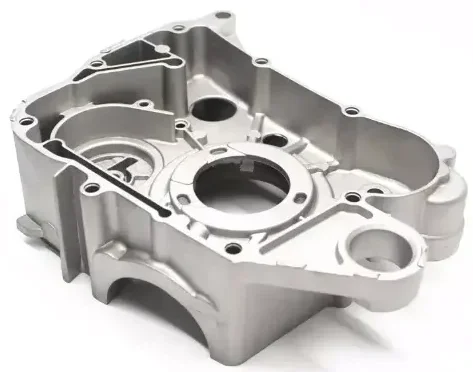
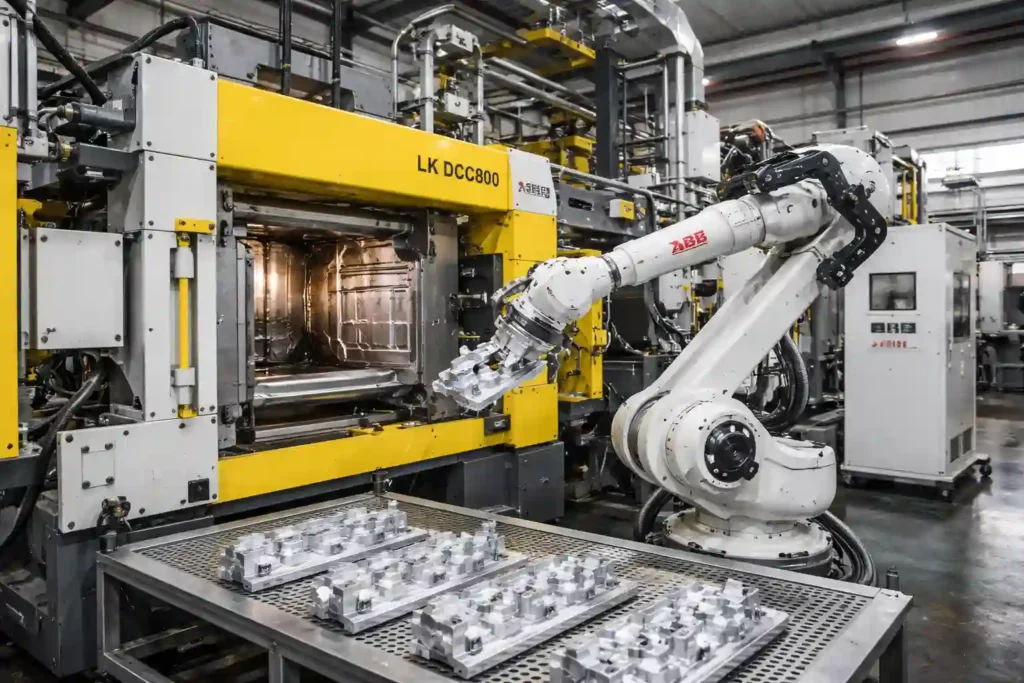
During sampling, conditions are often more controlled:
- Slower production pace
- More attention from engineers
- Higher inspection frequency
But in mass production, the situation changes:
- Cycle time increases to meet volume targets
- Process variations become more visible
- Tool wear starts to affect part quality
This is where differences between suppliers become clear. A supplier that performs well in sampling may struggle to maintain stable die casting quality control when production scales.
2. What Drives Consistency in Die Casting Productiony
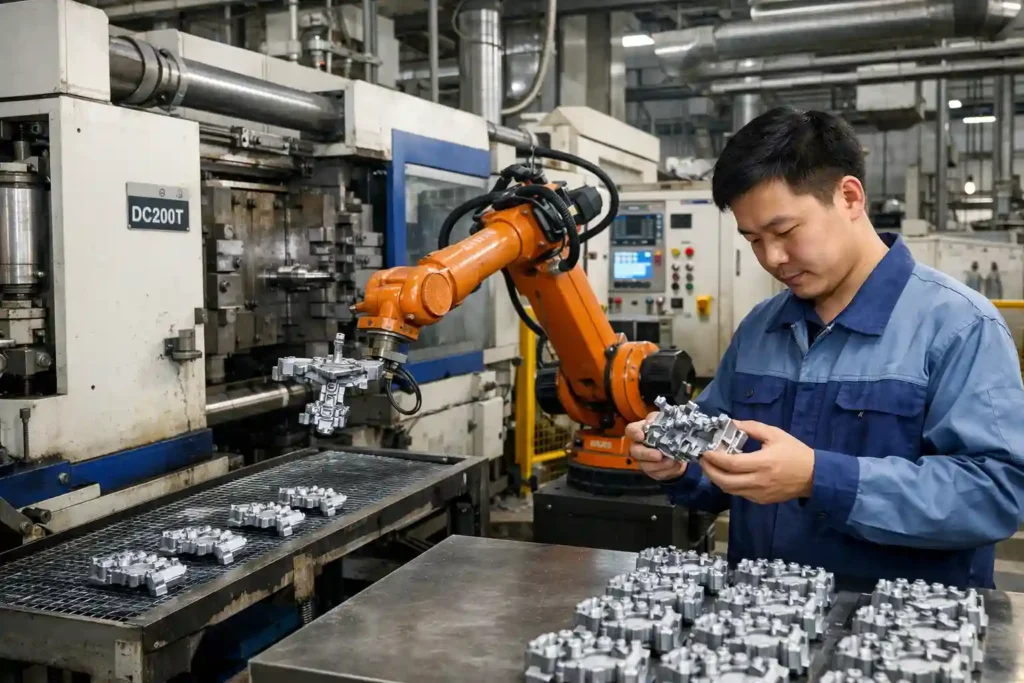
Consistent quality doesn’t happen by chance—it comes from a combination of process control and experience. Key factors include:
- Stable process parameters (temperature, pressure, injection speed)
- Well-designed tooling and cooling systems
- Preventive maintenance to manage tool wear
- Monitoring and controlling die casting scrap rate
Suppliers who understand these factors are better equipped to maintain production stability, even at higher volumes.
2. What You Should Ask to Evaluate Production Stability
To properly evaluate a die casting supplier, it helps to go beyond sample results and ask practical questions:
- How do you control quality during long production runs?
- What is your typical scrap rate in mass production?
- How do you handle process variation over time?
- Do you have data or examples from similar volume projects?
These questions give you a clearer picture of whether the supplier can support your project not just at the start—but throughout its lifecycle.
Consistent quality in mass production is what truly defines a reliable die casting supplier—not just good samples.
💡 Practical Tip:A part that works in 50 samples but fails in 5,000 pieces is not a successful project. Stability over time is what really matters.
What Happens After Casting — Do They Handle It or Not?
When evaluating a die casting supplier, many OEM buyers focus heavily on casting capability—but overlook what happens next.
In reality, die casting is often just one step in the process. Most parts still require secondary operations, such as CNC machining, drilling, tapping, or surface finishing, before they are ready for assembly.
Whether a supplier can handle these steps internally has a direct impact on cost, lead time, and overall project risk.
1. The Hidden Cost of Secondary Operations
At the quotation stage, secondary operations are sometimes underestimated or not fully discussed. But in production, they can quickly become a major cost driver:
- Additional machining increases total production cost
- Multiple suppliers mean more logistics coordination and delays
- Quality issues can occur between different processing stages
In some cases, a low casting price is offset by higher post-processing costs, making the total project more expensive than expected.
2. One-Stop Capability vs Multi-Supplier Complexity
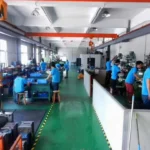
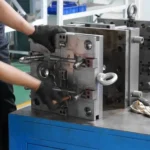
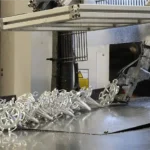
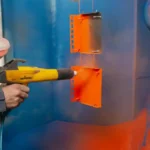
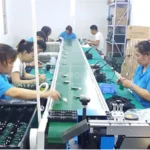
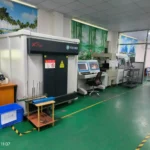
Working with a supplier that offers integrated die casting and post-processing can simplify the entire project:
- Better control over dimensional accuracy and tolerances
- Reduced risk of misalignment between casting and machining
- Faster turnaround, especially during sampling and modifications
On the other hand, splitting casting and machining across different vendors often leads to:
- Communication gaps
- Responsibility issues when defects occur
- Longer lead times due to back-and-forth handling
3. What This Looks Like in Real Projects
In many OEM projects supported by IEC MOULD, parts initially designed for casting required additional machining features that were not fully optimized at the beginning.
By reviewing the full process—including casting, machining, and finishing—small adjustments were made early on to:
- Reduce unnecessary machining steps
- Improve overall production efficiency
- Help reduce die casting cost without affecting functionality
This kind of early coordination is often what separates a smooth project from a complex one.
Key Takeaway: The real cost of a die casting project is not just in casting—it’s in how well the entire process is managed.
💡 Practical Tip: A supplier who can manage both casting and post-processing doesn’t just save time—they help prevent problems that usually appear between different vendors.
Are They Transparent About Cost — or Just Giving You a Number?
When reviewing quotations from different die casting suppliers, it’s common to see significant price differences—even for the same part.
At first glance, a lower quote may seem like the obvious choice. But experienced OEM buyers know that in die casting, price alone rarely tells the full story.
The real question is:
Do you understand what is behind the number?
1. Why a Low Quote Can Be Misleading
A quotation that looks competitive at the beginning can lead to higher costs later if key factors are not clearly addressed:
- Tooling complexity not fully considered
- Secondary operations underestimated
- Tight tolerances requiring additional machining
- Quality risks leading to higher scrap or rework
These factors are part of the real cost drivers in die casting, even if they are not clearly shown in the initial quote.
👉 This is why many projects that start with the lowest price end up with the highest total cost.
2. What a Transparent Supplier Should Be Able to Explain
A reliable die casting supplier should not only provide a price—but also help you understand it. In practice, this usually includes:
- Clear explanation of tooling cost vs part cost
- Identification of areas where cost can be optimized
- Suggestions to reduce die casting cost through design or process improvements
- Honest discussion of trade-offs between cost, quality, and lead time
In projects handled by IEC MOULD, it’s often found that when customers understand these factors early, they are able to make better decisions—rather than simply choosing the lowest quote.
3. Why Cost Transparency Reduces Risk
Transparency is not just about numbers—it’s about control. When cost structure is clearly explained, OEM buyers can:
- Make informed decisions during supplier evaluation
- Avoid unexpected cost increases during production
- Balance cost, quality, and delivery more effectively
This is especially important when you are trying to evaluate a die casting supplier before RFQ, because early decisions have a long-term impact on the project.
Key Takeaway: If a supplier cannot clearly explain the cost, it is very difficult for them to control it.
💡 Practical Tip: In many cases, the most reliable supplier is not the one with the lowest quote—but the one who helps you understand where your money is going.
How Easy Is It to Work With Them Day-to-Day?
Beyond technical capability and pricing, there is another factor that often gets overlooked during supplier evaluation: How easy is it to actually work with them on a daily basis?
In real projects, communication is not occasional—it’s constant. From design clarification to sampling feedback and production updates, the efficiency of communication directly affects project timelines.
1. Why Communication Becomes a Bottleneck
Even when a supplier has strong technical capability, poor communication can slow everything down:
- Delayed responses to technical questions
- Misunderstandings due to unclear feedback
- Lack of coordination between sales and engineering teams
For OEM buyers, this often results in repeated follow-ups, unclear timelines, and unnecessary stress—especially during critical stages like tooling and sampling.
2. What Good Communication Looks Like
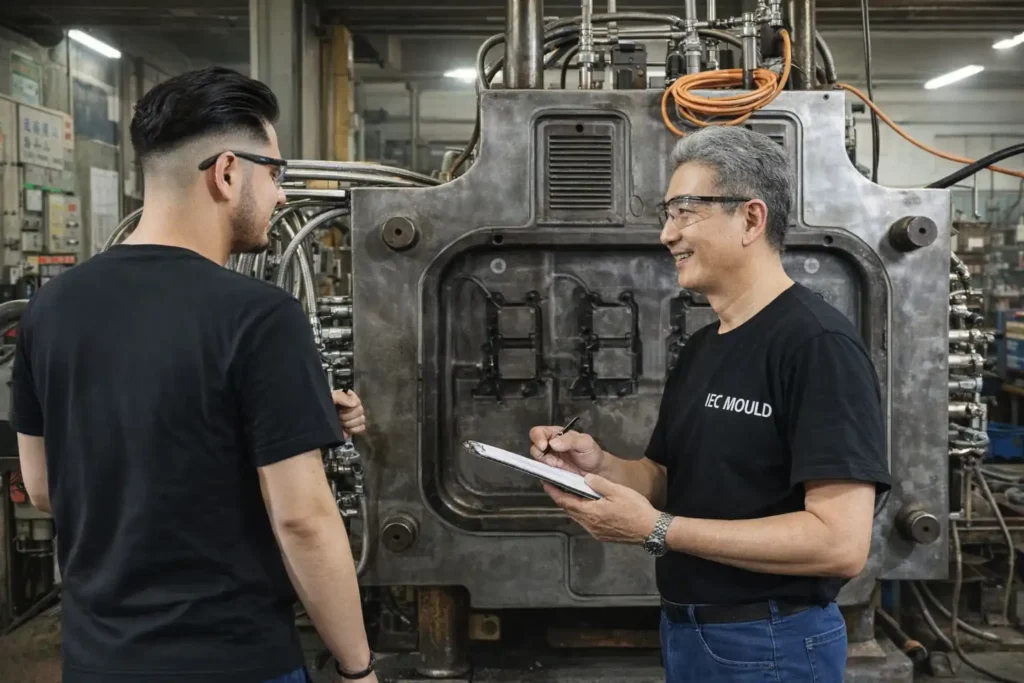
A reliable die casting supplier usually demonstrates:
- Clear and timely responses
- Direct communication between engineering teams
- Proactive updates instead of waiting to be asked
- Ability to explain technical issues in a practical way
This kind of collaboration helps keep projects moving and reduces friction throughout the process.
Key Takeaway:Good communication is not a bonus—it is part of the product you are buying.
💡 Practical Tip:In many projects, delays are not caused by production—they are caused by waiting for answers.
Are They Thinking Short-Term Orders — or Long-Term Partnership?
At the RFQ stage, most discussions are focused on price and lead time. But experienced buyers often look beyond the immediate order and ask:
“Is this a supplier we can rely on long-term?”
1. The Difference Between Transactional and Strategic Suppliers
Some suppliers focus only on closing the current order. Their priority is to win the quote, often with limited consideration for long-term performance. Others take a different approach. They look at:
- How to improve the product over time
- How to reduce cost across future orders
- How to maintain stable quality as volumes increase
This long-term mindset often leads to better outcomes—not just for one project, but for the entire product lifecycle.
2. Why Long-Term Thinking Saves Cost
Working with a supplier who thinks beyond a single RFQ can help:
- Reduce repeated tooling modifications
- Improve consistency across batches
- Identify cost-saving opportunities over time
- Build a more stable supply chain
Over multiple projects, this often results in lower total cost of ownership, even if the initial quote is not the lowest.
Key Takeaway: The best die casting suppliers are not just vendors—they are long-term partners in your production success.
💡 Practical Tip: A supplier focused only on today’s price may cost you more tomorrow.
The Right Supplier Will Save You More Than They Cost
Choosing a die casting supplier is not just about comparing quotations. It is about understanding risk, capability, and long-term reliability.Across all the questions discussed, one pattern becomes clear:
👉 The most reliable suppliers are the ones who:
- Engage early in design and DFM
- Take ownership when problems arise
- Maintain consistency in mass production
- Communicate clearly and proactively
- Provide transparency in cost and process
For OEM buyers, these factors often matter more than a small difference in unit price.
Because in die casting, avoiding problems is usually more valuable than saving a few percent upfront.
Not Sure If Your Supplier Meets These Standards?
If you are currently evaluating a die casting supplier—or preparing to send out an RFQ—it may be worth taking a step back to review these factors more carefully.
In many cases, a short technical discussion can quickly reveal:
- Potential design risks
- Opportunities to reduce die casting cost
- Improvements in tooling or process strategy
At IEC MOULD, we work with OEM teams to support this early-stage evaluation by:
- Reviewing part design for manufacturability (DFM)
- Identifying cost-saving opportunities
- Ensuring stable production from sampling to mass production
There is no need for a formal process to get started—sometimes a quick discussion is enough to uncover insights that can save weeks later.
👉 If you are evaluating your next die casting project, feel free to reach out for a practical review.