
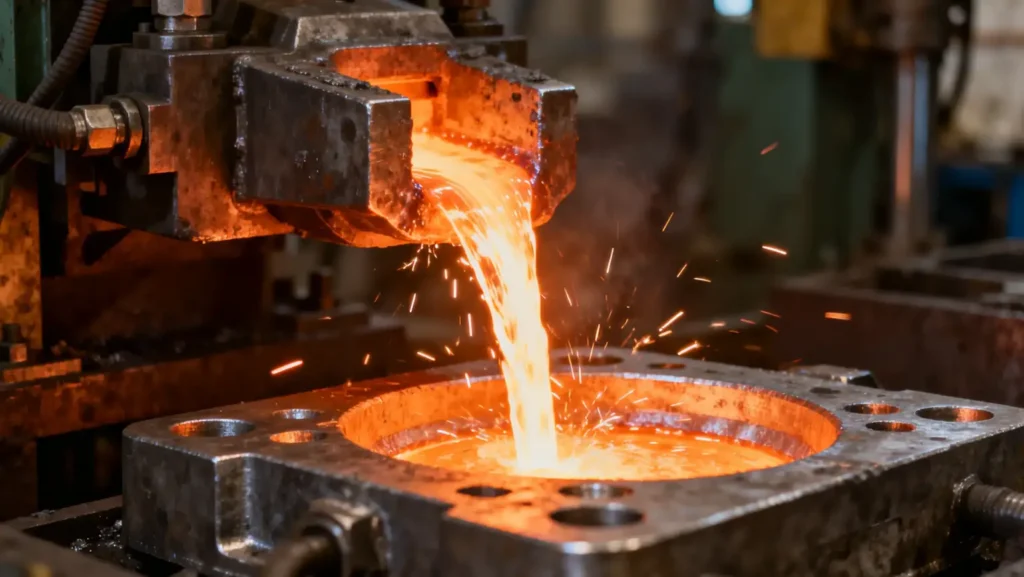
Die casting tool steel is a critical material used to manufacture molds that shape molten metal under high pressure. It directly determines mold lifespan, production stability, and final casting quality in industrial die casting processes.
For engineers and procurement teams, selecting the right tool steel is not a material comparison exercise—it is a lifecycle cost decision. The wrong choice can lead to thermal fatigue, cracking, surface erosion, and frequent mold downtime, significantly increasing total production cost.
👉 This article explains what die casting tool steel is, why it matters, and how it influences tool life, performance, and manufacturing cost in real production environments.
What Is Die Casting Tool Steel
Die casting tool steel refers to a group of high-performance hot-work alloy steels specifically designed for manufacturing dies (molds) used in high-pressure die casting (HPDC).
These steels are engineered to withstand extreme working conditions, including:
- 🔥 High-temperature molten metal impact (typically 600–700°C for aluminum alloys)
- 💥 High injection pressure (up to 100–120 MPa in HPDC processes)
- 🔁 Continuous thermal cycling during mass production
Unlike standard structural steels, die casting tool steels are optimized for:
- High thermal fatigue resistance
- Stable hardness at elevated temperatures
- Resistance to cracking and erosion under repeated stress
👉 The most commonly used grades in the industry include H13, 8407, and SKD61, each offering different balances between toughness, hardness, and thermal stability.
Why Die Casting Tool Steel Matters
The choice of die casting tool steel is not just a material selection decision—it directly determines tool performance, production efficiency, and total lifecycle cost.
🔥 1. Tool Life and Mold Durability
Tool steel has a direct impact on mold lifespan under repeated high-pressure cycles.
- High-quality tool steel can significantly extend tool life in high-volume production
- Poor-grade or incorrectly selected steel can lead to 30–60% shorter mold lifespan
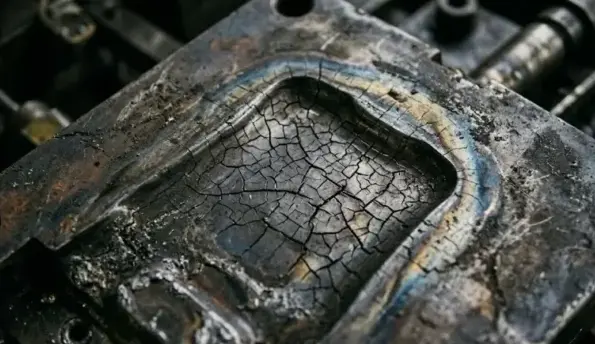
- Failure modes typically include thermal fatigue cracking, surface erosion, and soldering
👉 In industrial production, tool life often determines overall project profitability.
🧊 2. Casting Quality and Process Stability
Die casting tool steel affects the stability of the entire molding process:
- Surface finish consistency of cast parts
- Dimensional accuracy under repeated cycles
- Defect rates such as porosity, sticking, or erosion
A stable tool steel performance ensures repeatable production quality, which is critical for automotive, electronics, and precision components.
💰 3. Total Manufacturing Cost (Not Just Material Cost)
Although tool steel represents only a portion of the initial mold cost, it strongly influences long-term production economics.
Key cost drivers include mold maintenance frequency, production downtime, and scrap and rework rates.
👉 In many cases, selecting a higher-grade tool steel reduces total lifecycle cost by 20–40%, even if the upfront cost is higher.
📌 Key Engineering Insight
Die casting tool steel is not selected based on purchase price alone, but on its ability to balance thermal fatigue resistance, hardness retention, and lifecycle durability. In industrial applications, tool steel selection is one of the most important factors influencing mold lifespan and total production cost.
Types of Die Casting Tool Steel Used in Industry
Die casting tool steels are not used equally in industrial applications. In high-pressure die casting (HPDC), only a limited number of steel grades are considered suitable for long-term mold performance under extreme thermal and mechanical loading.
Instead of treating tool steels as a general material list, engineers typically evaluate them based on performance hierarchy, production suitability, and lifecycle behavior.
🥇 1. Primary Die Casting Tool Steels (Core HPDC Grades)
These are the most commonly used tool steels in high-pressure die casting molds due to their balance of thermal resistance, toughness, and durability.
📊 Steel Comparison Table
| Grade | Key Strength | Typical Application | Notes |
|---|---|---|---|
| H13 | Balanced toughness & thermal fatigue resistance | High-volume aluminum die casting | Global standard |
| 8407 | High material purity, improved consistency | Complex molds, precision parts | Premium grade |
| SKD61 | Reliable and cost-effective | Asia-market molds, general HPDC | H13 equivalent |
🥈 2. Secondary Hot-Work Tool Steels (Limited Industrial Use)
This category includes steels such as H11 and H21, which provide good heat resistance but are not as widely used in modern high-pressure die casting molds.
These materials may be selected when:
- Thermal load is moderate
- Mold design is less complex
- Cost constraints are more important than maximum tool life
However, compared to H13-class steels, they generally offer lower resistance to thermal fatigue under continuous HPDC conditions.
🥉 3. Non-Primary Tool Steels (Not Recommended for Core HPDC Molds)
Some general-purpose tool steels, such as D2, A2, and O1, are sometimes listed in broad “casting steel” references. However, these are not typically used for high-pressure die casting molds.
Their limitations include:
- Lower thermal fatigue resistance
- Poor performance under repeated heating and cooling cycles
- Higher risk of cracking in HPDC environments
These steels are better suited for cold-work tooling or low-temperature applications rather than production die casting molds.
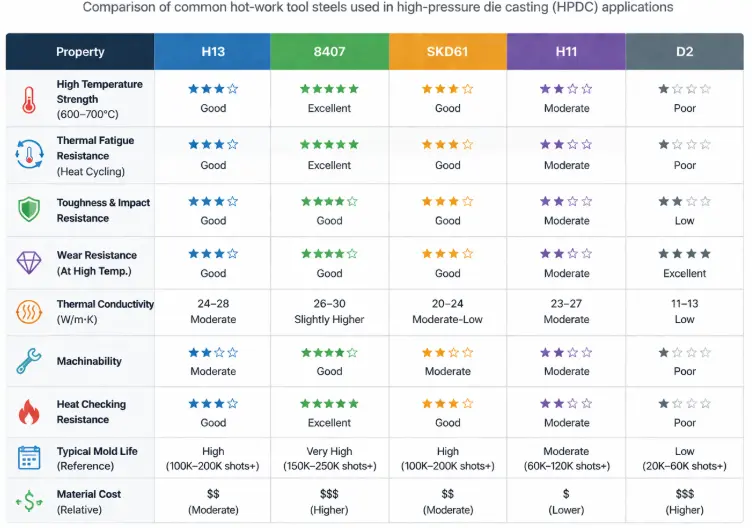
📌 Engineering Summary (Decision Logic)
In die casting applications, tool steels should not be selected based on general material availability or price alone.Instead, the selection hierarchy is typically:
- H13 / 8407 / SKD61 → Primary structural materials for HPDC molds
- H11 / H21 → Limited-use alternatives under controlled conditions
- D2 / A2 / O1 → Not suitable for high-pressure die casting molds
Ultimately, the correct choice depends on production volume, alloy type (aluminum, zinc, magnesium), mold complexity, expected tool life, and maintenance strategy.
Key Properties of Die Casting Tool Steel
Die casting tool steel must withstand extreme thermal, mechanical, and chemical stresses during high-pressure die casting (HPDC). Understanding the key properties allows engineers to select the optimal grade for mold performance, longevity, and cost efficiency.
🔥 Thermal Fatigue Resistance (Core Factor)
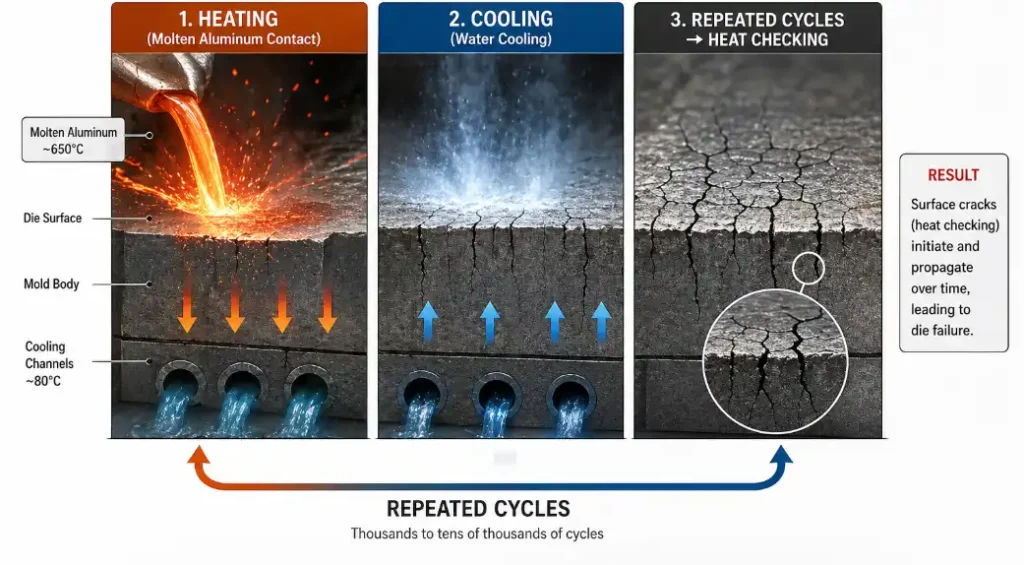
In high-pressure die casting, the die surface is repeatedly exposed to molten aluminum, followed by rapid cooling. This constant expansion and contraction leads to surface cracking—commonly known as heat checking.
This failure mechanism is directly related to Thermal Fatigue.
Why it matters:
- The primary root cause behind most die casting defects
- Determines whether a tool reaches 50,000 or 150,000+ shots
- Affects surface finish consistency over time
Insight:
Even high-grade steels like H13 or 8407 will fail early if thermal fatigue resistance is not optimized through proper heat treatment and cooling design.
⚖️ Hardness vs Toughness (Critical Balance)
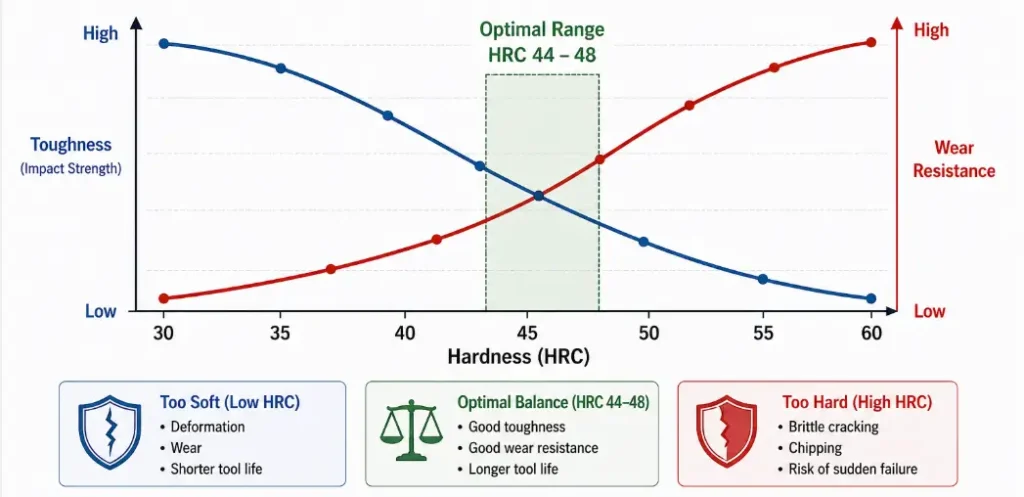
Hardness improves wear resistance—but excessive hardness reduces toughness, increasing the risk of cracking under stress.
Why it matters:
- Too hard → brittle cracking
- Too soft → deformation and wear
This balance is especially critical in areas exposed to pressure fluctuation, which often leads to pressure control defects.
Insight:
The optimal hardness range for most aluminum die casting tools is typically HRC 44–48, where both wear resistance and crack resistance are balanced.
🌊 Erosion & Heat Resistance
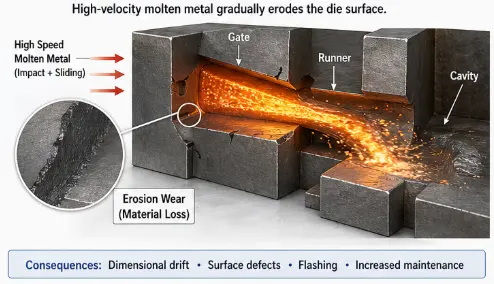
Molten metal enters the cavity at high speed and temperature, gradually eroding the die surface—especially at gates and runners.
Why it matters:
- Leads to dimensional drift
- Causes surface defects and flashing
- Shortens maintenance cycles
Insight:
Good heat resistance combined with surface treatments (like nitriding) significantly improves erosion resistance—but the base material must already have strong high-temperature stability.
📌 Engineering Summary
When selecting die casting tool steel, the top three factors are:
- Thermal fatigue resistance
- Toughness under cyclic loading
- Wear resistance
Secondary considerations include machinability, polishability, and hardness. H13, 8407, and SKD61 remain the industry standard, but the choice depends on alloy type (Al, Zn, Mg), mold complexity, production volume, and desired tool life.
How to Select Die Casting Tool Steel
Selecting die casting tool steel is an engineering decision process rather than a material comparison exercise. The correct selection is based on operating conditions, production requirements, and lifecycle cost rather than steel price or general material preference.
Below is a structured step-by-step selection model used in industrial die casting applications.
🔷 Step 1: Define Casting Alloy and Thermal Environment
The first step is to identify the type of molten metal being used, as it determines the thermal load imposed on the mold.
- Aluminum die casting (high thermal load, ~600–700°C)
- Zinc die casting (moderate thermal load)
- Magnesium die casting (oxidation-sensitive environment)
👉 Higher melting temperature directly increases thermal stress and accelerates mold fatigue.
👉 Higher melt temperature = higher thermal fatigue requirement.
🔷 Step 2: Determine Production Volume and Cycle Demand
Production volume defines the required durability level of the tool steel.
- Low-volume production → standard hot-work steels may be sufficient
- Medium-volume production → balanced performance steels are required
- High-volume production → high-purity ESR-grade steels are preferred
👉 A higher cycle count requires greater resistance to long-term thermal and mechanical fatigue.
🔷 Step 3: Match Material Family to Application Conditions
Once operating conditions are defined, the appropriate steel family is selected.
- H13 → general-purpose high-pressure die casting
- 8407 → high-end applications requiring superior consistency and fatigue resistance
- SKD61 → cost-effective alternative for standard production molds
👉 The selection is based on stability requirements, not only material availability.
🔷 Step 4: Evaluate Hardness and Toughness Balance Requirement
In die casting applications, performance depends on maintaining a controlled balance between resistance to wear and resistance to cracking.
- Excess hardness increases risk of brittle fracture
- Excess toughness increases surface wear and deformation
👉 Industrial molds require a controlled balance depending on load conditions.
🔷 Step 5: Evaluate Thermal Fatigue Resistance Requirement
Thermal cycling is the primary failure driver in high-pressure die casting molds.
Each production cycle introduces:
- Rapid heating from molten metal injection
- Rapid cooling through internal cooling channels
👉 This repeated expansion and contraction leads to surface fatigue over time.
🔷 Step 6: Optimize Lifecycle Cost (Not Material Cost)
Tool steel selection must be evaluated based on total lifecycle cost, not initial purchase price.
Key cost factors include:
- Mold maintenance frequency
- Production downtime
- Scrap and defect rates
- Total number of production cycles achieved
👉 Higher-grade steels often reduce total cost per part despite higher initial investment.
📌 Engineering Summary
Die casting tool steel selection follows a structured engineering decision model:
- Define casting alloy and thermal load
- Determine production volume requirements
- Match the appropriate steel family
- Balance hardness and toughness requirements
- Evaluate thermal fatigue resistance
- Optimize lifecycle cost efficiency
👉 This ensures stable mold performance, extended tool life, and reduced total production cost.
How Die Casting Tool Steel Affects Tool Life
The choice of die casting tool steel has a direct impact on die casting tool life, influencing both production efficiency and total cost. Tool failure is often not caused by improper operation alone—material properties, heat treatment, and thermal fatigue resistance are the main determinants of a die’s lifespan.
🔥 Causes of Cracking and Early Failure
Cracking is the most common reason tools fail prematurely. Repeated heating and cooling during casting cycles generate thermal stress, leading to heat checking and, eventually, deeper cracks.
Other contributing factors include:
- High cavity pressure causing mechanical stress
- Inadequate toughness relative to hardness
- Poor thermal conductivity or uneven heat treatment
Even high-grade steels like H13 or 8407 can fail early if these conditions are not optimized. This is why proper die casting tool steel selection is critical to achieving consistent tool life.
⚖️ Differences in Tool Life: Real-World Logic
Tool life can vary dramatically between similar dies, depending solely on steel choice and heat treatment. For example:
- A standard H13 die may last 50,000–80,000 shots under normal conditions
- A premium ESR steel like 8407, with higher thermal fatigue resistance and uniformity, can reach 120,000+ shots
This case logic shows that material selection directly translates into fewer maintenance cycles, lower downtime, and reduced cost per part.
📌 Key Takeaway
Selecting the right die casting tool steel is not optional—it determines whether a die reaches its designed lifespan or fails early. Prioritizing thermal fatigue resistance, toughness, and hardness balance directly extends die casting tool life, improves part quality, and optimizes production costs.
How Tool Steel Selection Impacts Total Manufacturing Cost & Lifecycle Performance
Tool steel selection has a direct and long-term impact on total manufacturing cost and lifecycle performance in die casting production. While material cost is only a small portion of initial mold investment, its influence on downtime, maintenance frequency, and production efficiency is significantly higher.
💰 Cost Impact of Tool Steel Selection
- Tool steel cost is only a small portion of total mold investment
- Lower-grade steels reduce initial cost but increase maintenance and downtime
- Premium steels improve long-term cost efficiency
👉 Key insight: Lifecycle cost is more important than purchase price.
⚙️ Maintenance & Downtime Impact
- Poor thermal fatigue resistance increases repair frequency
- Low-quality steels lead to unpredictable production interruptions
- Higher-grade steels improve operational stability
👉 Key insight: Better tool steel reduces machine downtime.
🔥 Tool Life & Production Efficiency
- Tool life varies significantly by steel grade and purity
- Longer tool life reduces mold replacement cycles
- Stable materials improve production continuity
👉 Key insight: Extended tool life lowers cost per part.
📉 Scrap Rate & Quality Stability
- Inconsistent tool steel increases defect rates
- Wear and thermal fatigue cause dimensional variation
- Stable steels improve yield rate
👉 Key insight: Material quality directly affects casting consistency.
🧠 Engineering Summary
Tool steel selection is a lifecycle cost decision, not a material cost decision. The optimal selection balances:
- Initial material investment
- Maintenance and downtime cost
- Tool life duration
- Production yield stability
👉 In industrial die casting, higher-grade tool steels often reduce total manufacturing cost by 20–40% through improved durability and process stability.
FAQ About Die Casting tool steel
What is die casting tool steel?
Die casting tool steel is a hot-work alloy steel used to manufacture molds for high-pressure die casting. It is designed to resist thermal fatigue, wear, and cracking under extreme operating conditions.
Which tool steel is commonly used in die casting?
H13, 8407, and SKD61 are the most commonly used grades due to their balanced thermal fatigue resistance, toughness, and cost efficiency.
Is higher-grade tool steel always better?
Not always. The best choice depends on production volume, alloy type, and lifecycle cost requirements.
How long does a die casting tool last?
Die casting tool life typically ranges from 50,000 to over 120,000 cycles, depending on tool steel grade, thermal conditions, and production parameters. Higher-grade steels and proper maintenance significantly extend lifespan.
What causes die casting tool failure?
The main causes of tool failure are thermal fatigue cracking, surface erosion, mechanical stress, and improper heat treatment. These factors gradually degrade mold performance under repeated high-pressure cycles.
Conclusion: Die Casting Tool Steel Is a Lifecycle Engineering Decision
Die casting tool steel is far more than a consumable material used in mold manufacturing—it is a core engineering factor that determines tool life, production stability, and total manufacturing cost.
Across high-pressure die casting applications, performance differences between steels such as H13, 8407, and SKD61 are not just technical variations, but long-term economic outcomes. The right selection directly influences:
- Resistance to thermal fatigue and heat checking
- Stability under repeated high-pressure cycles
- Mold maintenance frequency and downtime
- Scrap rate and casting consistency
- Total cost per produced part
This is why leading manufacturers do not choose die casting tool steel based on initial purchase cost, but on expected tool life and lifecycle cost efficiency.
👉 Next Step: Optimize Your Tooling Strategy
If you are designing or sourcing die casting molds, the next step is not just selecting a steel grade, but building a complete tooling strategy that considers:
- Alloy type (Al, Zn, Mg)
- Production volume and cycle demand
- Mold complexity and thermal load distribution
- Maintenance strategy and expected tool life
A properly optimized tool steel selection can significantly improve both product quality and long-term ROI.