
When evaluating manufacturing options, one of the first questions engineers and buyers ask is simple: how much does magnesium die casting cost?
The challenge is that there’s no single answer. Magnesium die casting cost can vary significantly depending on part design, tooling requirements, production volume, and finishing processes. Two parts with similar weights can end up with completely different pricing due to differences in wall thickness, tolerance, or surface quality.
For procurement teams, this creates uncertainty when comparing suppliers. For engineers, it makes early-stage design decisions more difficult, especially when balancing lightweight performance with budget constraints.
This guide breaks down magnesium die casting cost in a practical, real-world way—from per kg pricing and tooling investment to the key factors that drive cost up or down. Whether you’re sourcing components or optimizing a design, this article will help you understand not just the price but the logic behind it.
Magnesium Die Casting Cost Per KG
For engineers and sourcing managers evaluating magnesium die casting, the first question is often:
“How much does magnesium die casting cost per kilogram?”
The reality is that magnesium die casting cost depends on part design, volume, and finishing requirements. At IEC MOULD, we have supported clients in the automotive, EV, and electronics industries to deliver competitive and optimized solutions.
💰 Typical Magnesium Die Casting Cost Breakdown
| Cost Component | Typical Range | Notes |
|---|---|---|
| Material Cost (magnesium ingot) | $4 – $8 / kg | Depends on alloy and market region |
| Processing / Machine Cost | $2 – $5 / kg | Includes injection, cycle time, energy, and protective gas |
| Tooling Cost (per part) | $5,000 – $150,000+ | Spread over production volume, complex molds cost more |
| Secondary Operations | $0.5 – $3 / kg | CNC machining, surface finishing, and trimming |
⚠️ Note on Pricing
The costs listed above are typical ranges based on recent projects. Magnesium die casting cost can vary depending on alloy selection, part complexity, production volume, and regional market conditions.
For a precise quote tailored to your project, contact IEC MOULD. Our engineering team can provide updated pricing, design optimization, and tooling recommendations to ensure the most cost-effective solution.
📌 Key Insights
- Even if the per kg material cost is similar to aluminum, magnesium often reduces total material cost per part due to lower weight (~36% lighter).
- Higher upfront tooling may be offset by faster cycle times, lower machining costs, and better part yield.
- For small to medium series, the total cost per functional unit is often lower than that of aluminum.
🔹 IEC MOULD Advantage
- Early DFM support and mold flow analysis to avoid hidden costs from poor design.
- Integrated solutions reduce logistics and coordination costs, keeping your magnesium die casting project on budget and on schedule.
 Key Takeaway
Magnesium die casting cost per kg is more than just the material price. IEC MOULD helps clients optimize design, tooling, and production to achieve the best total cost per part.
Magnesium Die Casting Cost Breakdown
Understanding magnesium die casting cost requires looking beyond per-kilogram pricing. Costs are made up of several components—from raw material to secondary operations—and each factor can significantly impact the total cost per part.
At IEC MOULD, we break down magnesium die casting cost into four main areas:
1️⃣ Material Cost
| Factor | Impact on Cost | IEC MOULD Insights |
|---|---|---|
| Magnesium Ingot Price | $4 – $8 / kg | Market fluctuations, alloy selection |
| Part Volume & Weight | High | Lower weight reduces material per functional unit (~36%) |
| Scrap Rate | Medium | Efficient gating and mold design reduce waste |
📌 Key Point:
Material cost alone is rarely the biggest contributor. Optimizing part design and volume often has a larger impact on overall magnesium die casting cost per part.
2️⃣ Tooling Cost (Mold Investment)
| Tooling Type | Typical Cost | Factors Affecting Cost |
|---|---|---|
| Simple molds | $5,000 – $15,000 | Few slides, standard surface finish |
| Complex molds | $80,000 – $150,000+ | Undercuts, sliders, high-quality steel (H13), surface requirements |
💡 IEC MOULD Advantage:
High-quality molds reduce scrap rate, maintenance, and long-term cost per part. Early DFM support and mold flow simulation help minimize tooling rework and hidden costs.
3️⃣ Processing Cost
| Component | Typical Range | Notes |
|---|---|---|
| Machine Usage | $2 – $5 / kg | Tonnes of clamping force, cycle time, energy consumption |
| Protective Gas & Temperature Control | $0.5 – $1 / kg | SF₆ gas, semi-solid or thixo-molding processes |
| Advanced Casting Techniques | Variable | Semi-solid casting reduces oxidation, improves yield, lowers energy cost |
📌 Insight:
Advanced processes, like semi-solid die casting, help improve yield consistency and reduce per-part energy costs.
4️⃣ Secondary Operations
| Operation | Typical Range | Notes |
|---|---|---|
| CNC Machining | $0.5 – $2 / kg | Magnesium is easier to machine than aluminum |
| Surface Finishing | $0.2 – $1 / kg | Coating, plating, or anodizing |
| Deburring & Trimming | $0.1 – $0.5 / kg | Reduces assembly time |
💡 Key Takeaway:
Although often underestimated, secondary operations can significantly affect magnesium die casting cost. Proper planning and design for manufacturability (DFM) help reduce these costs.
Key Factors That Affect Magnesium Die Casting Cost
While the cost breakdown explains where the money goes, understanding what drives magnesium die casting cost is even more critical for engineers and buyers.
In real projects at IEC MOULD, small design or production changes can lead to 10–30% cost differences per part. Below are the key factors that have the biggest impact on overall cost.
1️⃣ Part Complexity & Geometry
| Design Factor | Cost Impact | Explanation |
|---|---|---|
| Thin walls | 🔺 High | Requires higher injection speed and precision |
| Undercuts / sliders | 🔺 High | Increases tooling complexity and mold cost |
| Complex geometry | 🔺 High | Leads to longer development and debugging time |
📌 Insight:
Simplifying geometry can significantly reduce both tooling cost and magnesium die casting cost per part.
2️⃣ Wall Thickness & Tolerance
| Parameter | Cost Impact | Best Practice |
|---|---|---|
| Thin wall (<1.5 mm) | 🔺 High | Improves weight but increases casting difficulty |
| Tight tolerance | 🔺 High | Requires precision tooling and secondary machining |
| Uniform thickness | 🔻 Lower | Improves flow and reduces defects |
💡 IEC MOULD Tip:
Optimizing wall thickness during the DFM stage helps balance performance and cost, reducing scrap and rework.
3️⃣ Production Volume
| Volume Level | Cost Effect | Explanation |
|---|---|---|
| Low volume | 🔺 High per part | Tooling cost spread over fewer parts |
| Medium volume | ⚖️ Balanced | Optimal cost efficiency |
| High volume | 🔻 Lower per part | Economies of scale reduce unit cost |
📌 Key Point:
Magnesium die casting becomes significantly more cost-effective at higher volumes, especially when tooling cost is amortized.
4️⃣ Yield Rate & Process Stability
| Factor | Cost Impact | Notes |
|---|---|---|
| Low yield (<85%) | 🔺 High | More scrap = higher real cost per good part |
| High yield (>95%) | 🔻 Lower | A stable process reduces waste |
| Process control | 🔻 Lower | Consistent temperature, pressure, and filling |
💡 IEC MOULD Advantage:
We use optimized gating systems and advanced process control to improve yield and reduce hidden magnesium die casting costs.
5️⃣ Surface Finish & Secondary Requirements
| Requirement | Cost Impact | Explanation |
|---|---|---|
| Standard finish | 🔻 Lower | Minimal post-processing |
| High cosmetic finish | 🔺 High | Requires polishing, coating, or plating |
| Additional machining | 🔺 High | Adds CNC time and cost |
📌 Insight:
Designing for “as-cast” quality can significantly reduce secondary operation costs.
6️⃣ Alloy Selection
| Alloy Type | Cost Impact | Characteristics |
|---|---|---|
| Standard alloys (AZ91D) | ⚖️ Medium | Good balance of cost and performance |
| Specialized alloys | 🔺 Higher | Improved strength, corrosion resistance |
💡 Tip:
Choosing the right alloy is not just about performance—it directly affects material cost and process efficiency.
🚀 Practical Takeaway
The biggest cost savings don’t come from cheaper material—they come from better design and process optimization.
Magnesium vs Aluminum Die Casting Cost Comparison
When comparing manufacturing options, one of the most common questions is:
Is magnesium die casting more expensive than aluminum?
The short answer: not necessarily.
While aluminum may appear cheaper at first glance, a deeper look at the total cost of ownership (TCO) often shows that magnesium can deliver lower system-level cost, especially in weight-sensitive applications like automotive and EV components.
At IEC MOULD, we frequently help customers evaluate both materials based on real project data—not just raw material price.
📊 Cost Comparison: Magnesium vs Aluminum
| Factor | Aluminum Die Casting | Magnesium Die Casting |
|---|---|---|
| Material Cost (per kg) | Medium | Medium / Slightly Lower |
| Density (Weight) | 2.70 g/cm³ | 1.74 g/cm³ (~36% lighter) |
| Material Usage per Part | Higher | Lower |
| Cycle Time | Standard | Faster (better fluidity) |
| Machining Cost | Medium | Lower (easier to machine) |
| Tool Wear | Higher | Lower |
| Yield Rate | Stable | Higher with optimized process |
| Secondary Operations | Moderate | Often reduced |
| Total Cost (Per Part) | Medium | Often Lower |
| System-Level Cost (TCO) | Medium | Lower in many applications |
📌 Key Insights from Real Projects
- Even when the material cost per kg is similar, magnesium reduces total material cost per part due to its lower density.
- Faster filling and solidification lead to shorter cycle times, improving production efficiency.
- Magnesium’s machinability reduces CNC time and tool wear, lowering secondary costs.
💡 IEC MOULD Insight:
In many EV and electronics projects, switching from aluminum to magnesium has reduced total system cost by 10–25%, primarily through weight reduction and part consolidation.
🚗 Why Magnesium Wins in System-Level Cost
1️⃣ Lightweight Advantage
- ~36% lighter than aluminum
- Enables smaller components or fewer parts
- Reduces transportation and assembly costs
2️⃣ Part Consolidation
- Complex geometries allow multiple parts to be combined
- Fewer fasteners and assembly steps
3️⃣ Manufacturing Efficiency
- Better fluidity improves mold filling
- Lower machining requirements
- Reduced tool wear and maintenance
⚠️ When Aluminum May Still Be More Cost-Effective
Magnesium is not always the best choice. Aluminum may be preferred when:
- Very low production volume (tooling cost not amortized)
- Extreme corrosion environments without coating
- The existing supply chain is fully optimized for aluminum
📌 Key Takeaway:
Material selection should be based on application, volume, and total cost, not just raw material price.
✅ Decision Guide
| Scenario | Recommended Material |
|---|---|
| Lightweight / EV components | Magnesium |
| High-volume production | Magnesium |
| Simple, low-cost parts | Aluminum |
| Harsh environments (no coating) | Aluminum |
At IEC MOULD, we support customers with material selection, DFM optimization, and cost comparison analysis, helping you choose the most cost-effective solution for your application.
🚀 Practical Takeaway
Magnesium may not always be cheaper per kg—but it is often more cost-effective per function.
Hidden Costs in Magnesium Die Casting (Most Buyers Miss This)
Many buyers focus solely on material price or per kg cost, but the reality is that hidden costs often have a bigger impact on total magnesium die casting cost.
At IEC MOULD, we’ve seen projects where ignoring these factors increased cost by 20–30% per part, even when the material price seemed competitive. Understanding these hidden costs early can save time, reduce scrap, and optimize TCO.
1️⃣ Poor Design (DFM Issues)
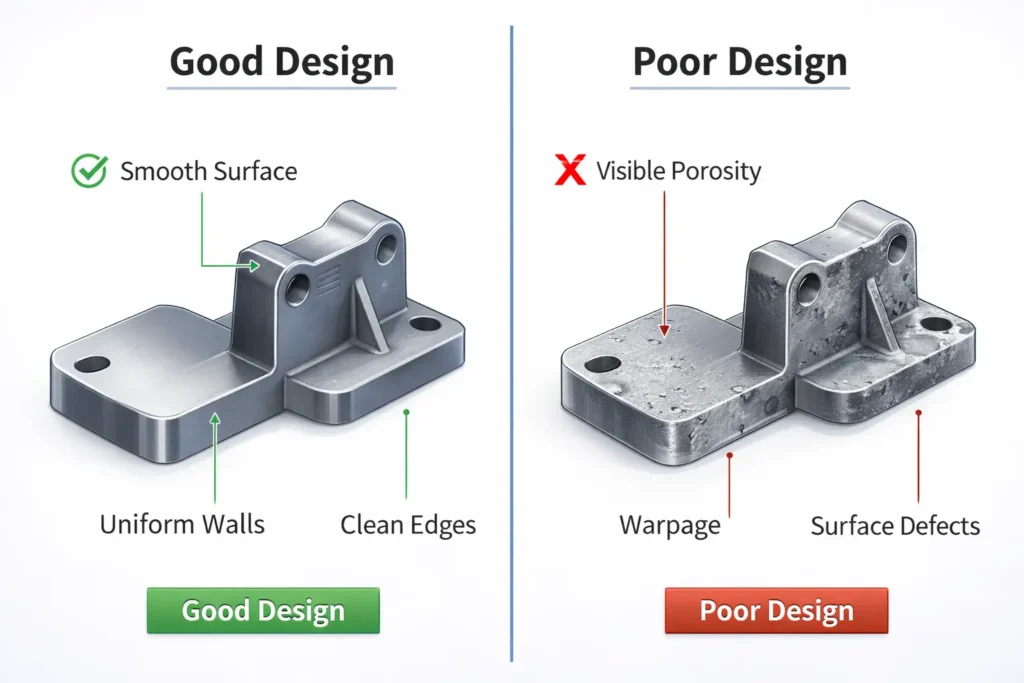
| Hidden Cost | Impact | Example / Notes |
|---|---|---|
| Porosity & Warpage | High | Incorrect wall thickness or gating leads to defects |
| Filling Issues | Medium | Complex geometries without simulation increase rework |
| Tool Rework | High | Mold modifications after first runs |
| Engineering Delays | Medium | Redesign due to manufacturability issues |
💡 IEC MOULD Solution:
- We provide early-stage DFM analysis and mold flow simulation
- Avoids costly redesigns, rework, and delays
- Directly reduces magnesium die casting cost per part
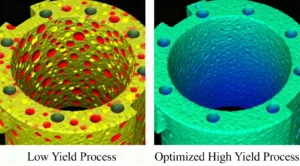
2️⃣ Low Yield Rate
| Hidden Cost | Impact | Notes |
|---|---|---|
| Scrap Rate | High | 80% yield → 20% wasted material, dramatically increasing cost per functional part |
| Production Delays | Medium | Additional cycles to meet quantity targets |
| Tool Wear | Medium | Higher defect rates wear molds faster |
💡 IEC MOULD Advantage:
- Optimized gating, process parameters, and semi-solid casting improve yield
- Many clients see 95%+ yield, lowering hidden costs and improving consistency
3️⃣ Supply Chain Fragmentation
| Hidden Cost | Impact | Notes |
|---|---|---|
| Logistics & Handling | Medium | Multiple suppliers increase shipping, storage, and coordination costs |
| Extended Lead Time | Medium | Delays in machining or finishing prolong the project timeline |
| Quality Risk | High | Inconsistent standards across vendors increase defects |
💡 IEC MOULD Solution:
- Integrated magnesium die casting + machining + finishing under one roof
- Reduces coordination costs, lead time, and quality risks
4️⃣ Secondary Operations & Post-Processing
| Hidden Cost | Impact | Notes |
|---|---|---|
| Machining Complexity | Medium | Poor initial design may require additional CNC time |
| Surface Treatment | Medium | Polishing, coating, or plating increases per part cost |
| Deburring & Trimming | Low | Time-consuming if not planned during DFM |
💡 Insight:
Even a small adjustment in early design can reduce secondary operations cost by 20–40%, making a significant difference in magnesium die casting cost per part.
🔹 Key Takeaways
- Material cost is rarely the largest cost driver—hidden costs such as poor design, low yield, a fragmented supply chain, and post-processing often dominate.
- Early engineering involvement (DFM & mold flow analysis) is the single most effective way to reduce hidden costs.
- Integrated suppliers like IEC MOULD help minimize hidden costs, shorten lead times, and lower total cost per part.
At IEC MOULD, we ensure clients see the true magnesium die casting cost, not just the per kg price, helping you make informed material and supplier decisions.
Case Study: Real Cost Reduction with Magnesium
In the competitive world of automotive and consumer electronics manufacturing, switching from aluminum or steel to magnesium die casting can unlock substantial cost savings—both upfront and over the product lifecycle. This case study illustrates a real-world scenario where magnesium die casting led to measurable financial and performance benefits.
🔹Background
A leading automotive components supplier was facing rising production costs with aluminum die-cast housings. The parts were critical for lightweight electric vehicle (EV) battery enclosures, where both strength and weight were key considerations. The company sought a solution that could:
- Reduce part weight without compromising structural integrity
- Lower material and processing costs
- Shorten production cycle times
💡 The Magnesium Solution
After consulting with a die-casting expert, the supplier piloted magnesium die casting with the AZ91D magnesium alloy. Key implementation steps included:
- Design for Manufacturability (DFM): Wall thickness optimized and draft angles adjusted to suit magnesium’s higher fluidity.
- Tooling Adjustment: Existing aluminum molds were modified rather than fully replaced, saving on initial investment.
- Process Optimization: Injection speed and pressure were fine-tuned to minimize porosity and ensure consistent mechanical properties.
🚀 Cost Reduction Results
| Metric | Aluminum Cast Part | Magnesium Cast Part | Improvement |
|---|---|---|---|
| Material Cost per kg | $3.50 | $5.20 | +48% (higher material price) |
| Part Weight | 2.2 kg | 1.3 kg | –41% |
| Material Cost per Part | $7.70 | $6.76 | –12% |
| Cycle Time | 90 sec | 65 sec | –28% |
| Secondary Machining | Required | Minimal | –100% |
| Total Cost per Part | $12.50 | $9.50 | –24% |
Even though magnesium’s raw material cost is higher than that of aluminum, the significant reduction in weight, cycle time, and secondary machining resulted in a 24% total cost saving per part. The supplier also achieved a lighter EV battery assembly, improving vehicle range—a key selling point.
📌 Key Takeaways
- Material cost alone doesn’t tell the whole story. Magnesium may be more expensive per kg, but its lightweight properties reduce overall material usage and downstream costs.
- Process efficiency matters. Faster cycle times and reduced post-processing contributed heavily to the cost advantage.
- Strategic tooling adaptation can mitigate upfront investment. Modifying existing molds minimized capital expenditure while enabling a new material switch.
- Performance gains can add value beyond direct cost savings. Weight reduction in automotive components translates to energy efficiency and market competitiveness.
This case underscores why magnesium die casting is not just a technical alternative—it can be a strategic cost-saving solution when applied thoughtfully.
Future Trends in Magnesium Die Casting
Magnesium die casting is evolving rapidly, driven by industry demand for lightweight, high-performance components. Understanding these trends can help engineers, procurement specialists, and product managers anticipate cost shifts, process innovations, and material opportunities.
1️⃣ Advanced Alloys and High-Performance Compositions
New magnesium alloys, such as WE43 and ZE41, offer improved corrosion resistance and mechanical strength while maintaining low density. These alloys are increasingly applied in aerospace, EV, and high-end electronics, enabling designers to push performance boundaries without sacrificing weight.
2️⃣ Integration with Hybrid Manufacturing
Magnesium die casting is being combined with additive manufacturing and machining hybrids. For instance, critical inserts or ribs may be 3D-printed and integrated into cast magnesium components, enhancing structural complexity and functional optimization while controlling magnesium die casting cost.
3️⃣ Automation and Process Intelligence
Smart manufacturing technologies are transforming die casting production. Sensors, real-time monitoring, and AI-driven process control help:
- Optimize injection pressure and temperature profiles
- Reduce scrap and rework
- Predict tool wear and schedule maintenance
These advances improve both yield and cost predictability.
4️⃣ Sustainability and Recyclability
Magnesium is inherently recyclable, and demand for eco-friendly materials is growing. Manufacturers are increasingly exploring closed-loop recycling of magnesium scrap, which not only reduces environmental impact but also stabilizes long-term material costs.
5️⃣ Industry Adoption in Electric Vehicles (EVs) and Aerospace
Lightweighting is critical in EVs and aerospace for energy efficiency, range, and payload optimization. Magnesium die casting adoption in these sectors is accelerating, supported by:
- Enhanced mechanical performance at elevated temperatures
- Integration into chassis, battery housings, and electronic enclosures
- Collaboration with OEMs for custom alloy and process development
📌 Key Takeaways
This forward-looking perspective underscores that magnesium die casting is not just a cost-saving measure—it is becoming a strategic material choice for high-performance, sustainable, and lightweight applications. Companies that stay ahead of these trends can capture both financial and technical advantages in competitive markets.
Practical Tips for Selecting a Magnesium Die Casting Supplier
Choosing the right supplier is as critical as choosing the material. A capable magnesium die casting partner ensures quality, cost-effectiveness, and timely delivery. Here are key considerations:
🔧 1. Technical Expertise and DFM Support
Look for suppliers who can provide Design for Manufacturability (DFM) consultation. They should:
- Identify potential casting defects before tooling
- Recommend optimal wall thickness and draft angles
- Advise on alloy selection and mechanical performance
A supplier with strong technical support reduces costly iterations and improves yield.
⚙️ 2. Tooling Capability
Magnesium die casting requires precise tooling. Check whether your supplier can:
- Handle high-pressure die casting for magnesium alloys
- Maintain die steel quality and surface treatment
- Offer mold modification services to save upfront costs
📊 3. Quality Assurance Systems
Ensure the supplier has robust QA protocols, including:
- Dimensional inspection and Cpk studies
- Porosity and microstructure analysis
- Process monitoring with real-time data
High-quality assurance translates to consistent part performance.
⏱️ 4. Production Capacity and Lead Time
Verify the supplier can meet your volume requirements without compromising quality. Consider:
- Average cycle times and throughput
- Flexibility for prototyping vs. mass production
- On-time delivery track record
💰 5. Cost Transparency
A good supplier provides detailed magnesium die casting cost breakdowns covering:
- Material and alloy costs
- Tooling and maintenance
- Secondary operations or finishing
- Shipping and logistics
Transparent costing helps you evaluate the total cost of ownership, not just per-part price.
🌱 6. Sustainability Practices
Increasingly, magnesium die casting partners emphasize recycling and energy-efficient processes. Look for suppliers who:
- Use magnesium scrap or recycled alloy inputs
- Optimize energy consumption during melting and casting
- Offer environmentally responsible waste management
FAQ: Magnesium Die Casting Cost
1. Is magnesium die casting more expensive than aluminum?
Magnesium die casting is not always more expensive than aluminum. Although magnesium costs more per kg, it is lighter, which reduces material usage per part. Combined with faster cycle times and less machining, magnesium often results in a lower total cost per part.
2. What is the cost of magnesium die casting per kg?
Typically, magnesium die casting costs between $4.5 and $7.5 per kg. The exact price depends on alloy type, order volume, and market conditions. However, cost per part is a more accurate measure than cost per kg.
3. Why can magnesium die casting reduce total cost?
Magnesium reduces total cost by lowering part weight, shortening cycle time, and minimizing machining. Its high fluidity allows thinner walls and near-net-shape production, which improves efficiency and reduces waste.
4. What are the disadvantages of magnesium die casting?
The main disadvantages include higher raw material cost, lower high-temperature resistance, and potential corrosion issues. These can usually be managed through proper alloy selection and surface treatment.
5. Is magnesium die casting good for high-volume production?
Yes, magnesium die casting is well-suited for high-volume production. It offers fast cycle times, high repeatability, and good dimensional accuracy, making it efficient for large-scale manufacturing.
6. Can magnesium die casting reduce machining costs?
Magnesium die casting can significantly reduce machining costs. Its excellent castability enables near-net-shape parts, which require less cutting, reduce tool wear, and shorten CNC processing time.
7. How to choose a magnesium die casting supplier?
Choose a supplier with strong DFM support, clear cost breakdowns, and proven experience with magnesium alloys. Reliable quality control and production capability are also essential for reducing risk and ensuring consistency.
Get Expert Support for Your Magnesium Die Casting Projects
If you are evaluating magnesium or other die casting solutions, early engineering support can significantly reduce cost, defects, and development time.
📦 Ready to Turn This Guide into Real Parts?
If you have drawings or an early concept, you can quickly move to a manufacturable solution.
👉 Typical Information to Prepare:
- 2D drawings or 3D CAD files (STEP/IGS)
- Material or performance requirements
- Estimated order quantity
With this information, a professional team can quickly evaluate your project and provide practical recommendations, ensuring your OEM project starts efficiently and effectively.