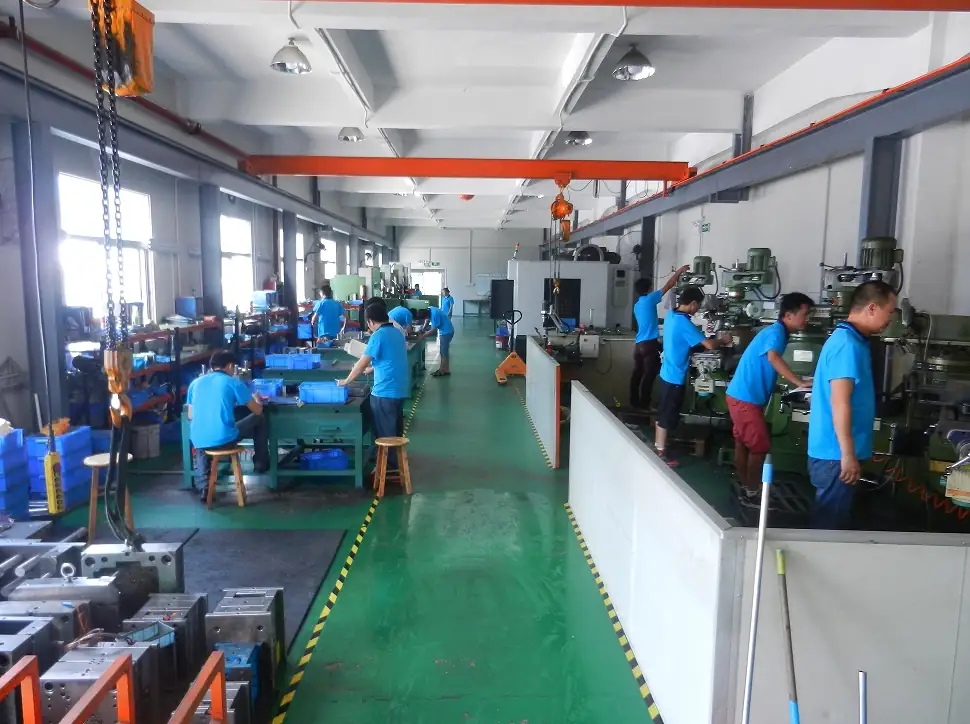
Aluminum die casting is one of the most efficient and widely used manufacturing processes for producing complex metal parts at scale. It enables manufacturers to achieve high precision, consistent quality, and excellent production efficiency at relatively low cost—making it a preferred solution across automotive, electronics, and industrial applications.
But achieving truly high-quality die cast parts is not as simple as selecting the right material or machine. In reality, many production issues begin long before manufacturing starts. Defects such as porosity, flow marks, cracks, and misruns often originate from improper die casting design decisions made at the early engineering stage.
This is why design is not just a preliminary step—it is the foundation of casting quality. A well-optimized die casting design can significantly reduce defects, improve mechanical performance, and lower overall production costs. Understanding how to properly design aluminum die cast components is therefore essential for ensuring stable, high-quality results in mass production.
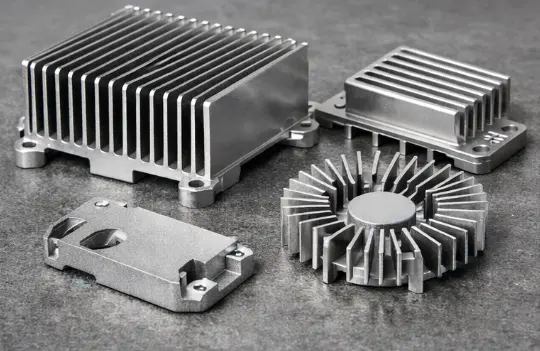
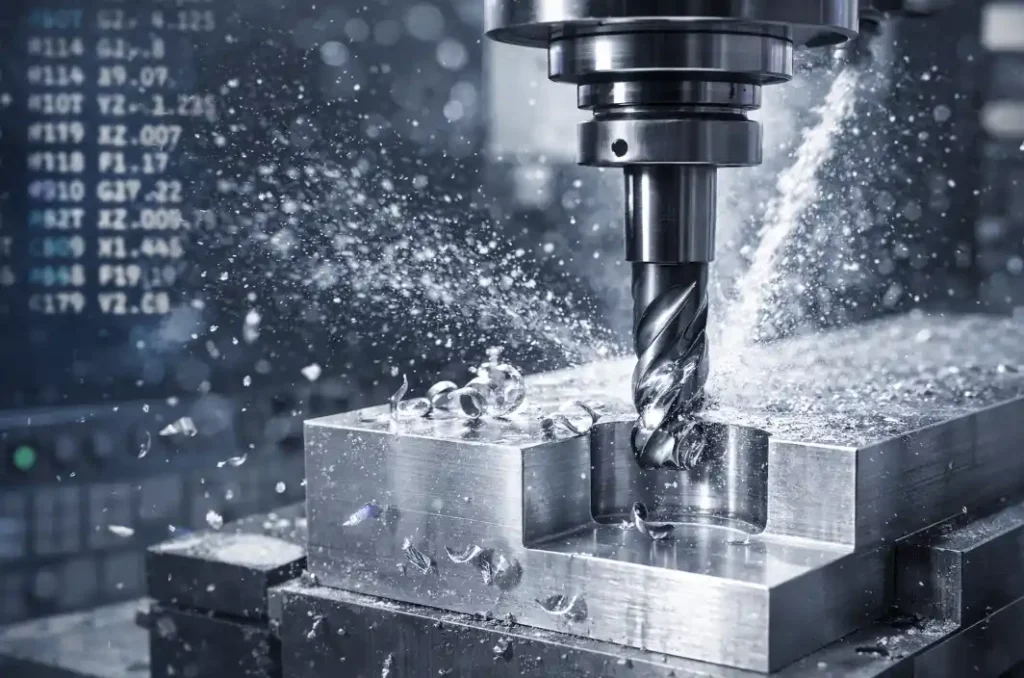
Introduction to Aluminum Die Casting and Its Design Importance
Forming Principle of Aluminum Die Casting
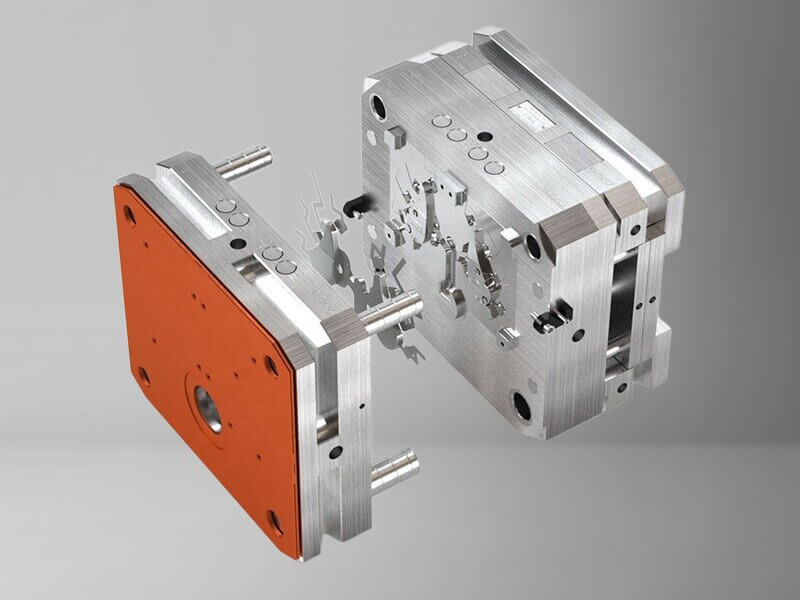
Aluminum die casting is a manufacturing process that combines molds, die casting machines, and aluminum alloys into a highly efficient production system. A well-executed die casting design ensures that molten metal can smoothly fill the mold cavity and form precise, high-quality components.
In this process, molten aluminum is injected into a precision steel mold cavity under high pressure and high speed. The metal then cools and solidifies under pressure, which helps improve density, dimensional accuracy, and surface quality of the final casting.
There are two main types of aluminum die casting processes used in industry. In cold chamber die casting, molten metal is first poured into a shot chamber and then forced into the mold cavity by a plunger system. In hot chamber die casting, the shot chamber is directly connected to the molten metal source, allowing metal to automatically flow into the chamber and be injected through a gooseneck system.
Although both methods follow different feeding mechanisms, the overall production cycle remains similar: injection of molten metal → pressure solidification → mold opening → part ejection. Each stage is highly dependent on proper die casting design, which directly influences filling behavior, solidification pattern, and final part quality.
Advantages of Aluminum Die Casting
Aluminum die casting is widely recognized as one of the most efficient metal forming processes in modern manufacturing. When supported by proper die casting design, it enables stable mass production of complex parts with consistent quality and performance.
One of the key advantages is high production efficiency, as the process allows rapid cycle times and is well-suited for large-scale manufacturing. At the same time, it offers low processing cost due to minimal material waste and reduced need for secondary operations.
Another important benefit is the ease of automation in aluminum die casting production, which improves consistency while reducing labor dependency. The process also delivers high dimensional accuracy, making it suitable for precision components with tight tolerances.
In addition, aluminum die casting provides excellent surface quality, which often reduces the need for extensive post-processing. Combined with its strong overall mechanical properties, the process can produce durable parts that meet demanding structural and functional requirements.
Overall, these advantages make aluminum die casting a preferred solution across industries, especially when supported by optimized die casting design principles that further enhance quality and efficiency.
Common Defects in Die Cast Parts
Despite the advantages of aluminum die casting, certain defects can still occur during the production process, especially when die casting design or process parameters are not properly optimized. Understanding these common issues is essential for improving part quality and reducing manufacturing risks.
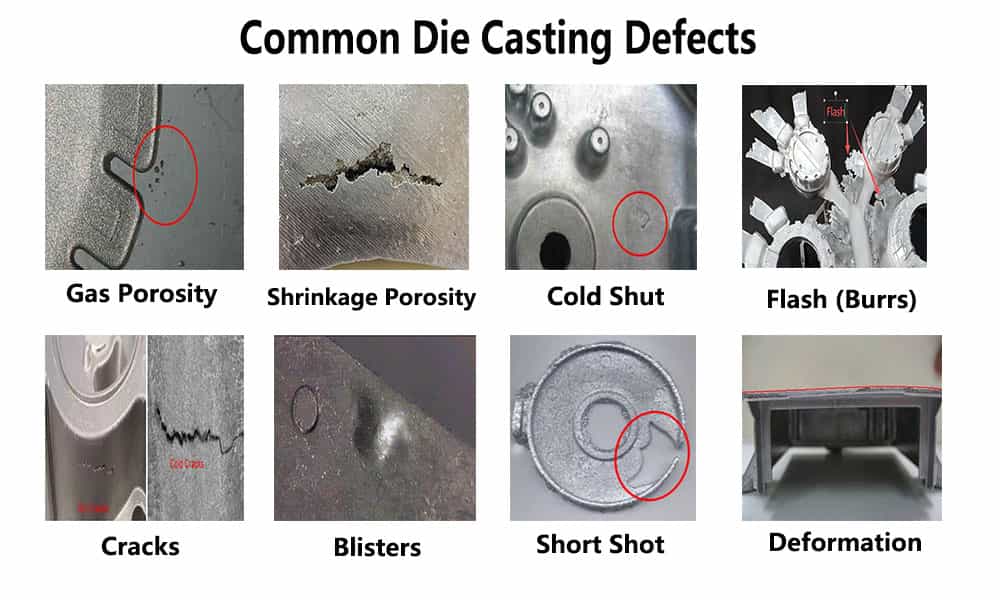
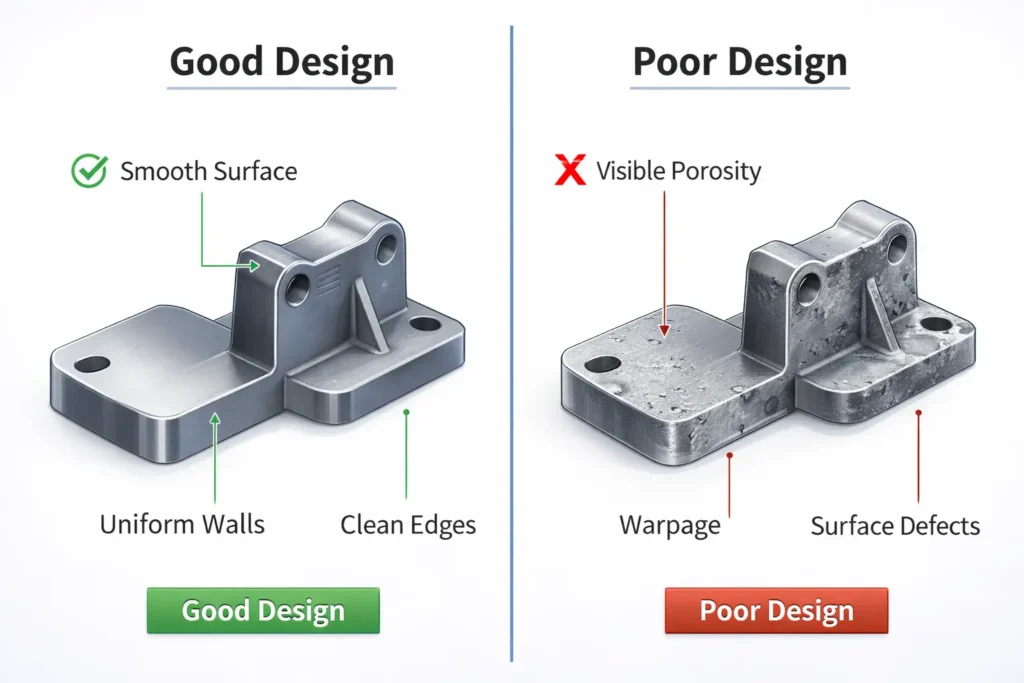
One of the most frequent defects is porosity, which refers to internal or surface gas pockets formed during solidification. This can weaken the mechanical strength of the part and affect its sealing performance. Flow marks are another common issue, typically appearing as visible lines or patterns on the surface caused by irregular molten metal flow inside the mold cavity.
Surface-related defects such as scratches may occur during ejection or handling, often linked to improper mold design or insufficient draft angles. Shrinkage cavities and depressions are also critical problems, usually resulting from uneven cooling and solidification, which can lead to dimensional instability.
In more severe cases, cracks may develop due to internal stress concentration or poor structural design, compromising the integrity of the casting. Misruns, where the molten metal fails to completely fill the mold cavity, are typically caused by low fluidity, insufficient injection pressure, or overly thin wall sections.
Most of these defects can be significantly reduced through optimized aluminum die casting process control and well-planned die casting design, which ensures proper metal flow, uniform cooling, and balanced structural geometry.
Why Structural Design Is Critical for Quality
In aluminum die casting, product quality is not determined by manufacturing alone, but is heavily influenced by die casting design at the early development stage. The structural design of a part directly affects how molten metal flows, fills, and solidifies inside the mold cavity.
Defects in aluminum die casting are often closely related to both part geometry and process conditions. If the design is not optimized, issues such as uneven filling, stress concentration, or improper cooling are more likely to occur, leading to porosity, cracks, or dimensional instability.
Poor structural design significantly increases the risk of casting defects and can also reduce production efficiency and mold life. This is why early-stage design decisions are critical in preventing downstream manufacturing problems.
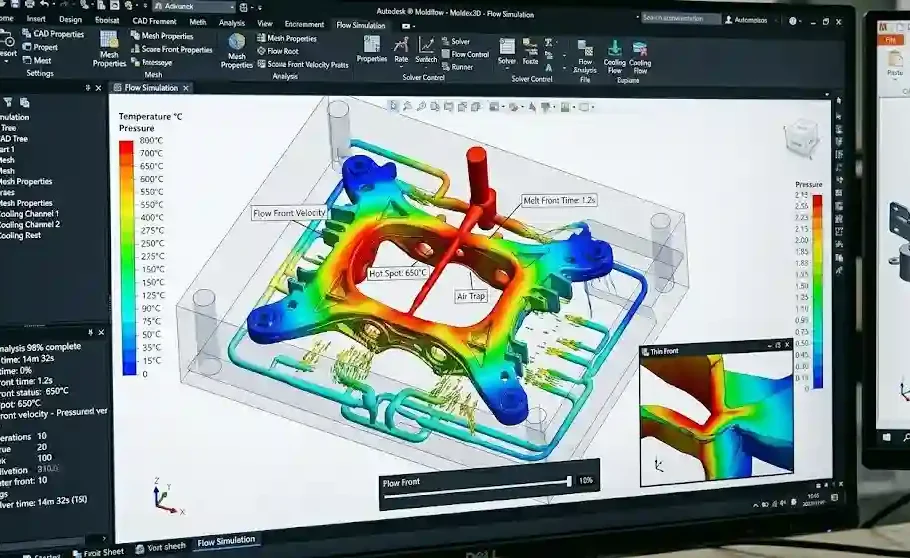
Conducting design evaluation at an early stage helps engineers identify potential risks and improve manufacturability before tooling is made. By adjusting wall thickness, rib structure, and overall geometry in advance, production stability can be greatly improved.
Ultimately, structural optimization plays a key role in improving both the quality and performance of aluminum die cast parts. A well-planned die casting design not only reduces defect rates but also enhances mechanical strength, consistency, and overall cost efficiency in mass production.
Key Design Principles for High-Quality Aluminum Die Cast Parts
The rationality of die casting design is related to the whole die casting forming process. When designing die castings, the structural characteristics and process requirements should be fully considered, and the occurrence of defects in the die casting process should be minimized, so as to improve the quality of die castings to the greatest extent with the optimal design scheme.
Optimize Wall Thickness for Strength and Flow
When designing aluminum alloy die castings, the wall thickness must be fully considered. Wall thickness is a factor of special significance in die casting, and is closely related to the whole process specification, such as filling time calculation, gate velocity selection, solidification time calculation, mold temperature gradient analysis, pressure (final specific pressure), dwell time, ejection temperature, and operation efficiency.
If the wall thickness is too thick, defects such as shrinkage cavities, sand holes, porosity, and coarse internal grains will occur, which reduce mechanical properties and increase cost due to higher weight. If the wall thickness is too thin, it will cause poor filling of molten aluminum, difficulty in forming, poor alloy flow, and defects such as insufficient filling and misruns, bringing difficulties to the die casting process.
As porosity increases, internal defects such as pores and shrinkage cavities also increase. Therefore, on the premise of ensuring sufficient strength and rigidity, the wall thickness should be minimized and kept uniform.
| Die Casting Wall Thickness (mm) | Rib Thickness (mm) |
|---|---|
| 0.8 – 2.5 | 1.5 – 2.5 |
| 2.0 – 3.5 | 2.5 – 3.5 |
| Alloy Type | Zinc Alloy | Aluminum Alloy | Copper Alloy |
|---|---|---|---|
| Inner Surface of Casting | 0° 20′ | 0° 32′ | 0° 45′ |
| Outer Surface of Casting | 0° 10′ | 0° 15′ | 0° 30′ |
Use Ribs to Improve Strength and Reduce Deformation
For large flat or thin-walled die castings, the strength and rigidity are poor and deformation is likely to occur. In this case, ribs can effectively prevent shrinkage, fracture, and deformation, and enhance strength and rigidity. For high bosses or columns, ribs can improve stress distribution and prevent root fracture. At the same time, ribs can assist molten metal flow and improve filling performance.
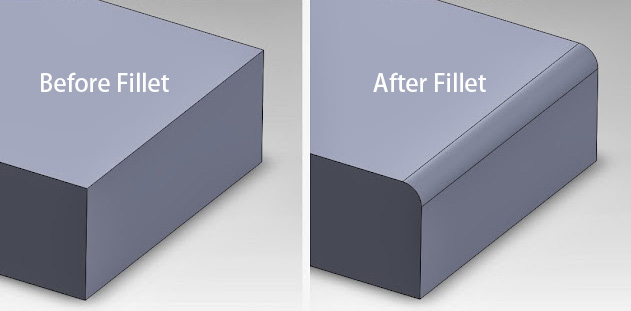
The root thickness of ribs should not exceed the wall thickness at that location, generally designed as 0.8–2.0 mm. The draft angle is generally 1°–3°, and the higher the rib, the smaller the draft angle. Fillets should be added at the root to avoid sudden section changes, assist metal flow, reduce stress concentration, and improve strength. The fillet radius is generally close to the wall thickness.
The rib height should generally not exceed 5 times its thickness. Rib thickness should be uniform. If too thin, ribs are easy to break; if too thick, defects such as sink marks and porosity are likely to occur.
Apply Proper Draft Angles for Easy Ejection
The function of the draft angle is to reduce friction between the casting and the mold cavity, facilitate ejection, prevent surface scratching, and extend mold life. The draft angle is related to the height of the casting—the greater the height, the smaller the draft angle.
Generally, the draft angle of the external surface is about half of that of the internal cavity. However, in practical design, the draft angles of internal and external surfaces can be designed to be the same to maintain uniform wall thickness and simplify structural design.
| Material | Inner Cavity Depth of Casting (mm) | ||||||
|---|---|---|---|---|---|---|---|
| ≤ 6 | 6 – 8 | 8 – 10 | 10 – 15 | 15 – 20 | 20 – 30 | 30 – 60 | |
| Zinc Alloy | 2° 30′ | 2° | 1° 45′ | 1° 30′ | 1° 15′ | 1° | 0° 45′ |
| Aluminum Alloy | 4° | 3° 30′ | 3° | 2° 30′ | 2° | 1° 30′ | 1° 15′ |
| Copper Alloy | 5° | 4° | 3° 30′ | 3° | 2° 30′ | 2° | 1° 30′ |
Minimize Machining and Plan Machining Allowance
Machining should be avoided as much as possible in die casting design. Machining will destroy the dense surface layer of the part, affect mechanical properties, expose internal porosity, affect surface quality, and increase cost.
If machining cannot be avoided, large cutting volumes should be avoided. The structure should be designed to facilitate machining or reduce machining area and cost.
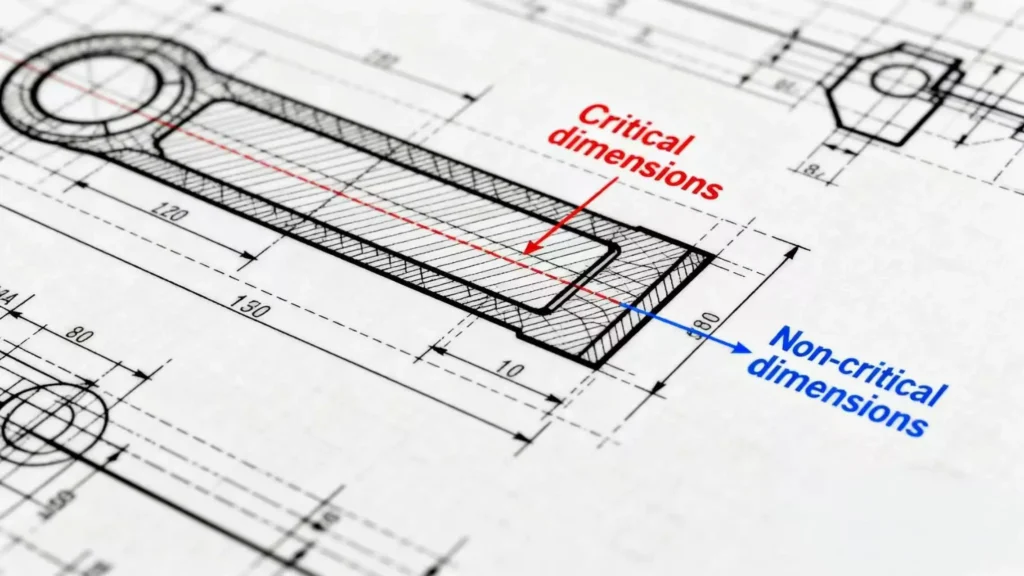
For dimensions with high precision requirements or surfaces with high roughness requirements that cannot be achieved by die casting, machining allowance should be reserved during design. Since the surface of die castings has higher strength and hardness than the interior, attention should be paid to retaining the dense surface layer during machining. Excessive allowance may expose internal defects such as porosity and surface defects.
| Nominal Size | 0~30 | 30~50 | 50~80 | 80~120 | 120~180 | 180~260 |
|---|---|---|---|---|---|---|
| Addendum per face | 0.3 | 0.4 | 0.5 | 0.6 | 0.7 | 0.8 |
Design for Surface Finishing and Coating
Surface coating is typically done using powder coating. The principle is electrostatic powder spraying:
- Powder particles are electrically charged and attracted to the oppositely charged workpiece under an electric field.
- The coating is evenly deposited on the surface.
Advantages of powder coating:
- No air pollution
- Recyclable material, reducing cost
- Excellent resistance to acid, alkali, and corrosion
Design Optimization for Performance, Quality, and Cost Efficiency
Avoid Sharp Corners and Use Fillets
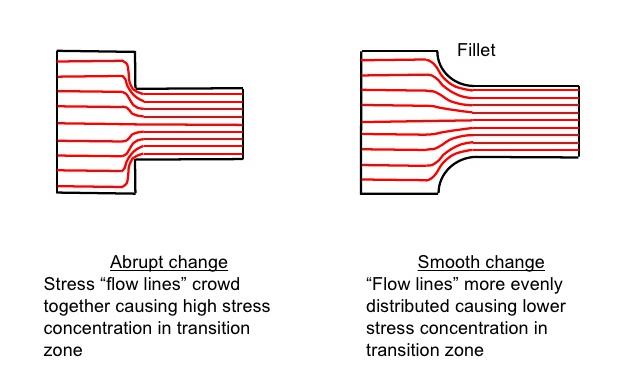
Sharp corners in aluminum die casting parts should be avoided, as they create stress concentration and restrict smooth metal flow. Adding fillets at internal and external transitions helps improve structural strength, reduce cracking risk, and support better cavity filling during the casting process.
Ensure Smooth Metal Flow and Uniform Solidification
A well-designed part should allow molten metal to flow smoothly through the cavity without sudden changes in direction or cross-section. At the same time, uniform cooling and solidification are essential to prevent shrinkage, deformation, and internal porosity. These factors are closely linked to overall die casting design quality and directly affect final part stability.
Reduce Stress Concentration in Critical Areas
Stress concentration often leads to cracks and premature failure in die cast components. Critical areas such as sharp transitions, thin-to-thick wall junctions, and load-bearing zones should be carefully optimized to ensure even stress distribution and improve long-term mechanical performance.
Optimize Design to Improve Manufacturing Efficiency and Reduce Cost
A well-optimized design directly improves production performance by reducing scrap rate, improving cycle stability, and lowering post-processing requirements. When part geometry supports efficient filling and consistent quality, manufacturers can achieve higher yield and lower rejection rates.
At the same time, good die casting design helps extend mold life by reducing thermal stress and mechanical wear, which lowers tooling maintenance cost and improves long-term production efficiency.
Conclusion: Designing for Quality Starts Early
In aluminum die casting, achieving high-quality parts is not only dependent on production conditions but is largely determined at the design stage. A well-optimized die casting design helps reduce defects, improve consistency, and ensure stable mass production from the very beginning.
Importance of Early Design Evaluation
Early design evaluation allows engineers to identify potential manufacturing risks before tooling is produced. By analyzing geometry, wall thickness, flow behavior, and cooling conditions at an early stage, common defects such as porosity, misruns, and shrinkage can be effectively reduced.
This proactive approach shortens development cycles and improves first-pass success rates in aluminum die casting projects.
Collaboration Between Designers and Manufacturers
Successful aluminum die casting projects rely heavily on close collaboration between designers and manufacturers. When engineering and production teams work together from the start, it becomes easier to align structural design with real manufacturing capabilities.
This ensures that die casting design decisions are not only theoretically sound but also practical for stable and cost-efficient production.
Achieving Optimal Quality Through Design Optimization
Ultimately, consistent product quality is achieved through continuous design optimization. By refining part geometry, improving metal flow, and balancing cooling behavior, manufacturers can significantly reduce defects while improving mechanical performance and dimensional stability.
A well-executed die casting design directly contributes to higher productivity, lower scrap rates, and better overall manufacturing efficiency.
Contact IEC Mould Engineering Making Ltd for Professional Support
For companies seeking reliable aluminum die casting solutions, IEC Mould Engineering Making Ltd provides strong engineering and manufacturing support. With extensive experience in die casting projects, a powerful in-house design team, and internationally recognized quality certifications, we are capable of delivering stable and cost-effective solutions for complex components.
We welcome cooperation on new projects, design optimization, and technical consultation.
- Company: IEC Mould Engineering Making Ltd
- Email: [email protected]
- Tel: +86-0769-85336570
- Website: https://castingstool.com / www.iec-mould.com