
Receiving a low-ball tooling quote only to be hit with thousands of dollars in unexpected modification fees is a nightmare for every sourcing manager. Understanding the transparent breakdown of aluminum casting mold cost is the only way to protect your project budget.
Typically, an aluminum die casting mold cost ranges from $2,000 to $60,000+, depending on part complexity, mold size, material selection, and expected production volume:
Simple molds: $2,000 – $8,000
Medium complexity: $8,000 – $25,000
High complexity / multi-cavity molds: $25,000 – $60,000+
In real projects, the final die aluminum casting mold cost is not determined by a single factor. Geometry, tolerance requirements, and mold life expectancy often have a larger impact than buyers initially expect.
If you are sourcing globally, especially from China, understanding this cost structure is critical to avoid underestimating your tooling budget or choosing the wrong supplier.
What Is Included in Aluminum Casting Mold Cost?
When evaluating an aluminum casting mold price, it’s important to distinguish between one-time tooling cost and per-part production cost.
A typical aluminum die casting mold cost breakdown includes:
- Mold design & engineering (DFM analysis)
- Mold material (H13 / SKD61 steel)
- CNC machining & EDM processing
- Mold assembly and fitting
- Trial runs (T1, T2 sampling)
- Surface treatment & finishing
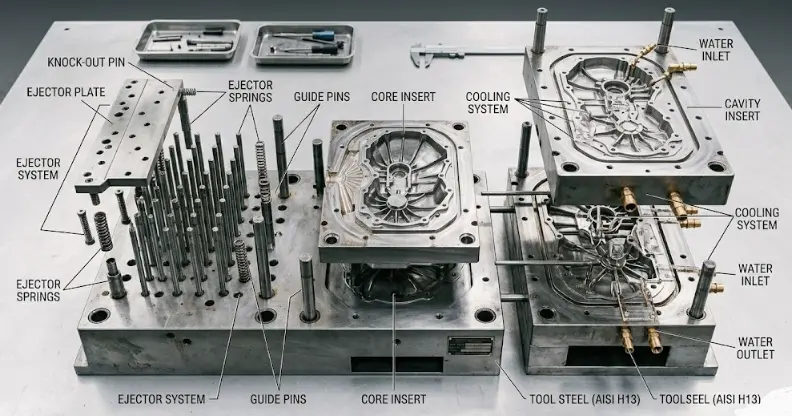
In most cases, tooling is a front-loaded investment, but poor design decisions at this stage can increase long-term production costs significantly.
Aluminum Casting Mold Cost Breakdown (Typical Percentage)
From an engineering and quoting perspective, the cost structure usually looks like this:
| Cost Component | Percentage Range |
|---|---|
| Mold Material | 20–30% |
| CNC Machining | 25–35% |
| Design & Engineering | 10–15% |
| Assembly & Fitting | 10–20% |
| Testing & Trial Runs | 5–10% |
This is why two suppliers quoting the “same mold” can have very different pricing—differences often lie in machining strategy, material quality, and engineering depth.
Cost Estimation Logic: What Drives Mold Price Up?
Before diving into the 10 factors, here’s a simplified way to estimate your tooling cost for aluminum casting:
- Larger part size → +15% to +25%
- Complex geometry (undercuts, deep cavities) → +20% to +50%
- High precision requirements → +15% to +30%
- Multi-cavity design → +30% to +60%
This is not a formula, but it reflects how experienced suppliers evaluate die casting tooling cost during early quoting stages.
The 10 Key Factors That Affect Aluminum Casting Mold Cost
When evaluating an aluminum casting mold cost, experienced buyers don’t just ask “how much”—they ask “what exactly is driving the cost?”
From an engineering and quoting perspective, mold cost is not random. It is the result of design complexity, tooling strategy, and production expectations working together.
Below are the 10 factors that actually determine your die casting mold cost, with real cost impact ranges based on industry practice.
1. Part Complexity (Geometry & Internal Structure)
- Impact Level: ⭐⭐⭐⭐⭐ (Highest)
- Typical Cost Increase: +20% to +50%
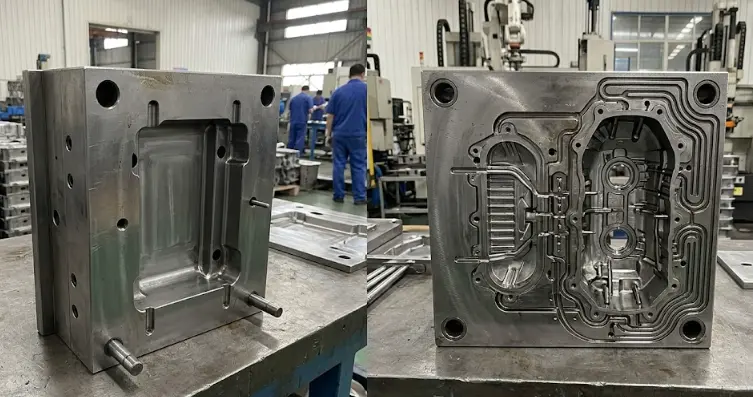
Complex geometries like deep ribs and internal cavities significantly increase the complexity of an aluminum casting mold. These features require advanced mechanisms such as hydraulic sliders and lifters, which extend CNC machining and EDM cycles.
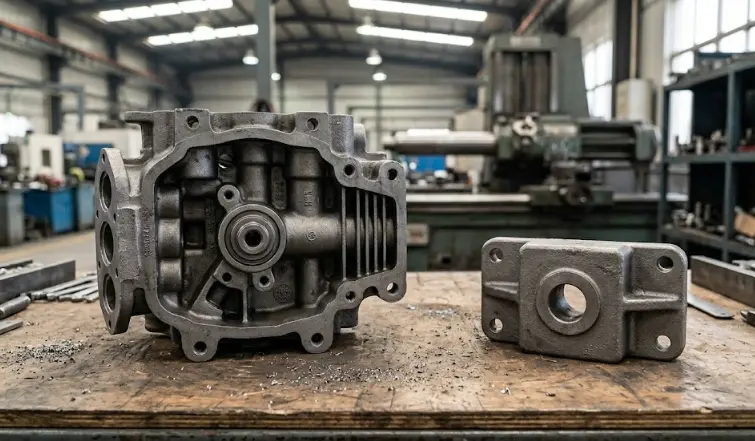
Each added mechanism results in:
Extended Machining Cycles: Significant increase in high-precision CNC milling and EDM (Electrical Discharge Machining) hours.
Precision Assembly: Higher complexity in manual fitting and mold base integration to ensure tight tolerances.
Increased Verification Time: More intensive T1/T2 trial runs to debug mechanical interference and thermal balance.
👉 Engineering Insight: A simple “open-and-shut” mold is the baseline. Incorporating just 2 or 3 side-action sliders can increase the total die casting mold cost by 30% or more, as each slider requires its own wear plates, locking blocks, and cooling channels.
2. Mold Material Selection (Tool Steel Grade)
- Impact Level: ⭐⭐⭐⭐
- Typical Cost Increase: +10% to +30%
The choice of tool steel (H13, SKD61, or 8407) is critical for the durability of an aluminum casting mold. High-grade steel improves thermal fatigue resistance and prevents premature cracking during high-pressure cycles.
Common materials for high-quality aluminum die casting molds include:
H13 (Standard): The industry workhorse for general-purpose tooling.
SKD61 (Premium): Offers superior toughness and heat resistance compared to standard grades.
8407 (High-End): A high-performance steel known for excellent isotropic properties and resistance to thermal checking.
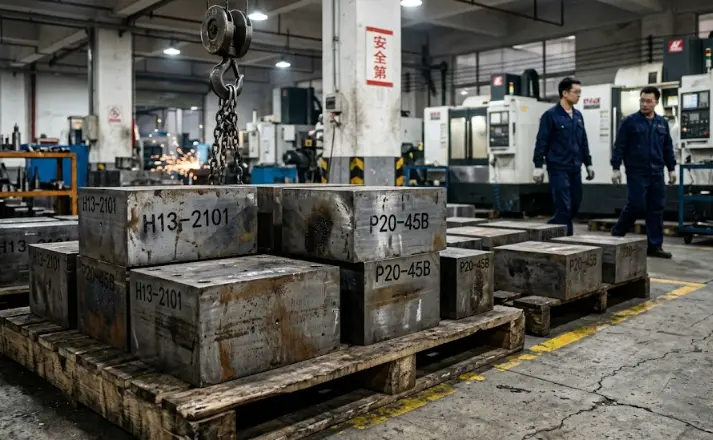
Why investing in higher-grade steel pays off:
Superior Thermal Fatigue Resistance: Minimizes “heat checking” (fine surface cracks) caused by repeated heating and cooling cycles.
Enhanced Crack Resistance: Reduces the risk of catastrophic mold failure under high injection pressures.
Extended Mold Lifespan: Maintains tight tolerances and surface finish over a significantly higher number of cycles.
👉 Decision Tip: While the upfront die casting mold cost is higher, premium steel is a necessity for high-volume projects. If your production exceeds 50,000 shots, choosing a higher-grade material combined with professional vacuum heat treatment usually reduces the total lifecycle cost by preventing premature mold maintenance or replacement.
3. Mold Size and Projected Area
- Impact Level: ⭐⭐⭐⭐
- Typical Cost Increase: +15% to +35%
The physical dimensions of the part determine the total volume of steel needed for the aluminum casting mold base. A larger projected area requires higher clamping forces, necessitating more robust and expensive tooling structures.
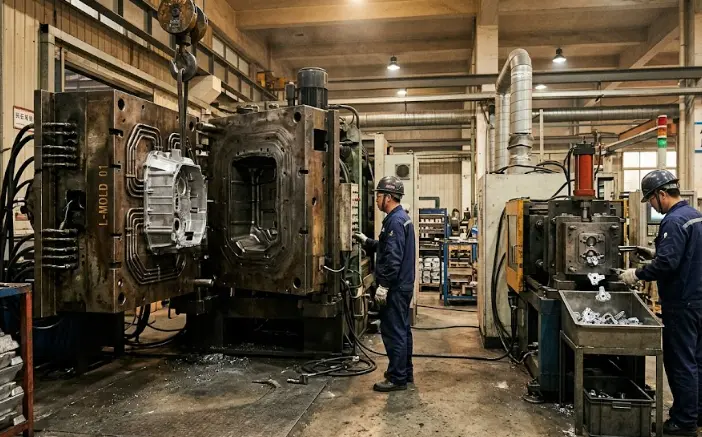
Mold size and projected area significantly affect:
Raw Material Volume: Larger molds require massive blocks of high-grade tool steel (like H13 or SKD61) for the mold base and inserts.
Machining Time: Increased surface area means more hours on large-scale CNC milling and grinding machines.
Machine Tonnage Requirements: A larger projected area necessitates a higher clamping force to prevent “flashing” during high-pressure injection.
Larger molds also introduce logistical complexities:
Complex Handling: Heavy-duty cranes and specialized assembly rigging are required for safe maneuverability during the tooling design and manufacturing phases.
Higher Logistics Costs: Significant impact on domestic and international shipping expenses, particularly for export-oriented projects requiring sea freight or heavy-lift air cargo.
👉 Practical Rule: While cost scales almost linearly with mold size, machining complexity and the need for heavy-duty die casting equipment can amplify expenses further. Optimizing part orientation during the DFM phase can often reduce the projected area and allow for a more cost-effective mold size.
4. Number of Cavities
- Impact Level: ⭐⭐⭐⭐
- Typical Cost Increase: +30% to +60%
Increasing the number of cavities in an aluminum casting mold boosts productivity but requires balanced runner systems and uniform cooling to maintain part consistency. This is a strategic investment for high-volume production.
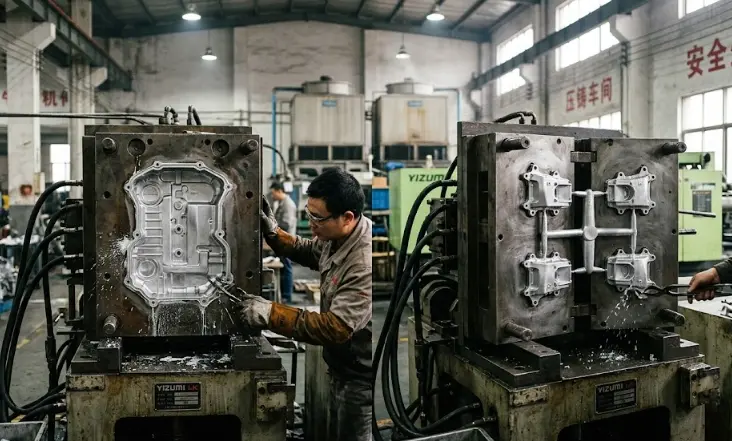
Multi-cavity molds increase productivity but require:
Balanced Runner Systems: Precision-engineered gating and runner designs are critical to ensure that molten metal reaches each cavity at the exact same pressure and velocity.
Uniform Cooling Design: A sophisticated thermal management system is needed to prevent hot spots and ensure consistent solidification across all cavities.
Higher Precision Machining: Tightening the dimensional variations between cavities requires advanced CNC machining and meticulous hand-finishing.
👉 Engineering Reality: Multi-cavity molds are only cost-effective when:
Production volume is stable and high enough to amortize the initial die casting mold cost.
Demand justifies higher upfront tooling investment to achieve a lower price-per-part.
Otherwise, adding cavities increases technical risk—such as imbalanced filling or increased scrap rates—without providing a clear ROI.
5. Surface Finish Requirements
- Impact Level: ⭐⭐⭐
- Typical Cost Increase: +5% to +20%
Whether it is mirror polishing or fine texturing, surface specifications directly impact the manual benchwork hours required for the aluminum casting mold. High cosmetic requirements also increase the necessity for rigorous CMM inspection.
Surface specifications such as:
Mirror Polishing: Essential for clear aesthetic parts or to reduce friction during part ejection.
Fine Texturing: Used for grip, decorative patterns, or to hide minor casting flow marks.
Specialized Coatings: Applying PVD or Chrome plating to mold inserts to enhance wear resistance and prevent molten aluminum from sticking (soldering).
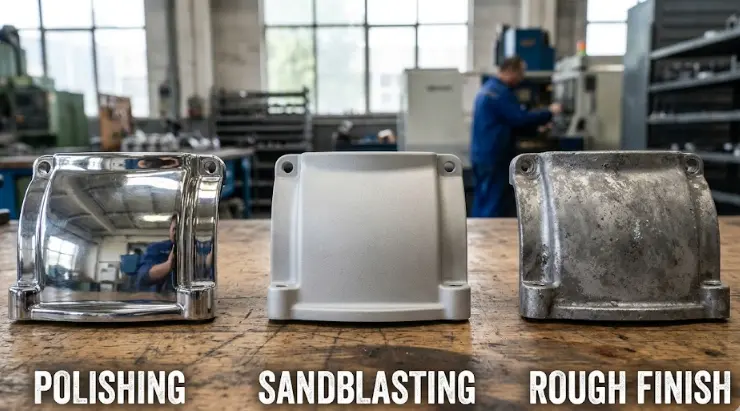
These requirements demand additional manual benchwork and precision secondary processes.
👉 Hidden Factor: High cosmetic requirements often increase inspection time and the necessity for specialized lighting or CMM verification, not just the initial machining cost. Stringent surface standards also mean a lower tolerance for mold wear, potentially leading to more frequent maintenance cycles.
6. Tolerance and Precision Requirements
- Impact Level: ⭐⭐⭐⭐
- Typical Cost Increase: +15% to +30%
Tightening tolerances from ±0.1mm to ±0.02 mm requires ultra-high-precision CNC programming for the aluminum casting mold. This ensures a high Cpk (Process Capability Index) for critical components.
Tighter tolerances require:
Ultra-High Precision CNC Programming: Utilizing sub-micron machining centers to ensure the mold cavity perfectly matches the digital twin.
Additional EDM Operations: Specialized Electrode Discharge Machining for intricate features where standard milling cannot reach the required precision.
Advanced Measurement Equipment (CMM): Intensive use of Coordinate Measuring Machines to verify dimensional accuracy and ensure a high Cpk (Process Capability Index).
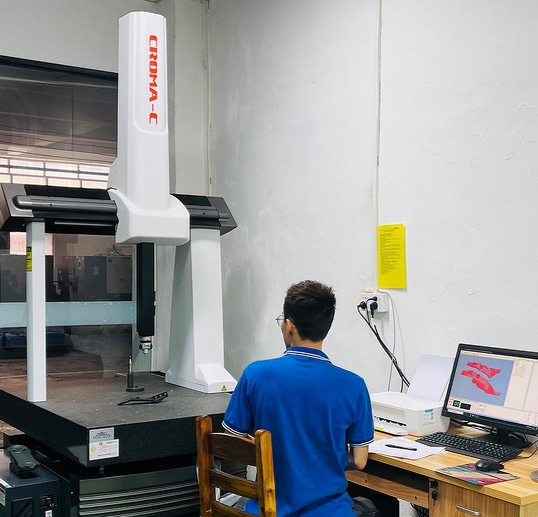
👉 Example: Moving from a standard tolerance of ±0.1 mm to a high-precision requirement of ±0.02 mm can increase tooling costs by over 20%. This is particularly true for critical sealing areas or bearing housings where fitment is non-negotiable.
7. Cooling System Design
- Impact Level: ⭐⭐⭐⭐
- Typical Cost Increase: +10% to +25%
Mastering thermal management through a well-designed cooling system is essential for a high-performance aluminum casting mold. Strategic cooling prevents warpage and reduces cycle times, improving overall ROI.
A well-designed cooling system ensures:
Uniform Solidification: Prevents internal stresses and ensures structural integrity throughout the part.
Reduced Cycle Time: Faster heat dissipation allows for quicker part ejection, directly increasing daily output.
Lower Defect Rate: Significantly reduces the occurrence of thermal-related issues like soldering or gas porosity.
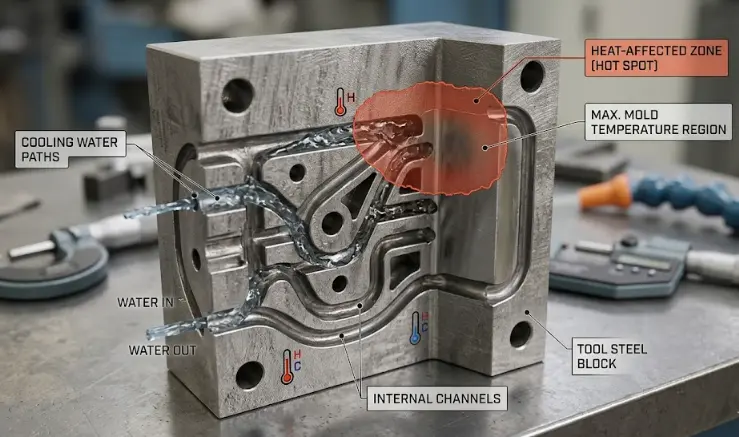
Poor cooling design leads to:
Warpage and Distortion: Caused by uneven cooling rates across different wall thicknesses.
Shrinkage Defects: Inadequate cooling in thick sections can lead to internal voids or surface depressions.
Longer Production Cycles: Overheated molds require longer “dwell times,” driving up the unit cost.
👉 Engineering Insight: Cooling design is often underestimated but directly impacts both die casting mold cost and long-term production efficiency. For high-precision parts, we often employ advanced techniques like “point cooling” or localized high-pressure water circuits to manage critical hot spots that standard lines cannot reach.
8. Mold Life Expectancy (Tooling Durability)
- Impact Level: ⭐⭐⭐⭐
- Typical Cost Increase: +20% to +40%
An aluminum casting mold designed for 100,000+ shots requires premium materials and reinforced structures. While the upfront cost is higher, it prevents costly downtime and premature tool failure.
Mold life depends on:
Steel Grade: High-performance alloys like 8407 or SKD61 provide the necessary resistance to thermal shock.
Precision Heat Treatment: Advanced vacuum heat treatment ensures the steel reaches optimal hardness and toughness.
Advanced Surface Coating: Specialized treatments like nitriding or PVD reduce erosion and “soldering” from molten aluminum.
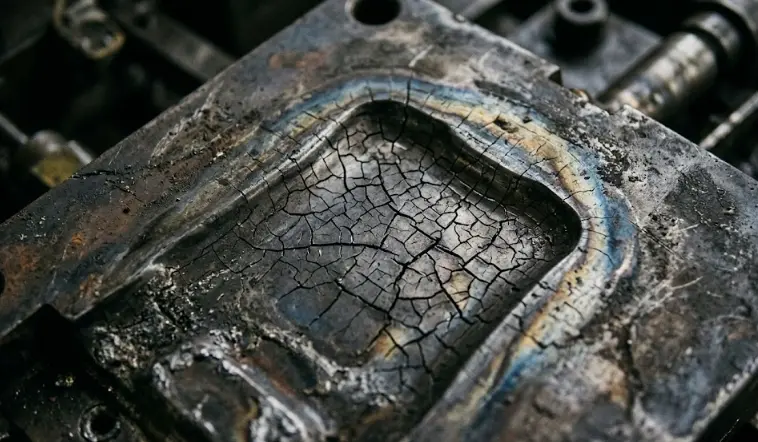
A mold designed for extended life requires:
Premium Base Materials: High-purity tool steel with excellent isotropic properties.
Reinforced Structure: Robust mold bases and insert supports to withstand millions of high-pressure injection cycles.
More Precise Machining: Reducing stress concentrations through superior CNC machining surface finishes.
👉 Key Point: A lower upfront cost often means a shorter mold life and higher long-term cost due to frequent repairs, increased downtime, and potential part quality degradation. For projects exceeding 100,000 shots, investing in high-durability tooling is essential for maintaining a consistent Cpk and lowering the total cost of ownership.
9. Lead Time and Project Urgency
- Impact Level: ⭐⭐⭐
- Typical Cost Increase: +10% to +25%
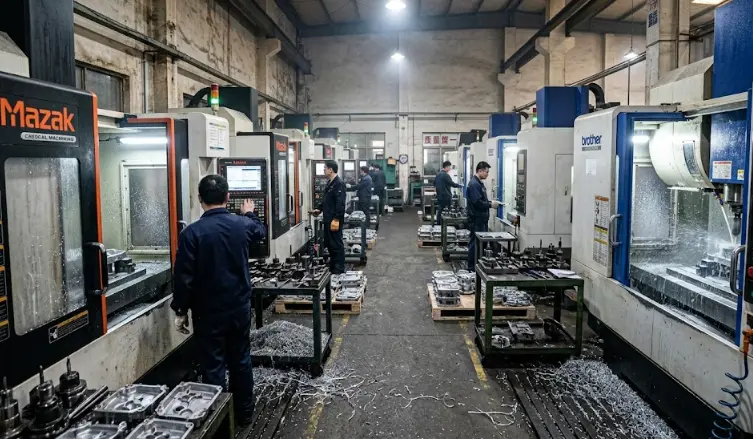
Accelerating the manufacturing of an aluminum casting mold involves overtime machining and priority scheduling. Parallel processing is often used to meet urgent time-to-market demands.
Accelerated timelines require:
Overtime Machining: 24/7 operation of high-precision CNC machining and EDM centers to shave days off the schedule.
Priority Scheduling: Disrupting standard production flows to move your project to the front of the queue.
Parallel Processing: Simultaneously manufacturing mold bases and inserts while finalized tooling design details are still being refined.
👉 Real-world Effect: Rush projects often reduce the window for cooling and gating system optimization. While speed is achieved, it may increase the risk of future modification costs if the initial design was not allowed to reach full maturity before steel was cut.
10. Supplier Capability and Engineering Experience
- Impact Level: ⭐⭐⭐⭐⭐ (Strategic Factor)
- Cost Difference: up to 50%+
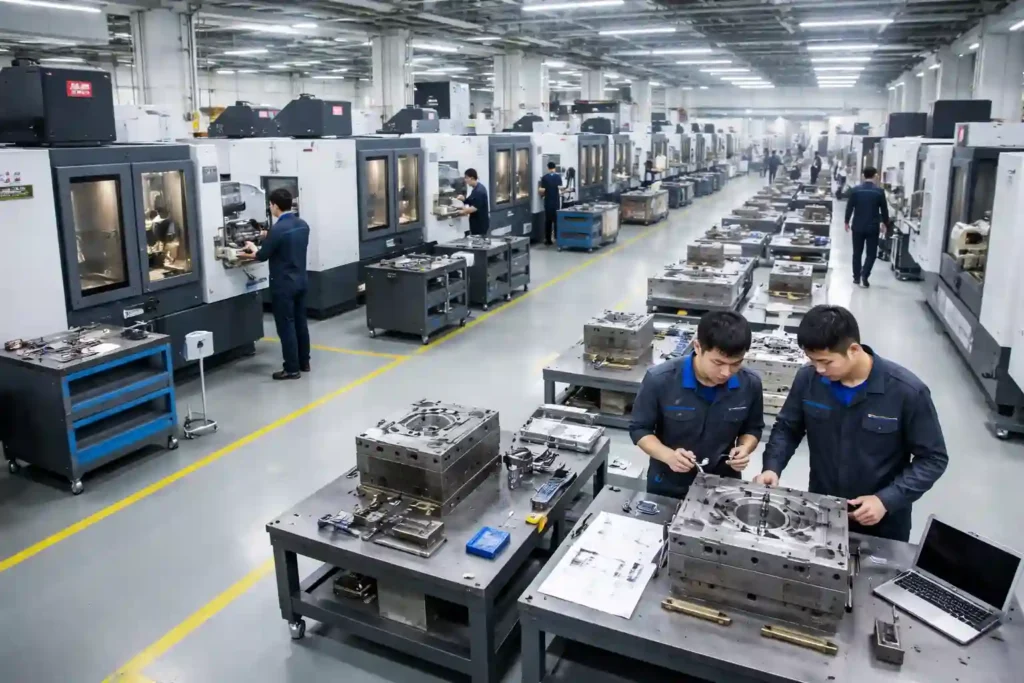
A supplier’s experience is the ultimate “hidden” factor in aluminum casting mold costs. An expert partner optimizes the design before steel is cut, reducing trial iterations (T1 to T2 success) and ensuring long-term production stability.
An experienced supplier can:
Optimize Mold Design Before Manufacturing: Utilizing advanced flow simulation and DFM analysis to predict and prevent defects.
Reduce Trial Iterations: Achieving T1 → T2 success through meticulous attention to detail, significantly shortening the development cycle.
Prevent Costly Design Errors: Identifying potential issues in complex geometries (like those found in NEV components) before they manifest in steel.
👉 Critical Insight: A cheaper quote from an inexperienced supplier often results in a “price trap.” Multiple revisions, delayed production start dates, and higher scrap rates eventually lead to a much higher total project cost. Choosing a partner with proven engineering expertise ensures that your production remains stable and your Cpk requirements are consistently met.
What Really Determines Aluminum Casting Mold Cost?
From a professional standpoint, aluminum casting mold cost is not just a number—it is a reflection of engineering quality.
The logic is simple:
Geometry determines structure
Structure determines tooling complexity
Tooling complexity determines final cost
In our experience working with 50+ die casting projects, over 70% of cost overruns come from early-stage design decisions, not supplier pricing.
So if you want to reduce die aluminum casting mold cost, here’s what actually works:
Simplify undercuts and slides
Optimize wall thickness consistency
Choose the right supplier for your volume (low-volume ≠ high-cost)
Negotiation helps, but design optimization + supplier selection drives real savings.
5 Hidden Costs of Aluminum Die Casting Most Buyers Ignore
Many buyers focus only on the quoted mold price. But in our experience with over 40 die casting projects, the initial quote is rarely the final cost.
Here are the hidden costs that quietly add 10–30% to total project cost:
| Hidden Cost | Typical Impact | Why It’s Often Overlooked | How to Avoid / Mitigate |
| Mold rework & modification | +15–25% | Design issues discovered only after steel is cut | Freeze the design only after a rigorous DFM and MAGMA flow simulation. |
| Multiple trial runs (T1, T2…) | +5–10% | Each trial costs material, machine time, and labor | Partner with an experienced tooling engineer to optimize gating channels early. |
| Production delays | +Variable | Late delivery affects downstream assembly schedules | Build a detailed tooling timeline with clear weekly milestone photos. |
| Quality defects & high scrap rate | +10–20% | Poor first-pass yield drives per-part cost up | Ensure uniform wall thickness and proper venting slots in the initial mold design. |
| Maintenance & repair | +8–15%/year | Inadequate steel quality or cooling design | Never compromise on steel grades (use premium H13/SKD61) and vacuum heat treatment. |
DFM Optimization: The #1 Way to Reduce Mold Cost
From real project experience involving over 30 production tools across automotive and consumer electronics industries:
More than 70% of aluminum casting mold cost is determined during the design stage—before any steel is cut.
This means that once your 3D model is finalized, most of your tooling budget is already locked in. Negotiation with suppliers has limited impact at that point.
The most effective lever? Design for Manufacturability (DFM).
Three DFM strategies that directly lower mold cost:
Eliminate unnecessary undercuts
Each undercut typically requires side-actions (slides or lifters), which add 3,000–3,000–8,000 to mold cost and increase maintenance.Standardize wall thickness
Variations in wall thickness cause uneven cooling, longer cycle time, and higher scrap rates. Uniform walls = simpler mold design.Add proper draft angles
Missing or insufficient draft angles can double ejection system complexity and increase wear. A standard 1–3° draft often saves 10–15% in tooling cost.
Bottom line: DFM is not a design constraint—it’s the most effective way to reduce both tooling cost and production risk simultaneously.
Real Case Study: Reducing Mold Cost by 30%
Project background:
Part: Pump housing, 2.5 kg, 280mm × 200mm × 90mm
Alloy: A380 aluminum
Annual volume: 15,000 units
Key improvements:
- Reduced slider count
- Simplified internal geometry
- Optimized gating system
Before DFM optimization:
| Parameter | Initial Design |
|---|---|
| Initial quote | $18,000 |
| Slider count | 4 |
| Wall thickness variation | 3.5mm – 7.0mm |
| Draft angle | 0.5° (insufficient) |
| Estimated T1 success | Low (expected rework) |
After DFM optimization:
| Parameter | Optimized Design |
|---|---|
| Final mold cost | $12,500 |
| Slider count | 2 (eliminated 2) |
| Wall thickness variation | 4.5mm – 5.5mm (standardized) |
| Draft angle | 2° (added) |
| T1 result | First-pass approval |
Result: $5,500 saved (30% reduction) + faster lead time + lower risk.
Why this worked: Engineering involvement happened before tooling started. The supplier provided DFM feedback, and the buyer accepted design changes early—when changes are cheap.
This is a typical example where design optimization directly reduces aluminum casting mold cost.
Aluminum Casting Mold Cost vs Injection Mold Cost
A common question from buyers: Is a die casting mold more expensive than a plastic injection mold?
Short answer: Yes, typically 20–50% higher for a comparable size.
1. Why Die Casting Molds Cost More
| Factor | Die Aluminum Casting Mold | Plastic Injection Mold | Cost Impact |
|---|---|---|---|
| Mold temperature | 600°C+ (molten aluminum) | 200–300°C (molten plastic) | Die casting requires higher-grade steel |
| Tool steel grade | H13, SKD61, or DAC55 | P20, 420, or NAK80 | Die casting steel costs 30–50% more |
| Injection pressure | Very high (metal flow) | Moderate (plastic flow) | Die casting requires heavier mold base |
| Machining complexity | Greater (cooling lines + wear resistance) | Moderate | Die casting machining time is longer |
| Typical lifespan | 50,000 – 100,000 shots | 100,000 – 500,000 shots | Die casting molds wear out faster |
2. The Trade-off You Need to Understand
Yes, aluminum casting molds have higher upfront cost. But they produce metal parts with:
Superior strength and stiffness
Better thermal conductivity (important for heat dissipation)
Higher durability under load
EMI shielding capability (plastic cannot provide this)
Plastic injection molds are cheaper and last longer, but the parts are plastic—lighter, but weaker and less heat-resistant.
3. How to Choose
| If you need… | Choose… |
|---|---|
| Metal strength, heat resistance, durability | Aluminum die casting |
| Lightweight, low cost, high volume (non-structural) | Plastic injection |
Bottom line: Compare total part cost + performance requirements, not just mold price.
How to Choose the Right Mold Supplier
When evaluating an aluminum casting mold supplier, don’t focus only on price. Instead, look for:
DFM capability – Can they optimize your design before tooling starts?
Proven case studies – Have they delivered similar aluminum casting mold projects?
Trial success rate – How many T1 samples pass without major rework?
Communication efficiency – Do they respond quickly and clearly?
The right supplier helps you reduce total cost for your aluminum casting mold—not just the tooling price.
Get a Free Aluminum Casting Mold Cost Evaluation
At IEC Mould, we help customers reduce tooling cost through engineering optimization.
What we provide:
- Free DFM analysis
- Cost breakdown report
- Mold design & manufacturing
- Trial production support
What we need from you:
- 3D drawings (STEP / IGS)
- Annual volume
- Surface and tolerance requirements
👉 You can request a free mold cost estimate within 24 hours.
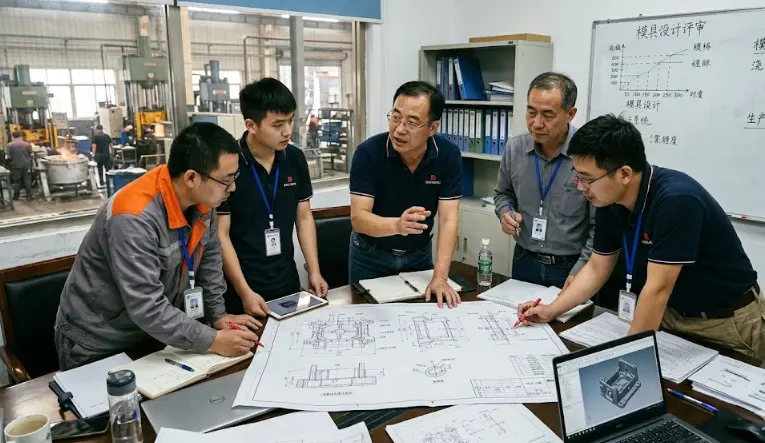
FAQ: Aluminum Casting Mold Cost
Why is aluminum casting mold cost so high?
Because it involves high-temperature-resistant materials, precision machining, and complex design.
Can mold cost be amortized?
Yes, it is typically distributed across production volume.
How long does a die casting mold last?
Usually between 10,000 and 100,000+ shots depending on material and design.
How to reduce die casting tooling cost?
Optimize part design and work with an experienced supplier.
Is multi-cavity mold worth it?
Only for high-volume production.
Conclusion
Ultimately, managing aluminum casting mold cost requires looking beyond the initial quote and understanding the engineering logic behind it. To achieve the perfect balance between your upfront budget and long-term tool life, keep these three proven pillars from our industry experience in mind:
Design Dictates the Baseline: Geometry drives tooling complexity. Simplifying undercuts and standardizing wall thickness early can reduce mold costs by 30% and eliminate hidden rework risks.
Steel Quality Secures Longevity: Don’t compromise on mold materials. Premium tool steel paired with proper vacuum heat treatment prevents thermal fatigue and costly production downtime.
Expertise Eliminates Rework: A supplier with strong DFM and flow simulation capabilities ensures T1/T2 trial success, protecting your project from the “price traps” of late-stage modifications.